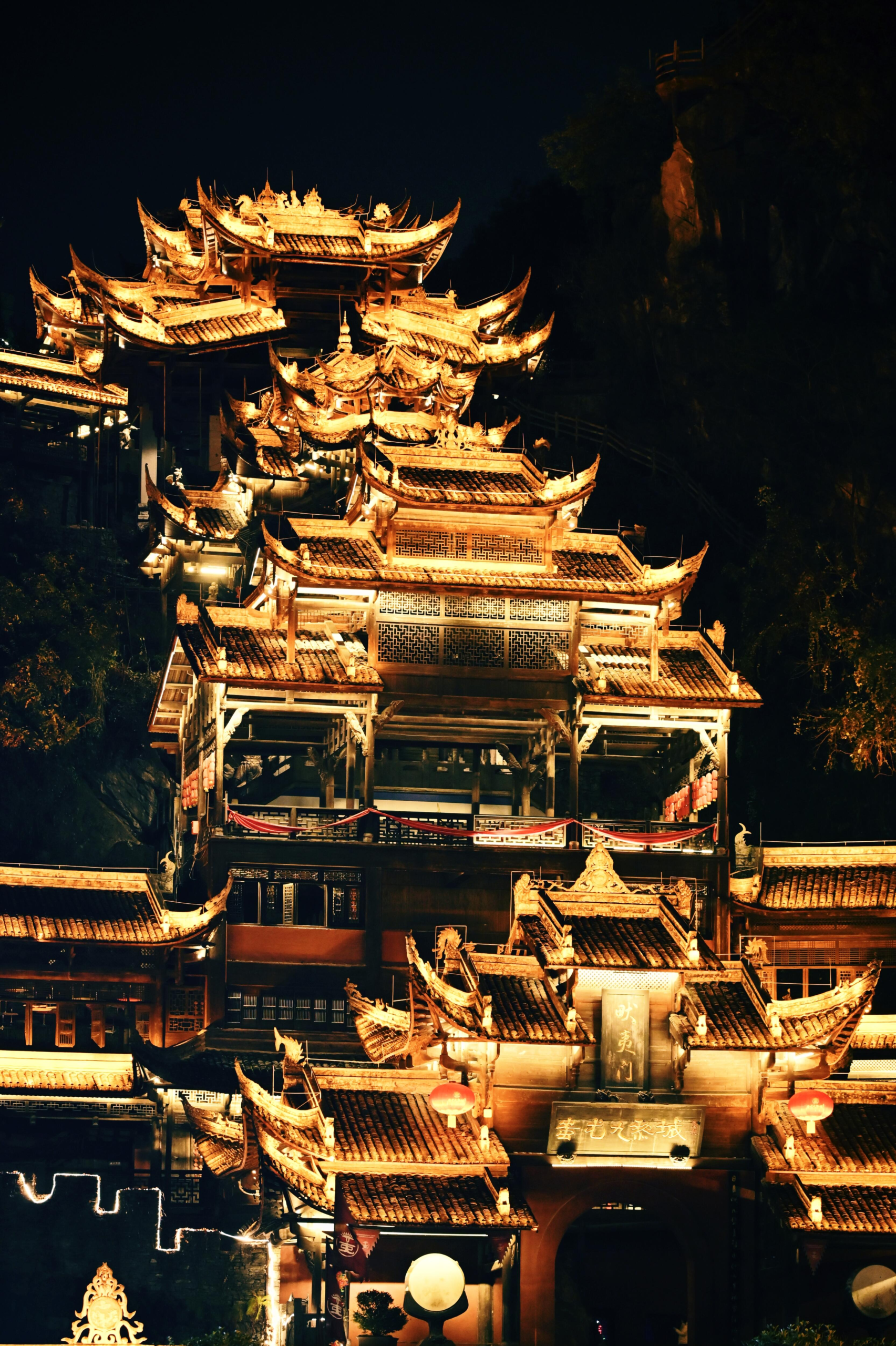


A quick and honest note before we get into it
📍 Location: Fengjie County, Chongqing Municipality, China
🗓️ Best time to visit: March–May or October–November (avoid summer heat and rain)
⏱️ How long: 2 days (one full day for the main sights, plus travel time)
👟 Difficulty: Moderate – Expect stairs, rocks and mountain paths. Doable for most but no joke.
💰 Budget estimate: Around ¥350–¥500 per day if you do it yourself.
Fengjie isn’t a polished tourist town. It’s a proper working county that happens to sit right at the entrance of the Three Gorges. Some roads are rough. English is very rare outside the main ticket booths. And the infrastructure – getting around, finding food after 8pm, translating menus – can be a proper challenge.
🚆 Getting there (the smart way)
From downtown Chongqing, the high-speed train to Fengjie is now the only option that makes sense. It takes around 1 hour 40 minutes from Chongqing North station. The ride is smooth, the carriages are modern, and tickets cost about US$16.60 each way. Around 32 direct trains run daily, so you won’t struggle to find a seat.
I pre-booked mine through a third-party app because buying at the station requires a Chinese ID card. That’s a deal-breaker for travellers like us. [Check real-time train tickets from Chongqing to Fengjie]
Once you arrive, you’ll need a taxi to get into the county itself. There’s no Uber. The station is about 15–20 minutes from the main town. Expect to pay around ¥30–¥40.
⚠️ If you’re on a Yangtze cruise, you’ll already pass through Qutang Gorge between Chongqing and Yichang. Some cruise packages offer excursions to Bai Di Cheng and Sanxia Zhi Dian from the water. [Browse Yangtze River cruise options with shore excursions included ]
🏛️ Bai Di Cheng – White Emperor City (白帝城)
This is where you’ll feel the weight of history.
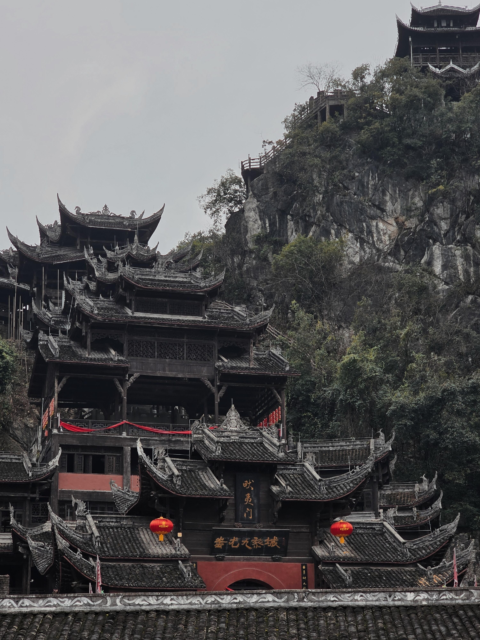
Bai Di Cheng sits on a hill that became an island after the Three Gorges Dam raised water levels. There’s a bridge connecting it to the bank. As you walk across, you can see exactly what I mean – the old town of Fengjie is now submerged beneath your feet. That water is deeper than you think.
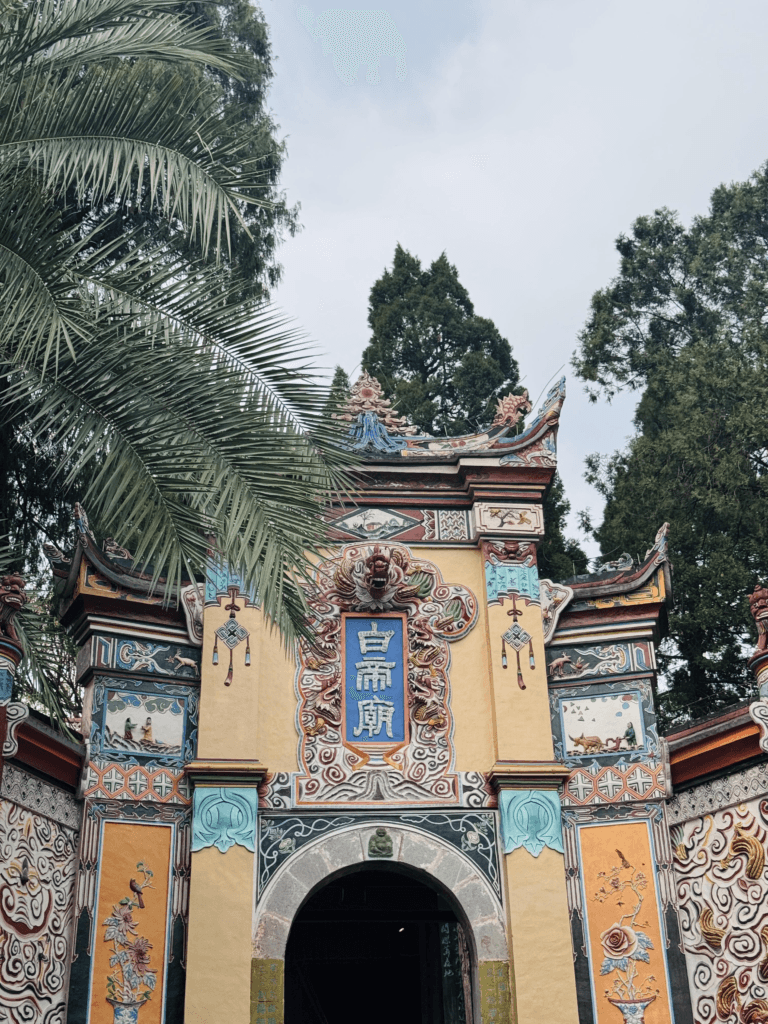
The name comes from a 2,000-year-old legend. A local warlord saw white vapour rising from a well – looking like a white dragon – and declared himself “White Emperor”. That story became the city’s name. These days, Bai Di Cheng is mainly known for something else.
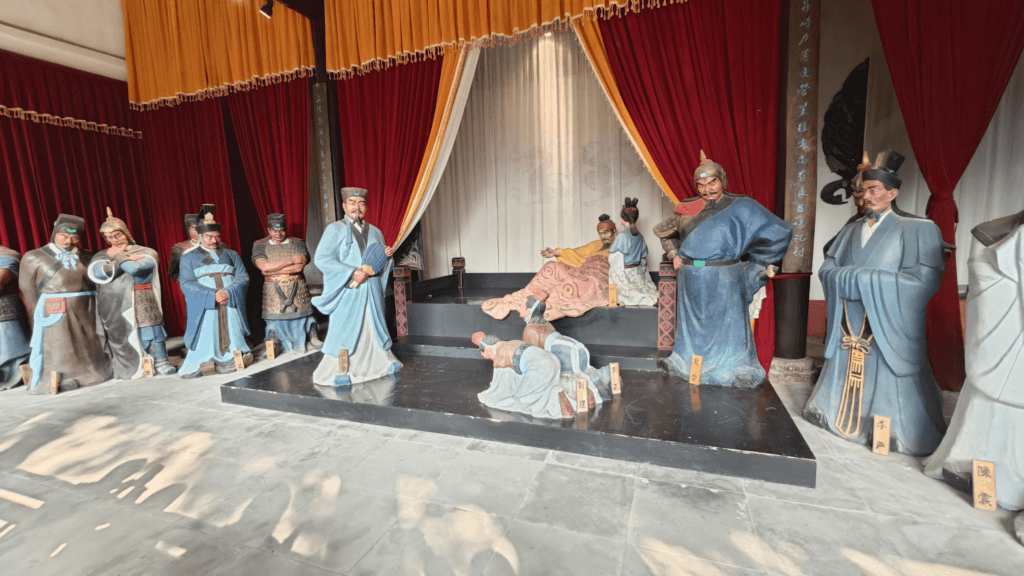
In the Three Kingdoms period (about 1,800 years ago), the Shu Kingdom emperor Liu Bei suffered a crushing defeat. Mortally ill, he called his most trusted strategist, Zhuge Liang, to his bedside and entrusted him with his young son and the entire kingdom. That moment is preserved inside the temple.
What you’ll actually see
- Baidi Temple (White Emperor Temple) – ancient architecture dating back two millennia, originally built to honour the self-declared White Emperor
- Tuo Gu Tang (Entrusting the Son Hall) – the exact hall where Liu Bei entrusted his kingdom to Zhuge Liang
- Guan Xing Ting (Observing Stars Pavilion) – a viewing platform originally used for astronomical observation
🛥️ Qutang Gorge – the short, intense one (瞿塘峡)
Of the Three Gorges along the Yangtze, Qutang is the shortest but the most dramatic. It runs only 8 km from Bai Di Cheng to Daxi Town in Wushan County. The narrowest point is about 100 metres across.
The Kui Gate shot
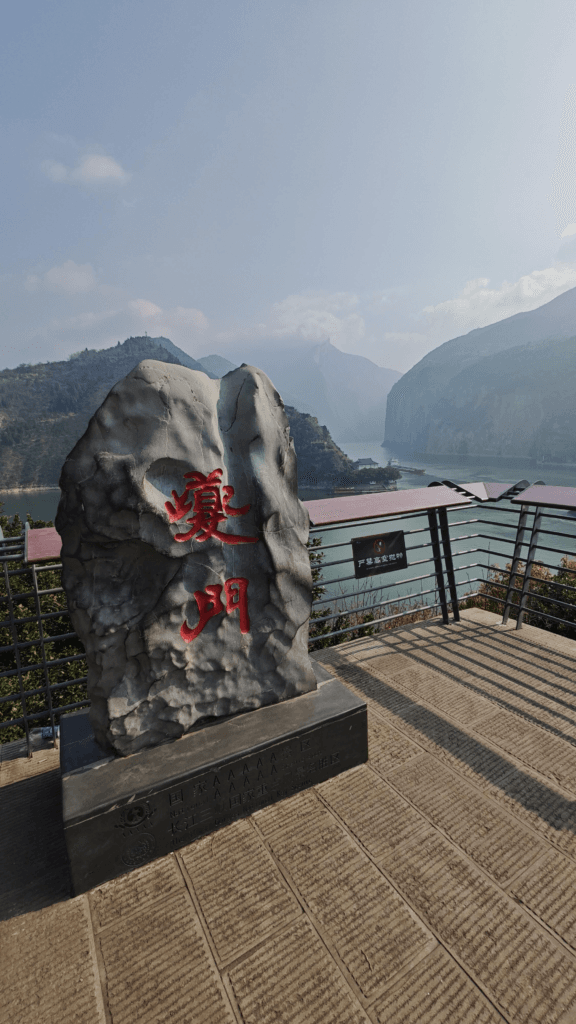
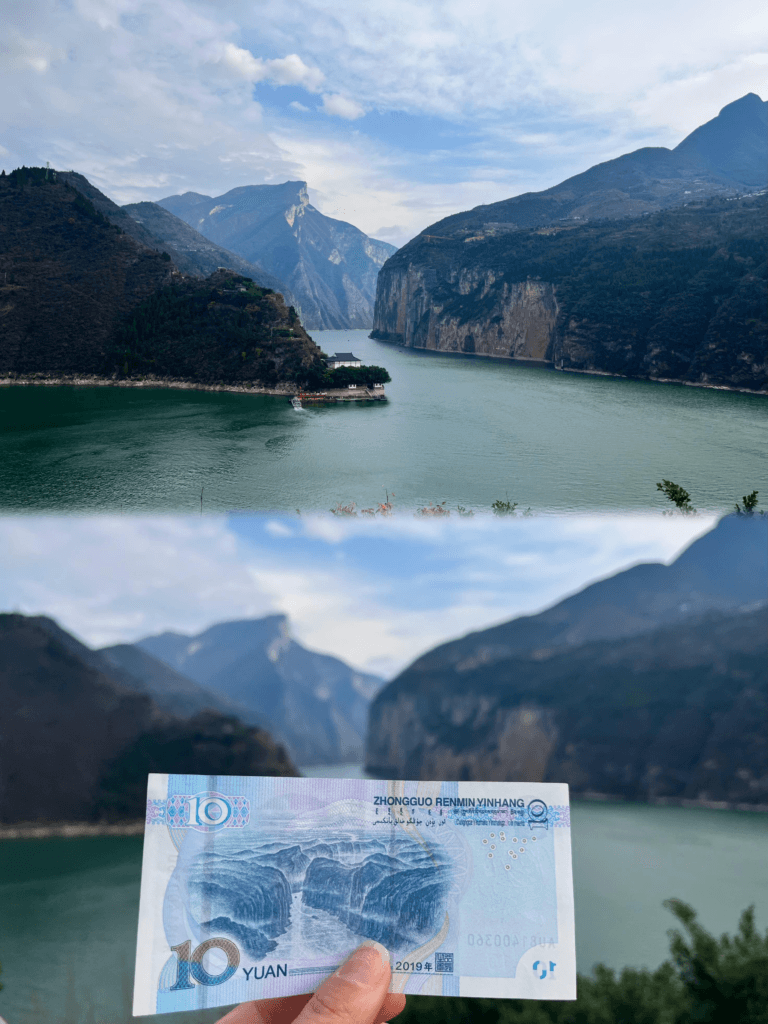
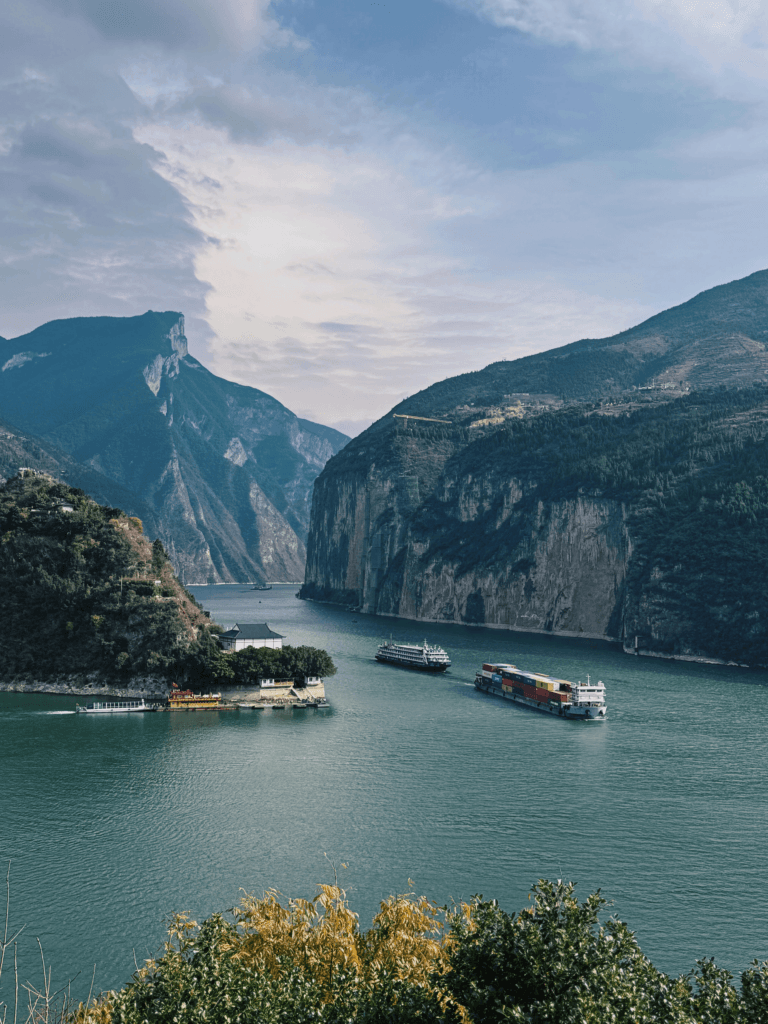
Walk through the temple complex until you reach the far side. There’s a viewing platform where you’ll see the iconic karst peaks rising from the river – that’s Kui Gate, the entrance to Qutang Gorge. It’s the exact image printed on the back of China’s 10 yuan banknote. Every Chinese tourist will be holding up their notes for comparison. You should too. It’s the best free souvenir you’ll get.
Walking around
There are hundreds of steps inside Bai Di Cheng. The complex is built into the hillside, so you’re constantly climbing. My knees were feeling it by the end. Wear proper walking shoes – not fashion trainers, not sandals.
Boat trip inside the scenic area
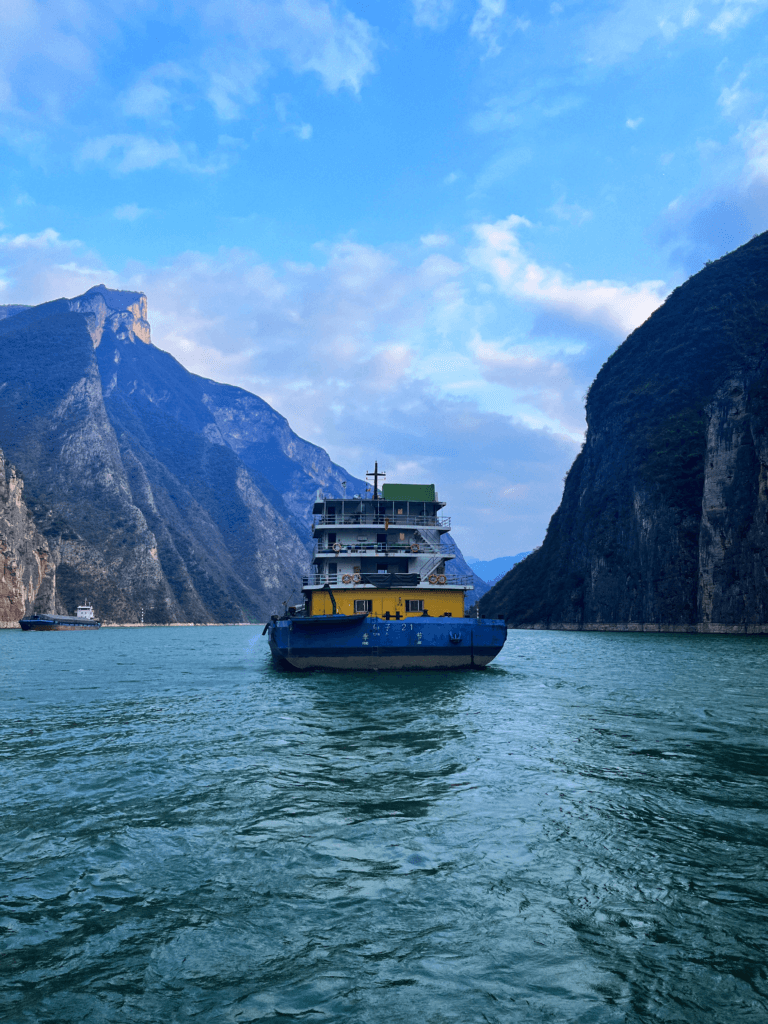
From Zhongyi Ferry inside the complex, you can board a dedicated boat that goes through Qutang Gorge itself. It costs an extra ¥50 (about US$7.50) and the journey takes about 20 minutes through the 8 km gorge. You’ll see the sheer cliffs rising straight from the water – Chijia Mountain on your left, Baiyan Mountain on your right. These are the same peaks you just saw from above, but now you’re looking up at them.
Opening hours: 8.30 am – 7.00 pm. Last entry 5.30 pm. Give yourself: 2 to 3 hours minimum.
If you booked through a cruise, you’ll see Qutang from the upper deck of your ship. The passage takes about 20 minutes. The cliffs close in on both sides, the river rushes fast below, and you’ll understand why ancient poets called this the “Supreme Kuimen under Heaven”.
The boat inside Bai Di Cheng scenic area covers essentially the same stretch, but from a smaller, lower vessel.
⛰️ Three Gorges Summit – the climb that pays off (三峡之巅)
This is the one that takes real effort – and real planning.
Sanxia Zhi Dian sits on Chijia Mountain at 1,388 metres elevation, making it the highest point in the entire Three Gorges region. From up there, you can see the entire Qutang Gorge snaking through the mountains, with the river cutting through like a green scar. The view is genuinely world-class.
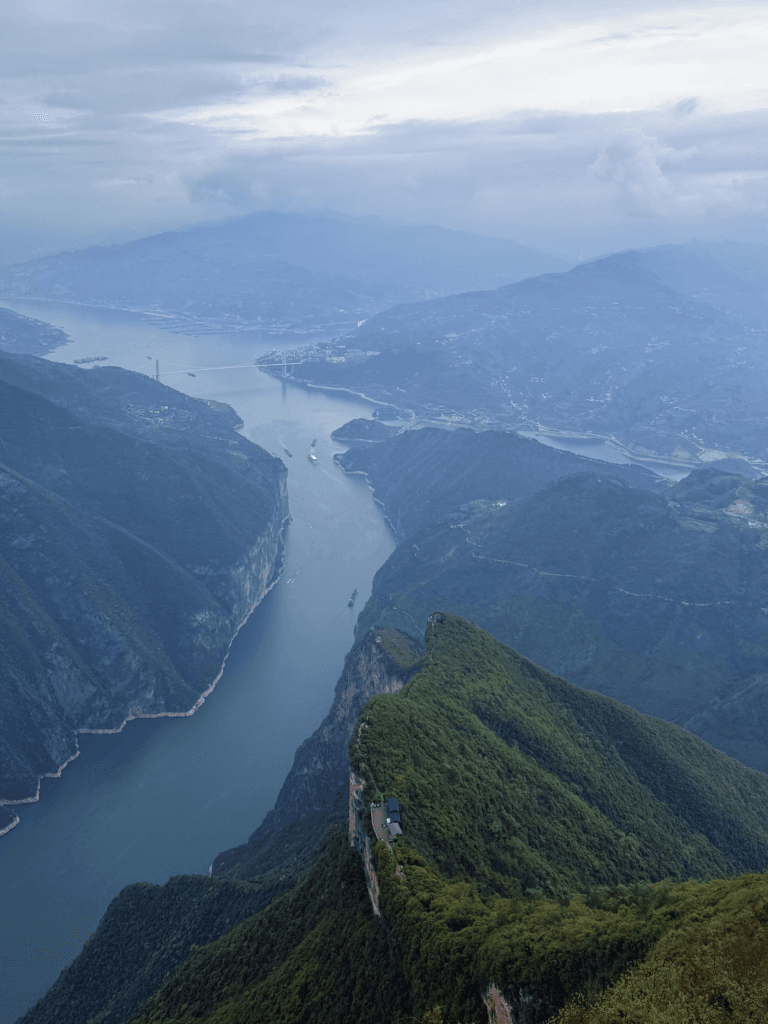
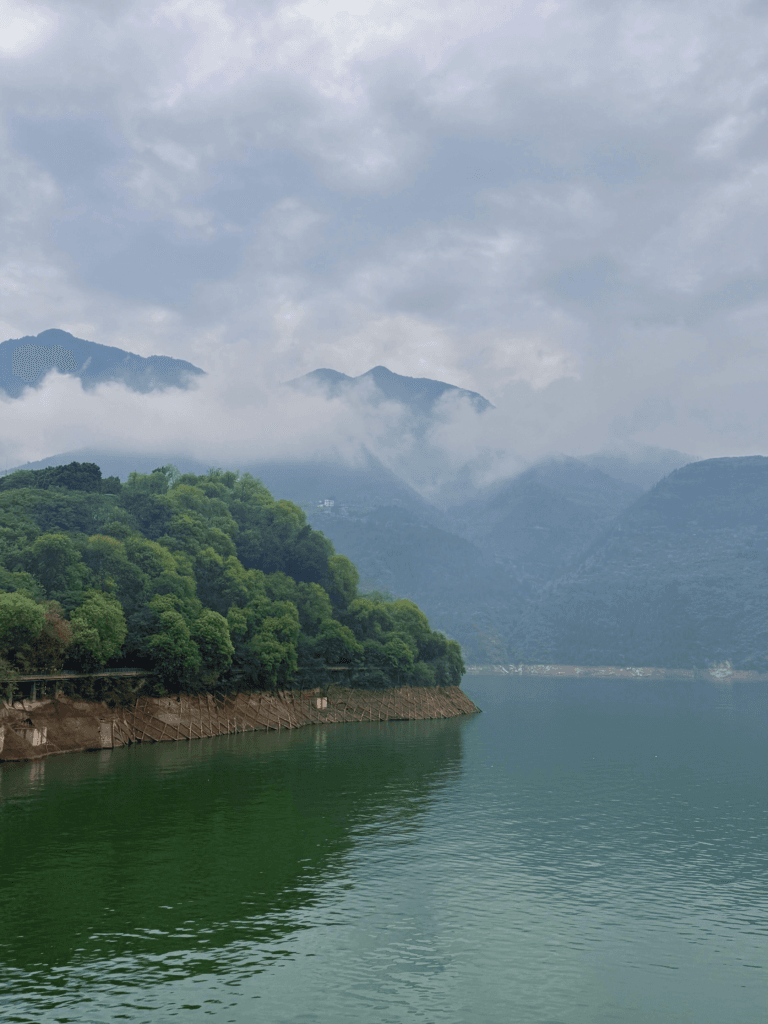
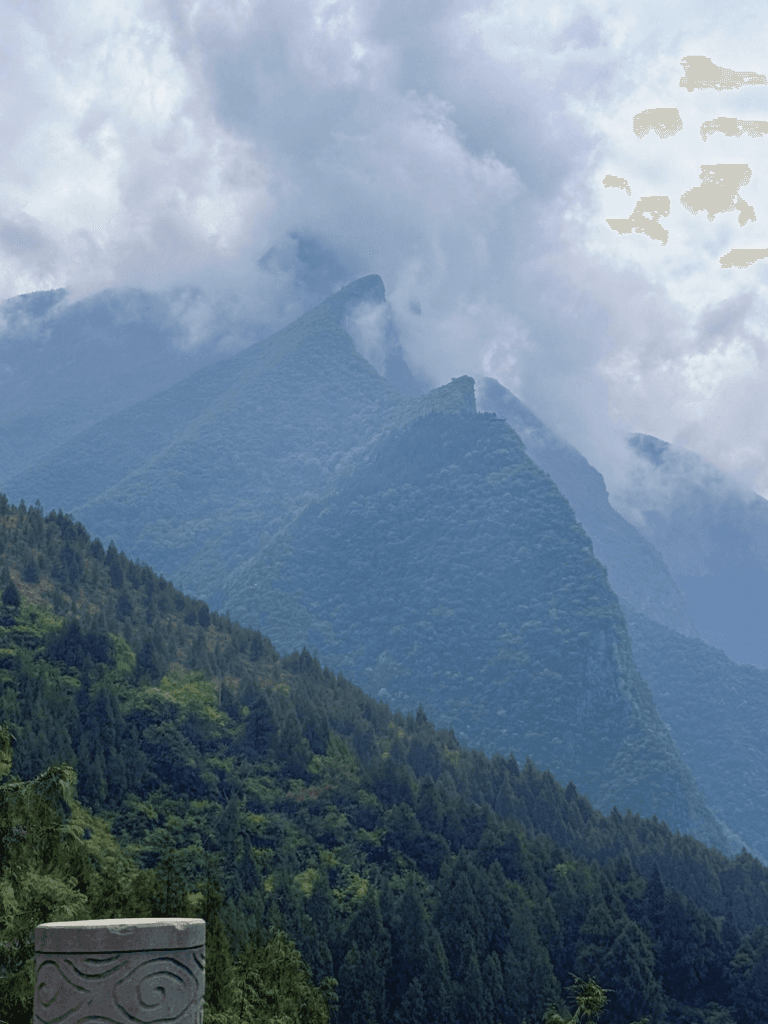

Hiking trail: There’s a 6.6 km trail with 66 switchbacks. It takes 2 to 3 hours one way for a fit hiker. I didn’t do the full walk – my knees wouldn’t thank me – but others on the trail said it was “challenging but completely worth it”. Some hikers reported the path is not always clearly marked in English, so take screenshots of the route before you go.
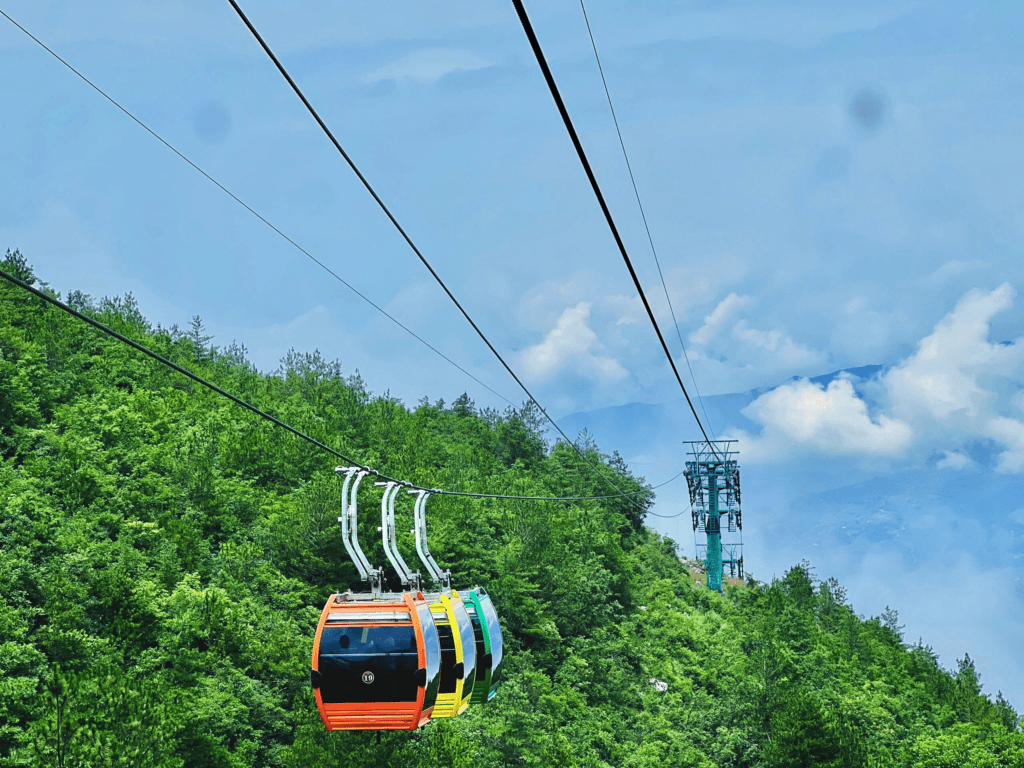
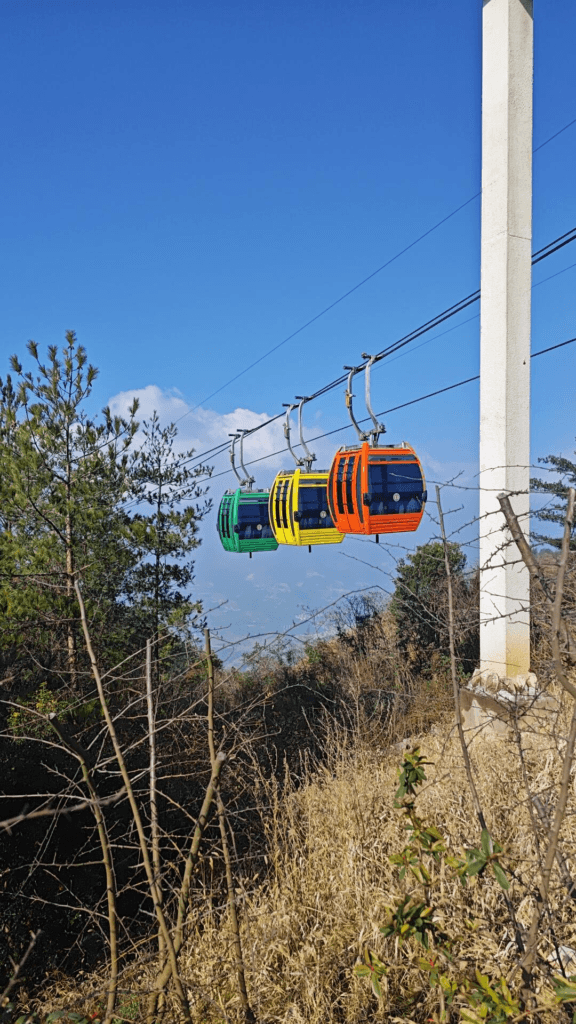
My approach: took the cable car up, hiked part of the way down, then took the cable car back up for the return. It gives you the best of both worlds – the effort where you want it, the engineering where you don’t.
What you’ll see at the top
- 360-degree panoramic view of the Yangtze River, Qutang Gorge, and the Kuimen Gate
- Glass walkway extending over the edge – not for the faint-hearted, but safe
- Drum Altar and Music Ancestor Statue – this area is considered the birthplace of ancient Chinese music
- The famous view of Kui Gate – same as the 10 yuan note, but from above
How to get there
Option 1 – Tourist Shuttle Bus – cheapest, but read the fine print
This is the official shuttle, and it’s your most budget-friendly move.
How it works: From Fengjie High-Speed Rail Hub Transfer Center (located right at the train station), you can catch a direct shuttle to either Bai Di Cheng or Three Gorges Summit (get off at “Shimiao” for the cable car). The fare is ¥30 per person one way.
WeChat Mini Program – Search for “Fengjie Wenlv” (奉节文旅). This is the official local tourism account. The interface is in Chinese, but you can figure it out with a translation app. Tickets can be booked directly there.

Opition 2:Hire a driver for the whole day. It sounds expensive but when you split it between 2–3 people, it becomes cheaper than multiple taxi fares and waiting around.
Warning from my own experience
Check the weather forecast before you go. If there’s fog or rain, you’ll see exactly nothing at the top. I saw photos from someone who went on a foggy day – white cloud in every direction, ¥20 wasted, and a long wet hike. Go on a clear day or don’t go at all.
❓ FAQ – Is Fengjie right for you?
🚐 Tour group or DIY?
DIY is doable but requires effort. You’ll handle your own train tickets, taxi negotiation, food ordering, and route planning. If you’ve travelled independently in Asia before, you can manage. If this is your first time in China, it’s a lot.
A small group day tour from Fengjie solves most problems: If you are departing from Chongqing, you must arrive at Fengjie High-Speed Railway Station before 9:00 AM to be picked up by the group tour driver.However, there are no English-speaking tour groups.Furthermore, all tour groups depart from Fengjie; you must first make your own way to Fengjie before you can join a tour group.
💡 Local tips that will save you
- Cash is still king in Fengjie. Alipay and WeChat Pay work, but small street vendors and some taxi drivers prefer cash. Carry about ¥200–¥300 in small notes.
- Pack proper footwear. Hiking boots or sturdy walking shoes. The paths are rocky and often wet. I saw someone in flip-flops near the summit. I still think about them sometimes.
- Bring water and snacks. There are vendors but not many. On the summit trail, there are maybe 2–3 spots selling drinks.
- The summit is windy. Even on a warm day, bring a light jacket. You’ll thank me when you get to the glass walkway.
- Check the fog forecast. Visibility is everything. A clear day makes the experience, I’m not joking.
- Learn a few Mandarin phrases. “Duoshao qian?” (How much?), “Xie xie” (Thank you), “Piao” (ticket). Locals are friendly and will help if you try.
- Bring your passport every day. You need it to buy attraction tickets and check into hotels. No exceptions.
☀️ Best time to visit
Spring (Mar–May) and autumn (Sep–Nov) are the sweet spots. Temperatures are mild, humidity is low, and the sky is clearer.
Autumn has the added bonus of red leaves on the mountainsides. The local Red Leaf Festival in late autumn draws some crowds, but the colours are spectacular.
Avoid summer (Jun–Aug) unless you really like heat and thick humidity. Both are present. Also avoid the first week of October (China’s National Day holiday) – Chinese domestic tourism surges and everything is packed.
📱 The travel checklist – what you need before you book
What to pack:
- Sturdy walking/hiking shoes
- Light jacket or fleece (summit gets windy)
- Rain jacket (mountain weather is unpredictable)
- Daypack with water and snacks
- Sunscreen + hat (sun at elevation is stronger than you think)
- Camera or phone with good zoom for faraway shots
- Power bank – you’ll be taking lots of photos
🧳 Trip Planning Essentials
✈️ Flights, Trains & Hotels
Everything you need for your China journey. Book with Trip.com for the best local coverage and seamless English support.
🎟️ Tours & Attractions
Skip the queues and secure your spot at the Great Wall or Disneyland. Discover handpicked experiences on Klook or GetYourGuide.
💰 Payments & Currency
Cash is rare in China! Link your Wise card to Alipay or WeChat Pay to pay like a local with the lowest exchange fees.
📑 Visa & Travel Insurance
Don’t let the unexpected ruin your trip. Get your travel insurance and visa consultation sorted before you fly.
Disclosure: Some of the links in this guide are affiliate links. If you book through them, I earn a small commission at no extra cost to you. It helps keep this blog running and me travelling. I only recommend what I’ve used and trust. I’ve hiked these trails, slept in these towns, and paid for these tickets. This is my honest, boots-on-the-ground advice.