Chongqing is the kind of city that hits you in the face—in the best possible way. The skyscrapers shoot out of cliffs. The elevators take you to highways. And the humidity wraps around you like a warm, wet blanket the second you step outside.
But here’s the thing no one told me before my first trip: Chongqing wakes up loud, fast, and red.
Before you even make it to the famous hotpot (and trust me, you will), you need to understand one simple truth about this city. Breakfast isn’t cereal or toast here. It’s a ritual. And it’s almost always spicy.
If you’re visiting Chongqing for the first time, here’s everything you need to know about eating breakfast like a local—without getting completely destroyed by the heat.
🌶️ The Big One: Chongqing Xiaomian (重庆小面)
Let’s start with the king. Xiaomian literally means “small noodles,” but don’t let the name fool you. The flavor is anything but small. This is the breakfast of choice for millions of Chongqing locals every single day, and once you try it, you’ll understand why.
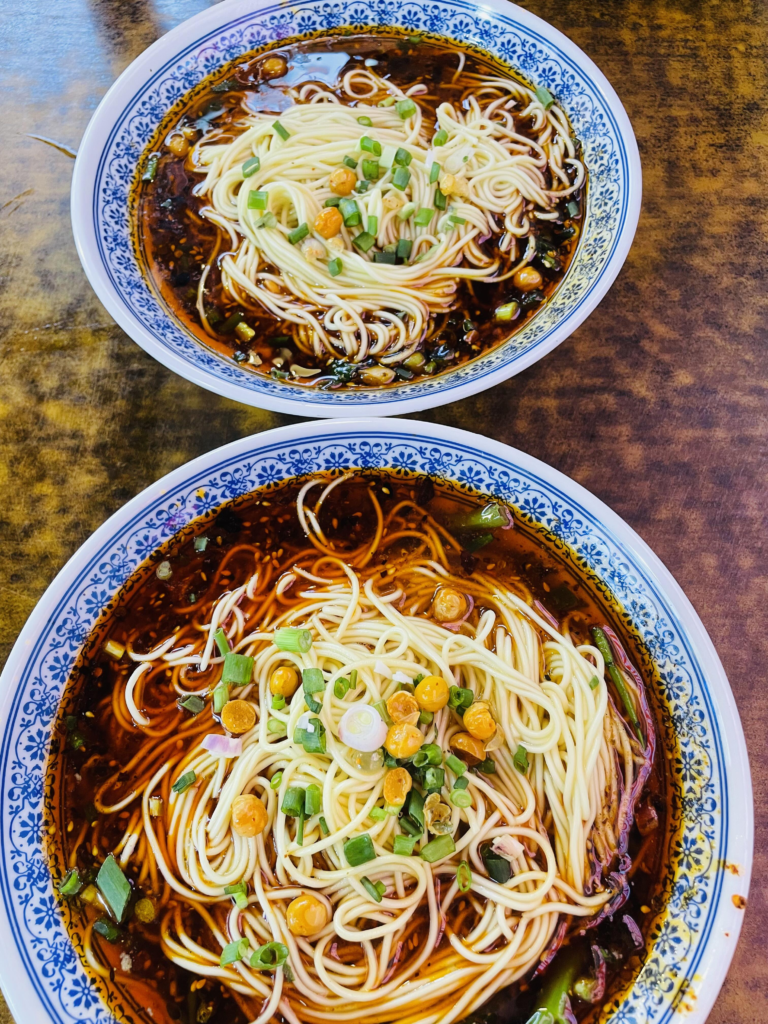
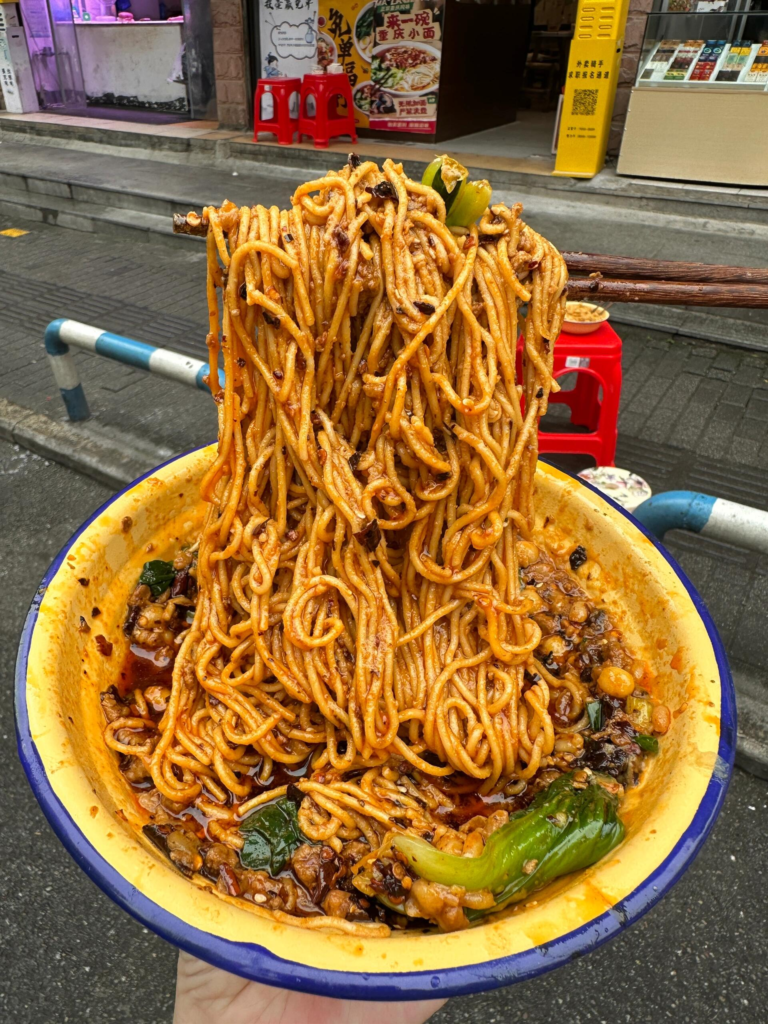
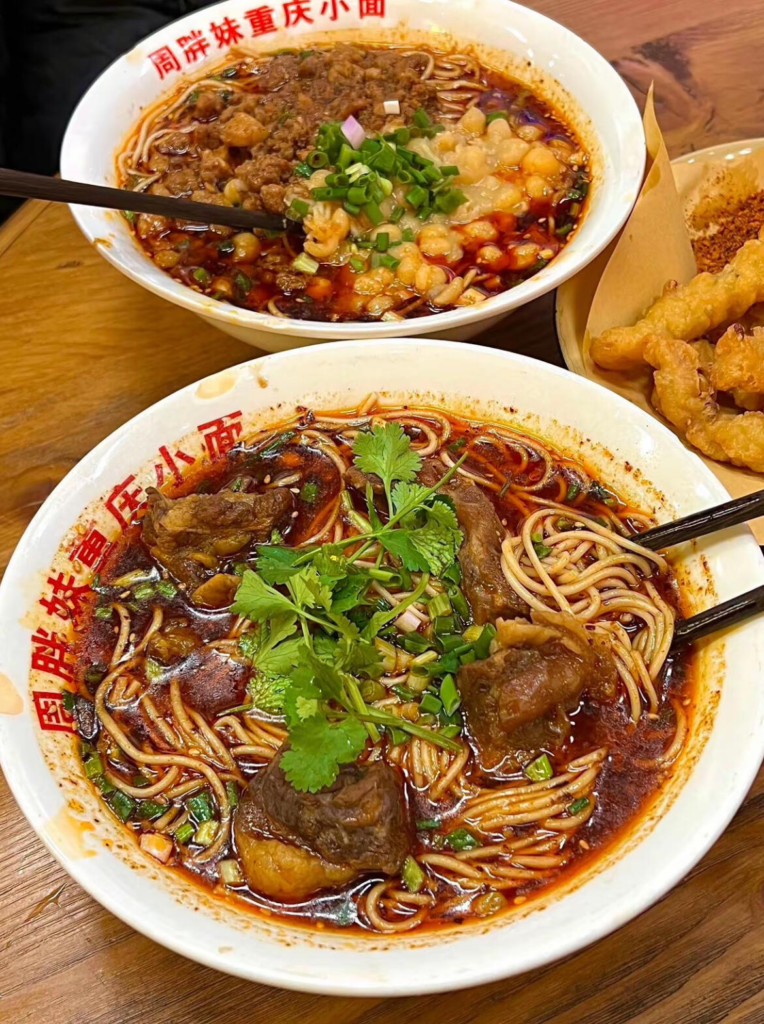
Here’s what makes it special. Unlike the chewy, hand-pulled noodles you find in northern China, Chongqing noodles are thin alkaline wheat noodles that stay springy even after sitting in hot soup. But the real magic isn’t in the noodles themselves—it’s in the sauce.
A proper bowl of xiaomian uses more than ten different seasonings: chili oil, Sichuan peppercorn powder, sesame paste, garlic water, ginger water, soy sauce, vinegar, pickled mustard greens, crushed peanuts, and sometimes a little lard for richness. The result is a complex punch of spicy, numbing, savory, and fragrant all at once. If you’ve never had Sichuan peppercorns before, get ready for a weird sensation. It’s not like chili heat. It’s a fizzy, tingly numbness that spreads across your tongue and lips. Some people hate it at first. Most people get addicted by day two.
You can order xiaomian in two main styles: with broth (汤面) or without broth (干溜). The dry version is more intense—every strand of noodle is coated in concentrated sauce, like a spicy carbonara. The soup version is a bit gentler, especially if you’re new to the game.
Price range: ¥6–15 (less than $2–$2.50)
🥟 Red Oil Wontons (红油抄手) – The Gentle Heat
If you’re nervous about the intensity of xiaomian, red oil wontons might be your gateway drug.
These are called chaoshou in Chongqing, and they’re basically the local version of wontons. Thin, silky dumpling wrappers wrapped around a juicy pork filling, served in a bowl of chili oil, vinegar, and broth. The heat is there, but it’s gentler than the noodles. The vinegar cuts through the oil and gives it a bright, almost tangy finish.
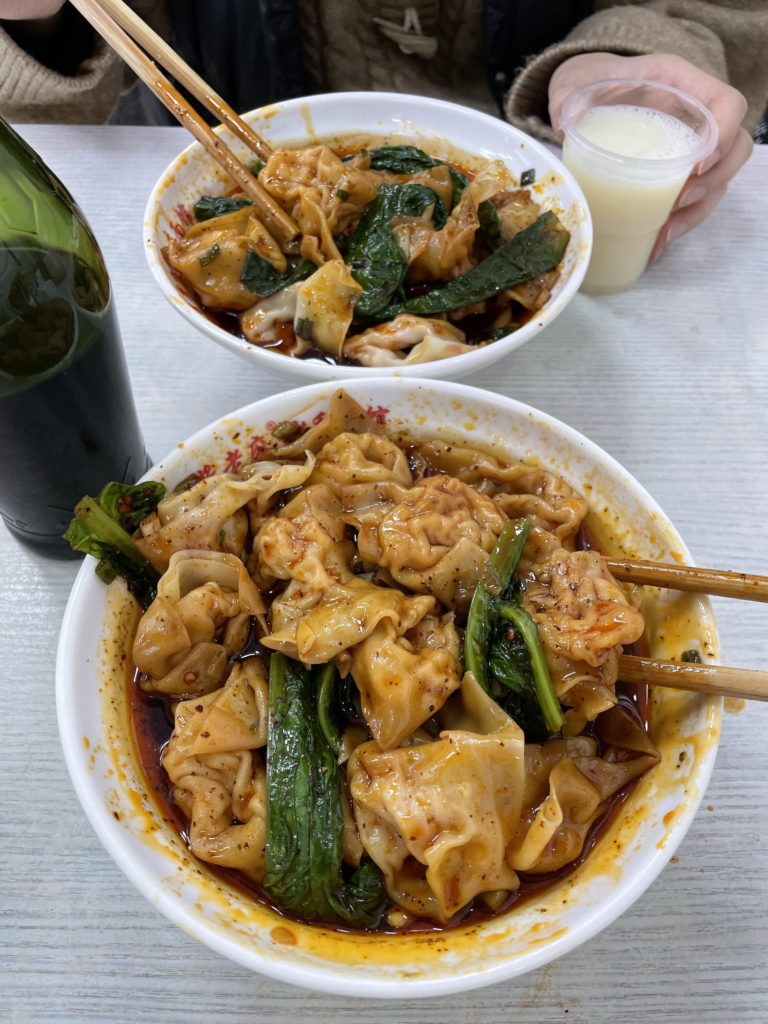
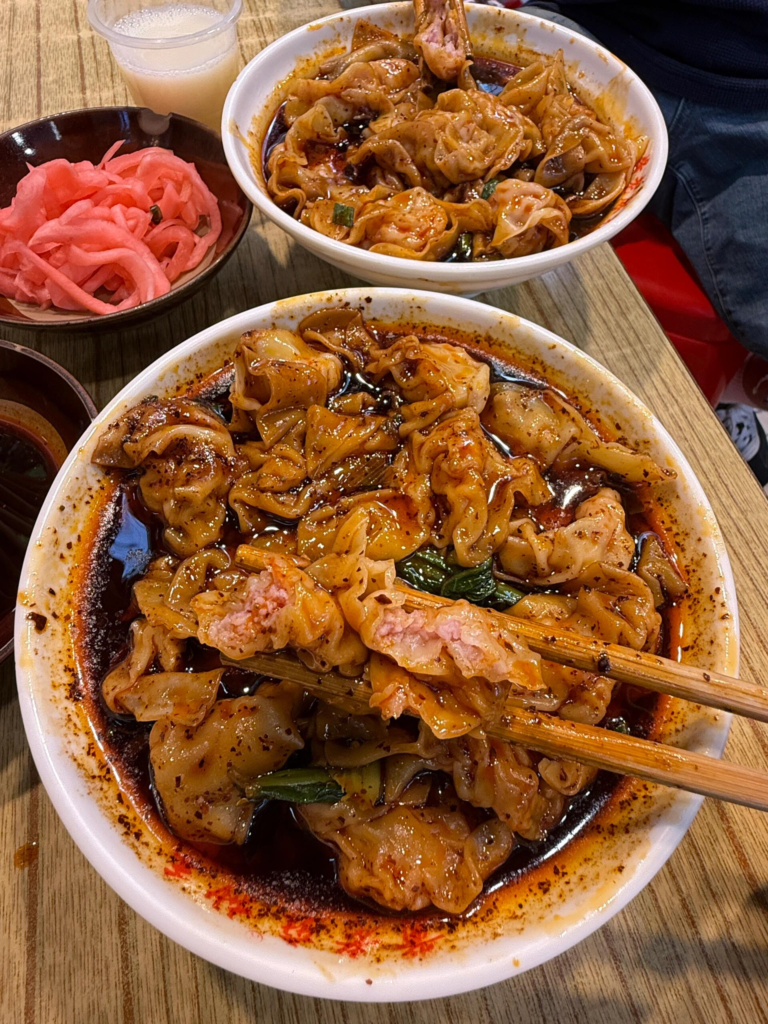
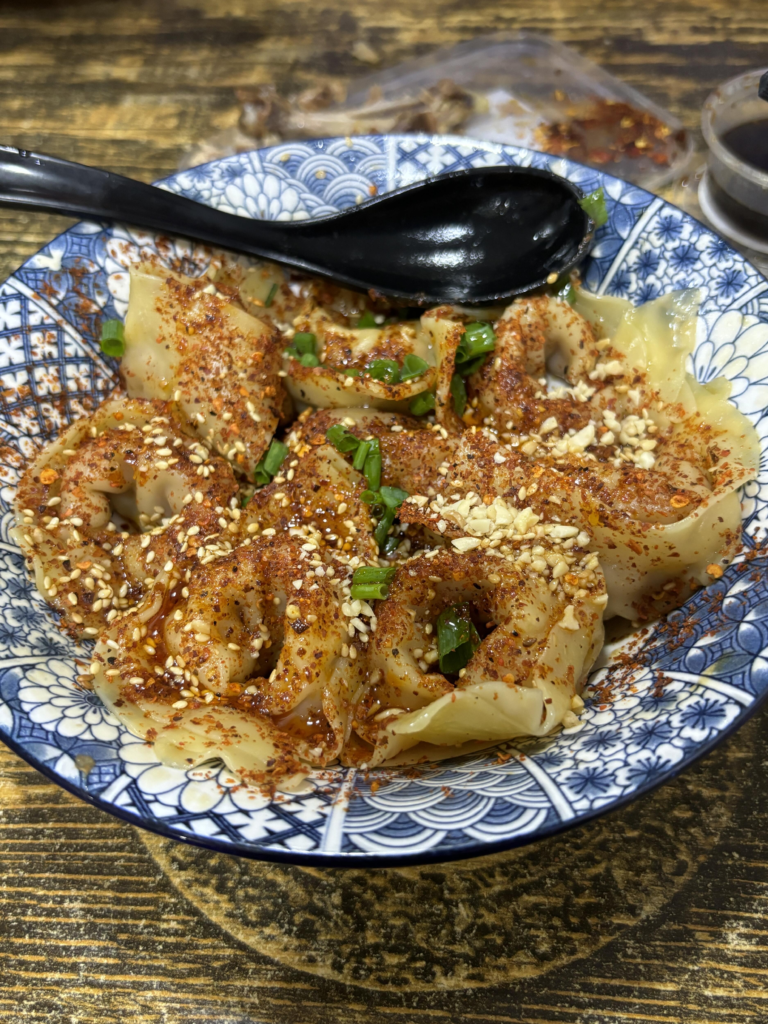
I remember sitting at Hejiaxian Wontons in Lianglukou around 7:30 AM, watching office workers in suits and grandmothers with shopping bags all slurping from the same plastic bowls. The owner didn’t speak a word of English, but she pointed at the La Ma (spicy & numbing) option, then at Tengjiao (rattan pepper), and gave me a thumbs up for both. She was right.
What makes them special: The wrappers are thinner than what you’re used to. They practically melt in your mouth. And the pork filling is juicy enough that you get a little burst of savory liquid with every bite.
Price range: ¥10–15
Where to find them: Look for shops with steaming baskets visible from the street. If you see elderly locals lining up at 7 AM, you’re in the right place.
🥣 Oil Tea (油茶) – Don’t Let the Name Fool You
This one confused me for a while. Oil tea has nothing to do with tea. In fact, it has nothing to do with oil either, in the way you’re probably thinking.
Here’s what it actually is: a warm, thick rice porridge (made from ground rice, slow-cooked until it’s silky smooth) topped with crispy fried dough twists called sanzi, plus chili oil, Sichuan pepper, crushed peanuts, pickled mustard greens, and scallions.
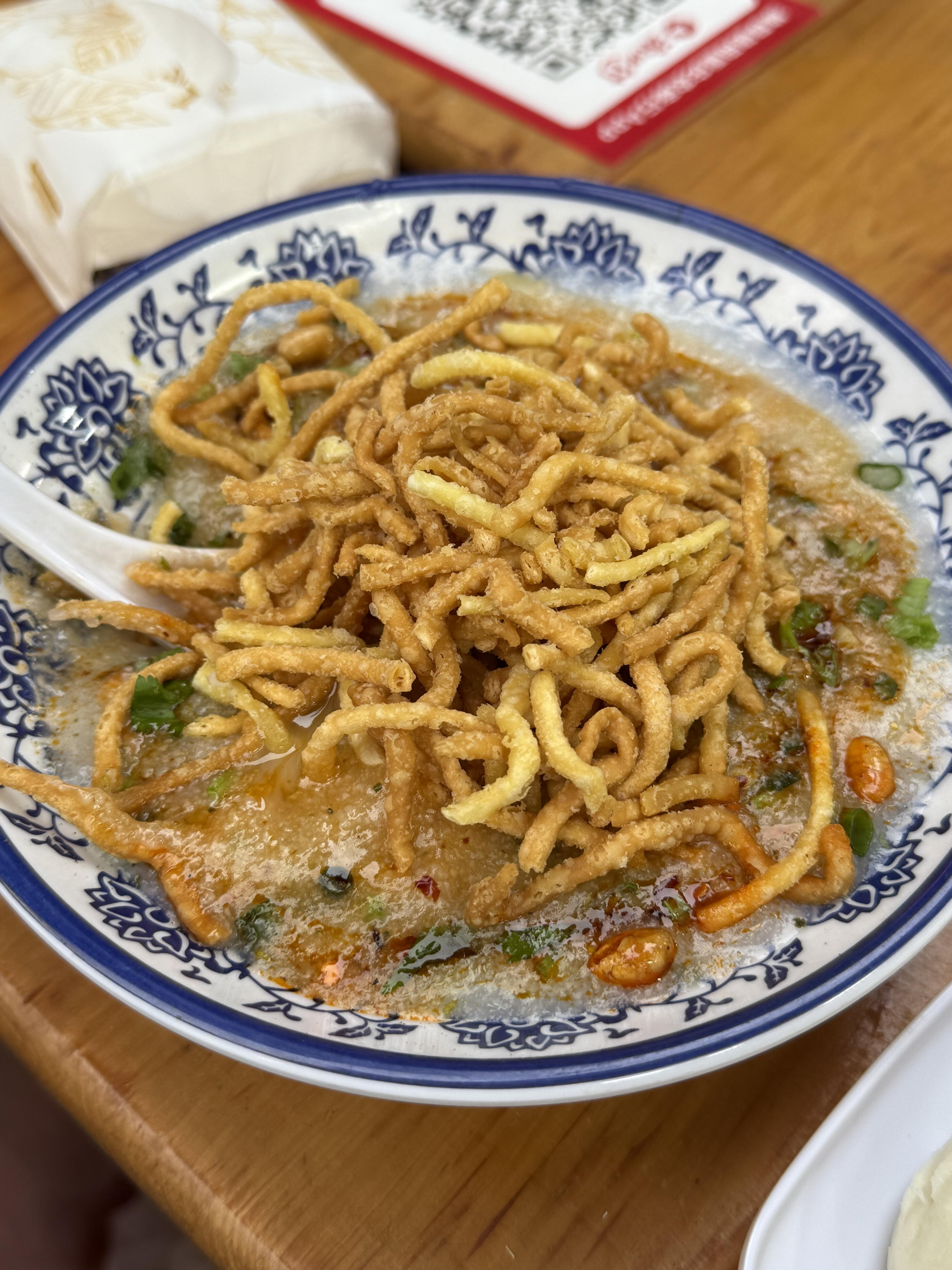
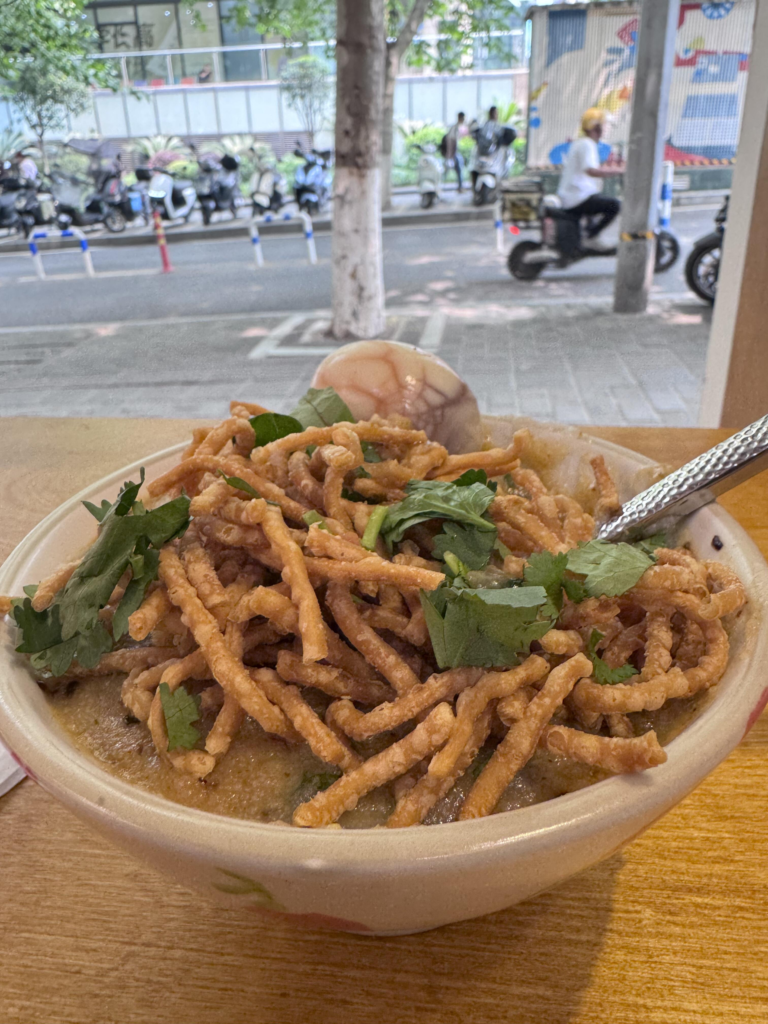
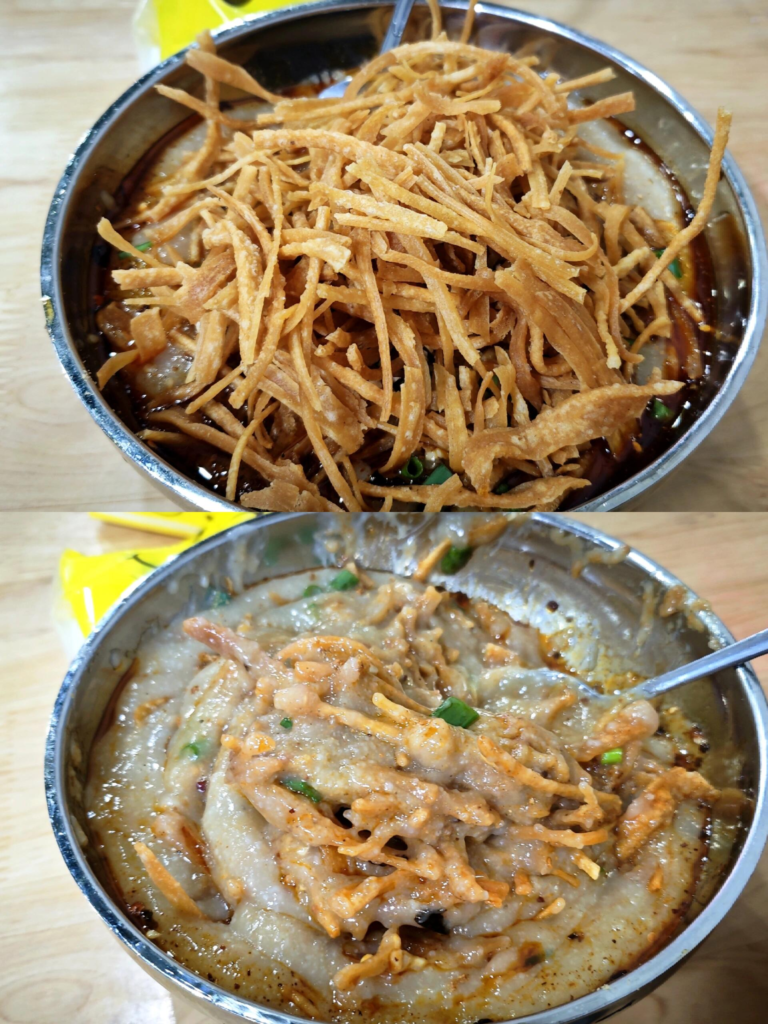
You mix everything together until the crispy sanzi are partially softened but still retain some crunch. The contrast between the smooth, warm porridge and the crispy, salty toppings is genuinely addictive. It’s also the least spicy option on this list, so if you’re traveling with someone who has a low heat tolerance, this is their best friend.
I found my favorite bowl at Old Chongqing Oil Tea, tucked in a small alley behind the Bayi Street Food Market. No sign in English. Just a little handwritten price list and a woman who’s been making the same recipe for thirty years.
Best part about oil tea: It’s incredibly comforting on a chilly or humid morning. The warmth spreads through your chest and stays with you.
Price range: ¥5–8 (less than $1.50)
🍙 Glutinous Rice Roll (糯米团) – The Portable Hero
Need breakfast on the go? This is your answer.
A glutinous rice roll is exactly what it sounds like: a layer of soft, sticky glutinous rice flattened out, wrapped around a crispy fried dough stick (youtiao), then rolled in soybean powder and sometimes sprinkled with sugar or a tiny bit of pickled mustard greens for balance.
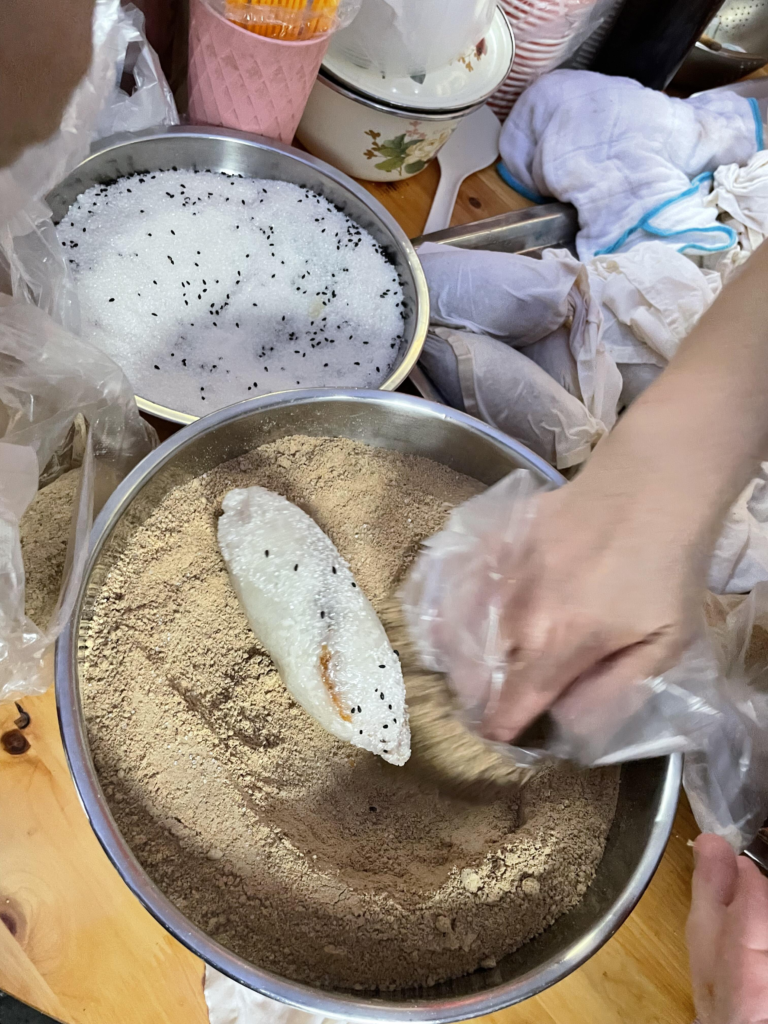
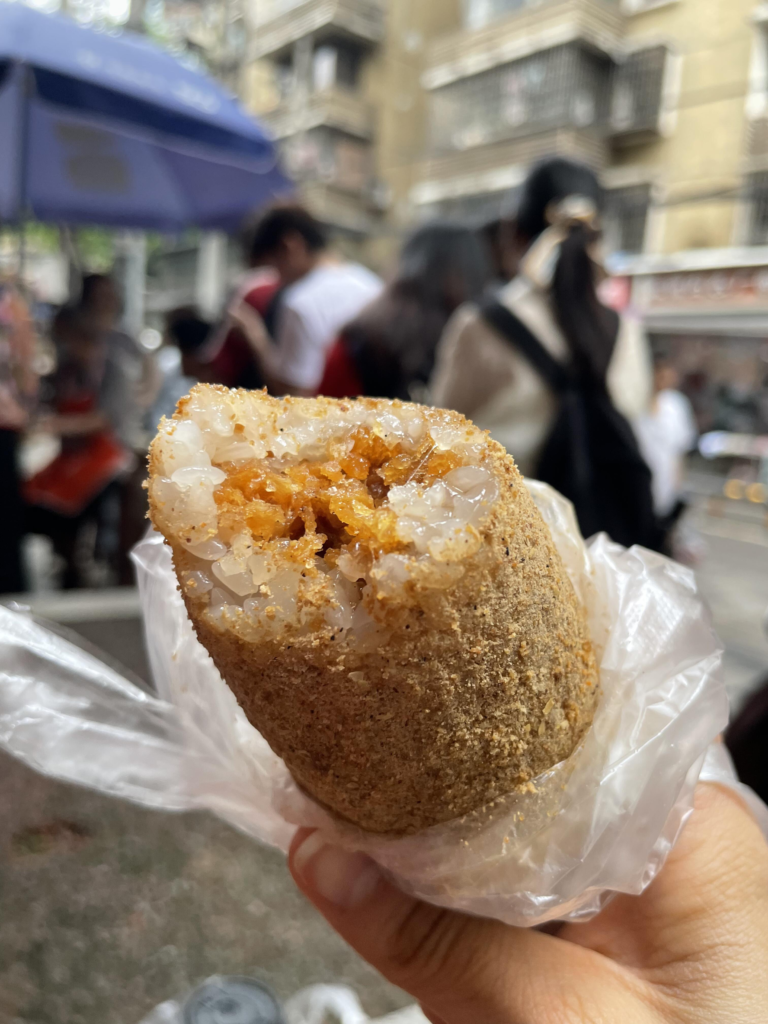
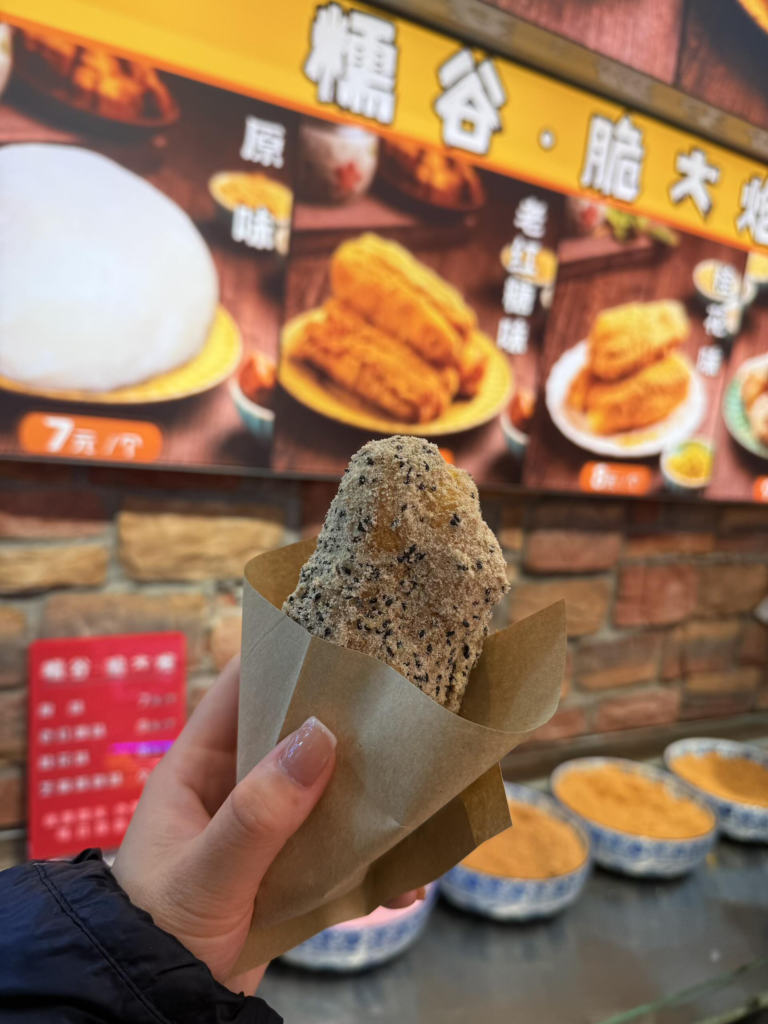
The texture is incredible. The outer rice is warm and slightly sticky. The inner fried dough is shatteringly crisp. The soybean powder adds a nutty, slightly sweet finish. You can eat it with one hand while walking, which makes it perfect for those mornings when you’re rushing between sights.
The honest downside: It’s heavy. One roll is surprisingly filling, so don’t plan on eating much else for a couple of hours. And it’s not particularly flavorful in the spicy sense—this is more about texture than heat.
Price range: ¥5–8
Where to find them: Any breakfast street stall. Look for steam rising from bamboo baskets.
🍜 Other Breakfast Gems Worth Trying
Dou hua fan (豆花饭): This is a bowl of silky, soft tofu served over rice with a side of spicy dipping sauce. It’s more common in the surrounding areas than in central Chongqing, but if you see it, try it. The tofu is so tender it barely holds its shape.
Pea and Pork Organ Noodles (豌杂面): Don’t let the “pork organ” scare you. This is a rich, comforting bowl of noodles topped with slow-cooked yellow peas that have practically melted into a paste, plus small pieces of pork intestine. It’s one of the most flavorful noodle dishes in the city, and it’s a local breakfast favorite.
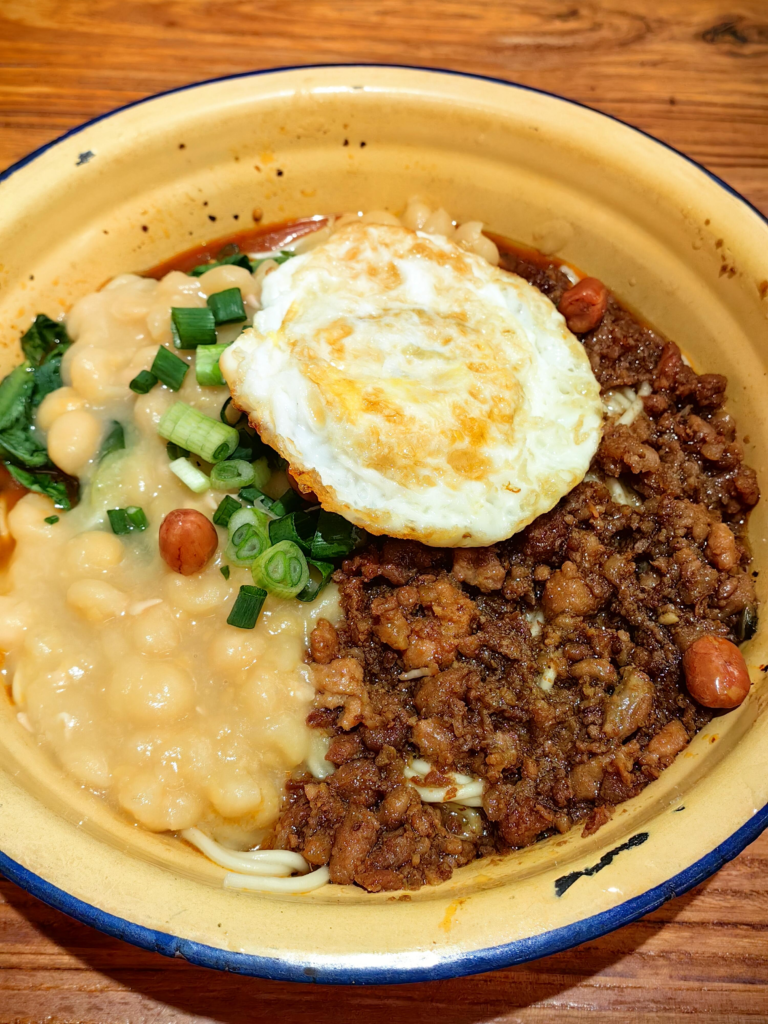
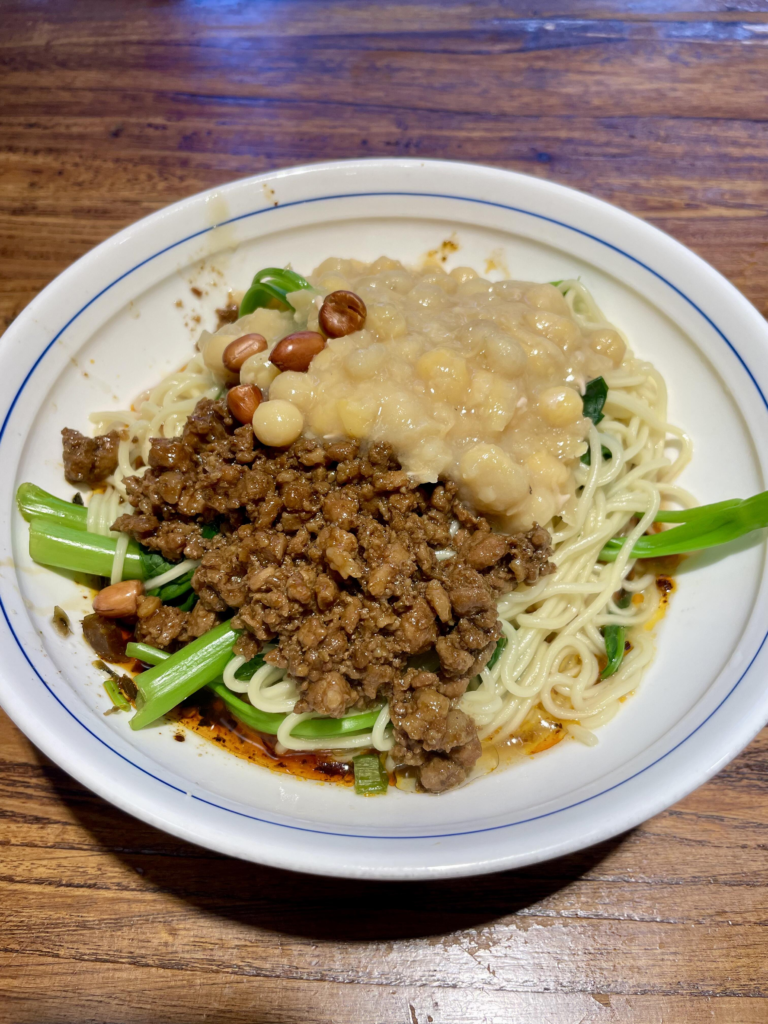
Price range for both: ¥8–15
🪑 Real Talk: What to Expect at a Chongqing Breakfast Joint
Let me be honest with you. This is not a sit-down-with-a-menu-and-a-fork kind of experience.
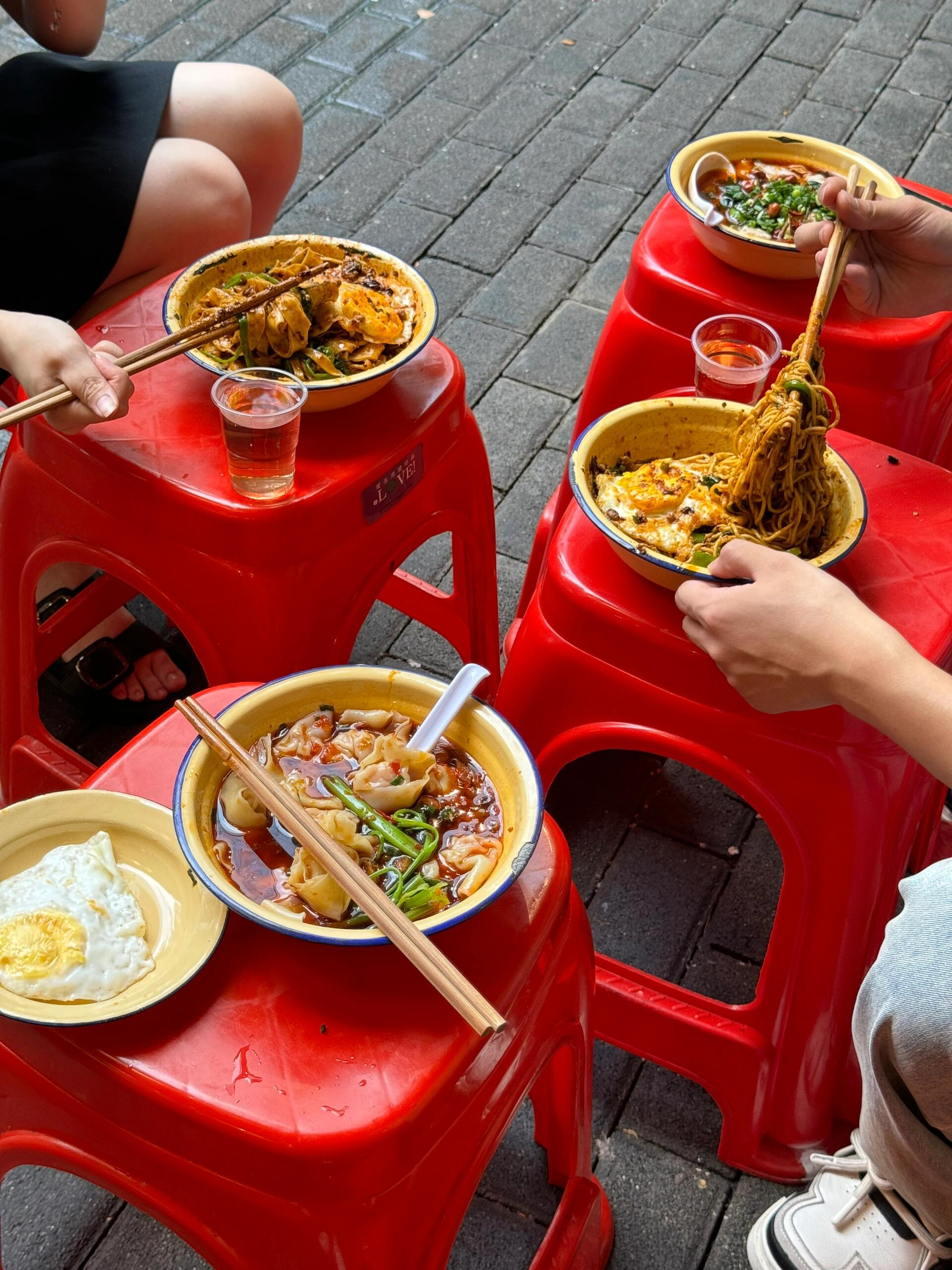
Most breakfast shops in Chongqing are hole-in-the-wall operations. You’ll see a small counter, a massive pot of boiling water, a pile of plastic bowls, and maybe three rickety tables. Half the customers will be standing. The other half will be sitting on tiny plastic stools that are about eight inches tall, balanced on uneven sidewalks.
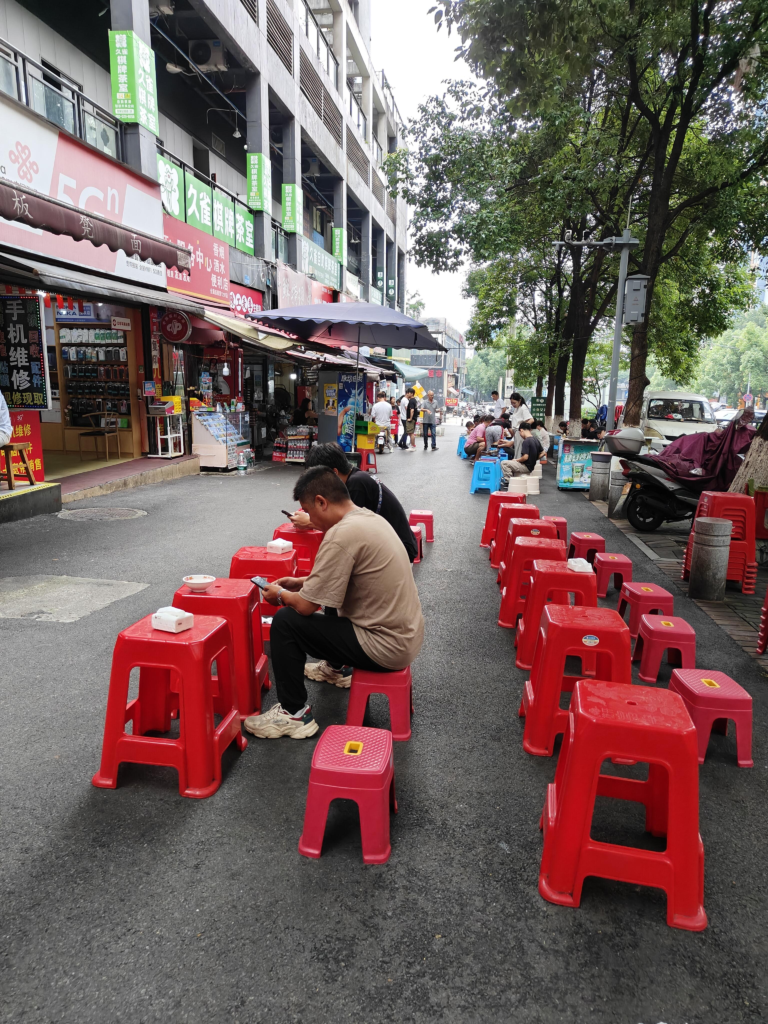
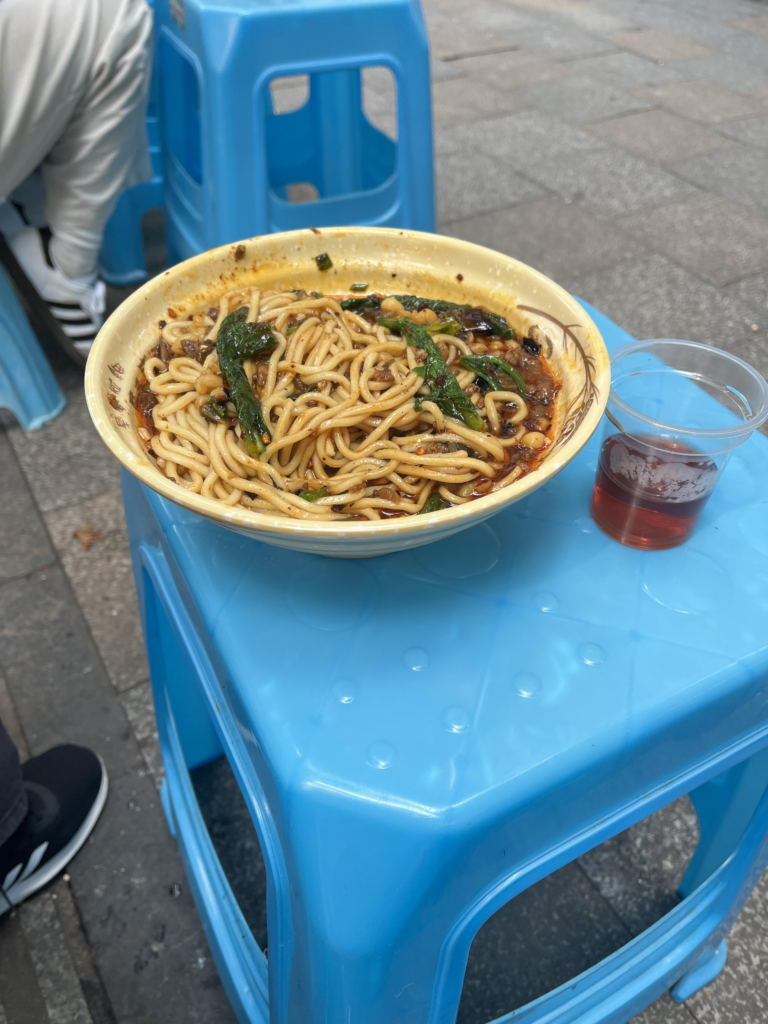
The first time I saw this, I thought I’d walked onto a movie set. Nope. That’s just how Chongqing eats breakfast.
Here’s what to do:
- Look for the shop with the longest line. That’s your sign.
- Point at what everyone else is eating. Gesturing works perfectly.
- When the food comes, find a stool or just stand. No one will judge you.
- Slurp loudly. It’s not rude here—it’s how you show appreciation.
- Pay with your phone (Alipay or WeChat) if you can. Cash still works at most places, but you’ll get weird looks if you try to use a credit card.
A warning about hygiene: Most street shops are perfectly safe, and the food is cooked fresh at high temperatures. But if you have a sensitive stomach, start with the busier shops. High turnover means fresher ingredients.
Lesson : Don’t assume “mild” means mild. In Chongqing, “mild” still has a serious kick. I watched a Canadian traveler order what she thought was a gentle breakfast noodle and end up sweating through three bottles of water. If you’re spice-sensitive, say wei la (微辣) and make a little “small” gesture with your fingers. Or better yet, just get the oil tea.
🤔 FAQ: Is Chongqing Breakfast Right for You?
Q: Can I find English-friendly options?
A: Mostly no. Very few small breakfast shops have English menus or English-speaking staff. That said, pointing and gesturing works shockingly well. If you want a safety net, grab the printable translated menu guide here or join a guided breakfast tour with an English-speaking local.
Q: Is this suitable for kids?
A: Most kids handle it fine if you stick to the milder options. Rice rolls and oil tea are universally liked. Xiaomian at Level 1 spice is manageable for older kids. But I wouldn’t bring a toddler to a cramped street stall at 8 AM—it’s chaotic, hot, and not exactly stroller-friendly.
📍 Where to Find the Best Breakfast in Chongqing
Jiefangbei area: This is the city center. You’ll find plenty of options, but they’re more tourist-oriented. Head to the small alleys behind Bayi Street Food Market for the real stuff.
Lianglukou: This is where I found my favorite spots. Fewer tourists, more locals, and some genuinely hidden gems.
Ciqikou Ancient Town: More atmospheric than authentic, but worth a visit for the experience.
Any wet market: If you really want the local experience, find a morning market. The food stalls at markets are almost always excellent and dirt cheap.
🎒 Final Thoughts
Chongqing breakfast isn’t elegant. It isn’t comfortable. It’s messy, loud, spicy, and served on furniture designed for toddlers. But that’s exactly why you should do it.
This is how Chongqing really lives. Not in the fancy restaurants or the Instagram-famous hotpot joints. But at 7 AM, hunched over a plastic bowl on a sidewalk, watching the city wake up around you.
One bowl of noodles. One tiny stool. One unforgettable morning.
Ready to eat? Book a Chongqing food tour with English-speaking guide here or grab the printable breakfast ordering guide.
🧳 Trip Planning Essentials
✈️ Flights, Trains & Hotels
Everything you need for your China journey. Book with Trip.com for the best local coverage and seamless English support.
🎟️ Tours & Attractions
Skip the queues and secure your spot at the Great Wall or Disneyland. Discover handpicked experiences on Klook or GetYourGuide.
💰 Payments & Currency
Cash is rare in China! Link your Wise card to Alipay or WeChat Pay to pay like a local with the lowest exchange fees.
🌐 Internet & Connectivity
Stay online without the Great Firewall. Get a Saily eSIM and pair it with NordVPN to access Google, Instagram, and WhatsApp instantly.
🚗 Airport Transfers & Ground Transport
Avoid the taxi line hassle. Pre-book a private car transfer or use Amap for a stress-free ride to your hotel.
📑 Visa & Travel Insurance
Don’t let the unexpected ruin your trip. Get your travel insurance and visa consultation sorted before you fly.
Disclaimer: This post contains affiliate links. If you book through these links, I earn a small commission at no extra cost to you. It helps me keep writing honest guides like this one.
Loved reading this! I visited Chongqing last year and completely agree that the breakfast scene is a hidden gem—the spicy noodles really wake you up in a way coffee never could. Do you have a favorite spot for *mianxian* in the old town?
June 14, 2026 at 7:10 am