
📍 Location: Liziba Station, Yuzhong District, Chongqing, China
🗓️ Best time to visit: March–May or September–November (avoid foggy winter and scorching summer).
⏱️ How long: 30–60 minutes for a quick stop, 1.5–2 hours if you want good photos and multiple angles.
👟 Difficulty: Easy – flat viewing platform, short walks, metro access. Stairs only if you hunt for alternative spots.
💰 Budget estimate: Free to watch. Metro ride ¥2–4 (30–60 cents).
Quick take — yes, it’s real. A full‑size light rail train blasting straight through the middle of a 19‑story apartment building. No optical illusion. No Photoshop. And the best part? It’s totally free to watch.
If you’re planning your first trip to Chongqing, this is one of those “I can’t believe this exists” moments you won’t forget. But here’s what most travel blogs won’t tell you — the viewing platform gets packed, the weather matters more than you think, and knowing exactly where to stand makes the difference between a blurry mess and a shot that makes your friends back home ask “wait, are you serious?”
📍 What Is Liziba Station, Really?
Liziba Station is a cross‑platform monorail station on Chongqing Rail Transit Line 2. But that’s the boring description. The actual spectacle: trains glide through the 6th and 7th floors of a residential building like it’s completely normal. Floors 1–5 are shops and station infrastructure. Floors 6–8 are the rail section — platforms, tracks, the whole operation. Floors 9–19 are people’s apartments.
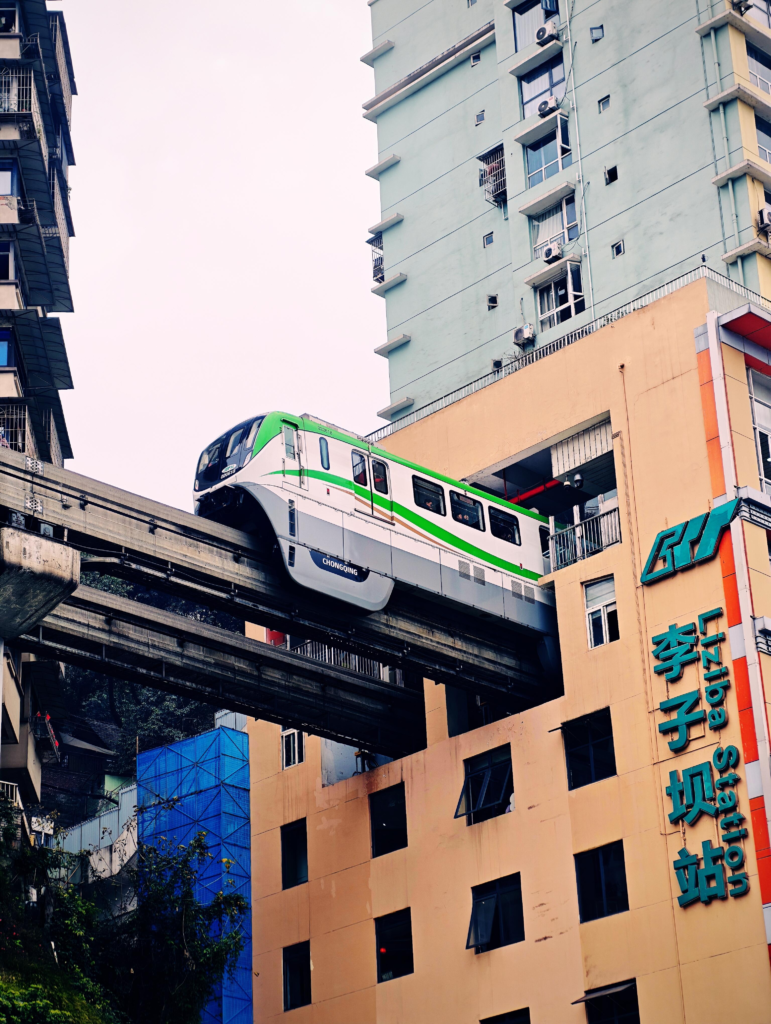
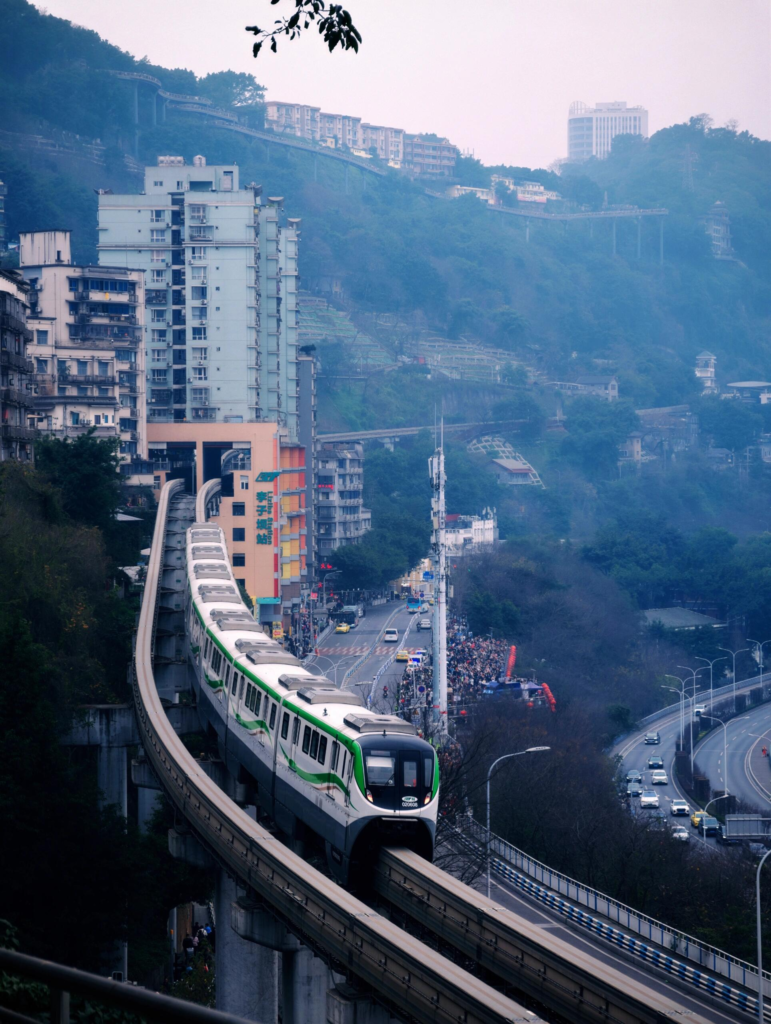
The building and the station were built together — not one after the other. Construction kicked off in 2000, and the station went into operation in 2005. Two teams worked side by side, essentially assembling two Lego structures that interlock perfectly. And yes, residents live directly above the tracks — special rubber tires and noise‑dampening materials keep the noise under 60 decibels, quieter than street traffic.
⏱️ How Long Should You Spend Here?
Honest answer: 30 minutes to 1 hour if you just want to see the train pass through, snap a few photos, and move on.
But here’s my recommendation after doing it both ways — give it 1.5 to 2 hours. Here’s why:
- Trains come every 3–5 minutes, so you’ll have about 10–20 passing opportunities in an hour.
- The best shot isn’t your first try — you’ll want to experiment with angles and timing.
- There are multiple photo spots worth walking between.
- The riverside walk nearby is genuinely pleasant, and you can grab a cold drink or snack after you’re done.
If you’re squeezing this between other attractions, yes — you can do it in 30 minutes. But rushing it misses half the experience.
☀️ What Weather Works Best?
Clear days are great for crisp, postcard‑style photos. Blue sky, bright train, sharp lines.
Overcast or drizzly days actually create a moodier, more atmospheric shot — the low clouds and mist fit Chongqing’s natural aesthetic. Some photographers prefer this because the soft light reduces harsh shadows.
Avoid thick fog in winter. Chongqing is nicknamed the “Fog City” for a reason — winter fog can be so heavy that you can barely see the building from the viewing platform, let alone the train entering it. If you’re visiting between December and February, check the morning visibility before heading over.
Rain isn’t a dealbreaker — transparent umbrellas as props actually look great in photos. Just bring an umbrella (obviously) and wipe your camera lens before shooting.
🕐 Best Time to Go
| Time | Experience |
|---|---|
| 7:00 AM – 9:00 AM | Fewest crowds, soft morning light, trains running frequently |
| 9:00 AM – 11:00 AM | Still manageable, good lighting |
| 11:00 AM – 2:00 PM | Peak crowd time — every spot gets packed, harshest overhead lighting |
| 3:00 PM – 5:00 PM | Golden hour approach — my personal favorite for soft, flattering light |
| 5:00 PM – 7:00 PM | Sunset shots from certain angles, but crowds return as evening tourists arrive |
| Evening (after dark) | Train is lit, building windows glow — different vibe entirely, but harder to photograph without a tripod |
Avoid weekend afternoons if you hate crowds. Seriously. The viewing platform gets shoulder‑to‑shoulder between 1 PM and 3 PM on Saturdays and Sundays. Go on a weekday morning if you have the flexibility.
📜 The Story Behind the Madness
The design dates back to 1998, when engineer Ye Tianyi from Chongqing University took over as structural designer for the Liziba Station project. Here’s what makes the backstory so good:
The real estate company already owned the land. The rail company needed to run Line 2 through that same spot. Instead of fighting over who got the space, they decided to share it — the building would house the station, the station would run through the building.
A German engineer in France ran computer simulations to prove it was structurally safe. The two construction teams broke ground at the same time in 2000 and built simultaneously.
The result? China’s first — and most famous — “station‑building coexistence” project. It became a national landmark for China’s 70th anniversary and has been featured in films like I Belonged to You and Chongqing Hot Pot.
And the most impressive part to me? Residents living directly above the train line actually supported the design after the initial concerns faded — they now have one of the most famous addresses in China.
🚇 How to Get There
By Metro (My Strongest Recommendation)
Take Chongqing Rail Transit Line 2 to Liziba Station.
- Get off at the station (yes — you’ll be inside the famous building)
- Take Exit 1 for the main viewing platform
- Take Exit B for alternative photo spots (more on this later)
By Taxi / Ride‑Hailing
Taxis and Didi (China’s Uber equivalent) are widely available. Search “Liziba Station” or show the driver: 李子坝轻轨站.
Heads‑up: Driving and parking near Liziba is hard. Limited parking, constant traffic, tourist buses clogging the surrounding streets. I don’t recommend renting a car just for this spot unless you’re on a multi‑stop tour. The metro is genuinely easier and cheaper.
By Tour Bus
Some half‑day and full‑day Chongqing tours include Liziba as a stop. If you’re on a group tour, they’ll handle the logistics — but you’ll be there during peak hours with everyone else from your bus. Worth it for convenience; less ideal for quiet photography.
💰 Cost & Tickets
| Expense | Cost |
|---|---|
| Watching from viewing platform | Free |
| Riding Line 2 | ¥2–4 (30–60 cents) |
| Train ride through the building | Included in your metro fare |
| Reservation required | No |
| Opening hours | 6:30 AM – 11:30 PM (varies slightly by season) |
No ticket booth. No entry fee. Just show up.
📸 What to Expect & What’s Worth Looking Forward To
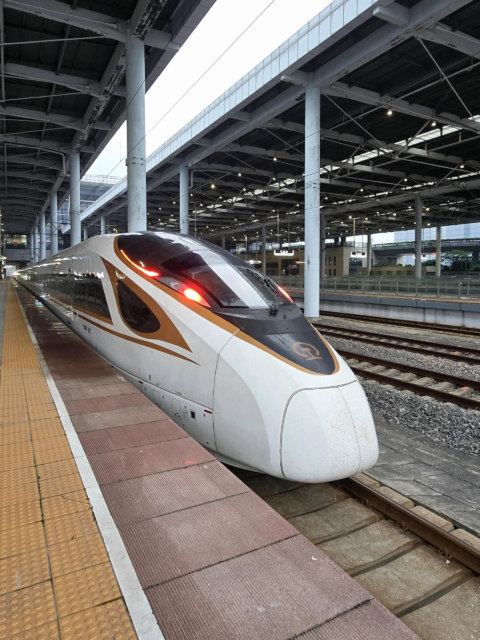
- The train pass itself — every 3–5 minutes, a light rail train glides into the building’s opening, pauses at the station, and glides back out. From the viewing platform, it looks like the building is swallowing and spitting out a train.
- The “scale of it” — photos don’t fully prepare you for how large both the building and the train are. When you’re standing there watching a full‑size train disappear into a residential tower, it genuinely makes you smile.
- Resident life above the tracks — look up and you’ll see laundry hanging on balconies, potted plants, maybe someone watering flowers. There’s something oddly wholesome about everyday life happening directly above a rushing train.
- The sound profile — or lack of it. The rubber tires on Chongqing’s monorail system make the train surprisingly quiet. You’ll hear it, but it’s not the screeching metal‑on‑metal of a traditional subway.
- Creative photo ops — the famous “mouth‑eating‑the‑train” pose where you position yourself so the train enters your open mouth. I’ve seen grandmas do this pose. It’s ridiculous and hilarious and everyone does it.
🎯 Best Photo Spots
- The Main Viewing Platform (Exit 1) – The standard spot. You’re directly across from the building, elevated above street level. But expect crowds. Go early or late.
- The Staircase Spot (100m right from Exit 1) – Gives you train + building + Jialing River in one frame. Much better composition.
- The Riverside Opposite – Wide‑angle lens required. River, skyscrapers, and train‑building all together. Best overall shot.
- The Rooftop View (Exit B, Building 119) – Take elevator to 9th floor, then stairs to roof. Experience the train passing directly below you. Be respectful — people live there.
- The Stone Bench Hidden Spot (Exit B) – Quiet, shaded, away from the crowds. You can actually hear the train approach.
- The Little Yellow Building – Right next to the viewing platform. Great for street‑style portraits while you wait.
💬 What Other Travelers Say
Most visitors genuinely love it — the novelty factor is high, and it’s one of those “only in China” experiences that sticks with you.
Common praise: “I couldn’t believe it until I saw it,” “my kids thought it was the coolest thing we saw in China,” “free and easy to access.”
Common complaints: overcrowding on weekends, limited shade on the viewing platform, some confusion about exits. A few reviewers felt 30 minutes was plenty — which is fair. This isn’t an all‑day destination.
My take: Liziba works best as part of a larger exploration of Yuzhong District, not as the sole reason for a long trip across town.
👨👩👧👦 Friendly Rating – Who Is This For?
| Traveler Type | Rating | Notes |
|---|---|---|
| Solo travelers | ⭐⭐⭐⭐ | Very safe, easy to navigate |
| Couples | ⭐⭐⭐⭐ | Fun photo‑op date spot |
| Families with kids | ⭐⭐⭐⭐⭐ | Kids love this. Open space to run. |
| Seniors | ⭐⭐⭐ | Accessible from Exit 1, but limited seating |
| Wheelchair users | ⭐⭐⭐ | Viewing platform accessible; some spots are not |
| English speakers | ⭐⭐ | Few English signs outside the station |
Safety: Extremely safe. Chongqing is low‑crime. The biggest “danger” is street food that’s spicier than you expected.
⚠️ Real Talk – What No One Warns You About
- The hills and stairs. Chongqing is the “8D Mountain City.” Even short walks involve stairs. Wear proper walking shoes — no flip‑flops.
- Summer heat and humidity. July–August: 35°C+ (95°F+) with 90% humidity. The viewing platform has almost no shade. Bring water and a hat.
- No restrooms on the platform. Use the station restroom before you head out.
- Limited English signage. Have Baidu Maps or Google Translate + a VPN ready.
- Vendors selling trinkets. Fine to browse, but don’t expect high quality.
- Peak metro hours (7–9 AM, 5–7 PM) are full of commuters. Avoid traveling with luggage during those times.
📋 Pre‑Trip Checklist (Tools I Actually Use)
| Need | My Recommendation | Why |
|---|---|---|
| Metro payments | Alipay or WeChat (Trip.com guide) | QR codes work everywhere; cash is rarely accepted |
| Refillable transport card | Buy a Chongqing metro card | Cheaper than single tickets, works on buses |
| Photo gear | Wide‑angle lens or phone with wide mode | The riverside shot won’t fit in standard lens |
| Staying online | eSIM or local SIM (Airalo) | Google Maps is blocked — you need a VPN or offline maps |
| Half‑day car hire | Private tour with driver | Not for Liziba alone, but for Liziba + Eling Park + Factory, a car saves hours of uphill walking |
| Restaurant cheat sheet | Chongqing hotpot guide for foreigners | Most local spots near Liziba have no English menus |
🗺️ Nearby Attractions (Turn This Into a Half‑Day)
| Attraction | Distance | What It Is |
|---|---|---|
| Liziba Anti‑Japanese War Relics Park | 5 min walk | WWII air‑raid shelters + river views |
| Little Yellow Building (Juelu) | Adjacent | Extremely photogenic vintage building |
| Eling Park | 15–20 min uphill | Traditional Chinese garden, peaceful, panoramic views |
| E’ling No. 2 Factory | 20 min walk from Eling Park | Art space with cafés and rooftops — very “Brooklyn warehouse” energy |
| Flying Tigers Museum | 10 min by taxi | Small museum about US volunteer pilots in WWII |