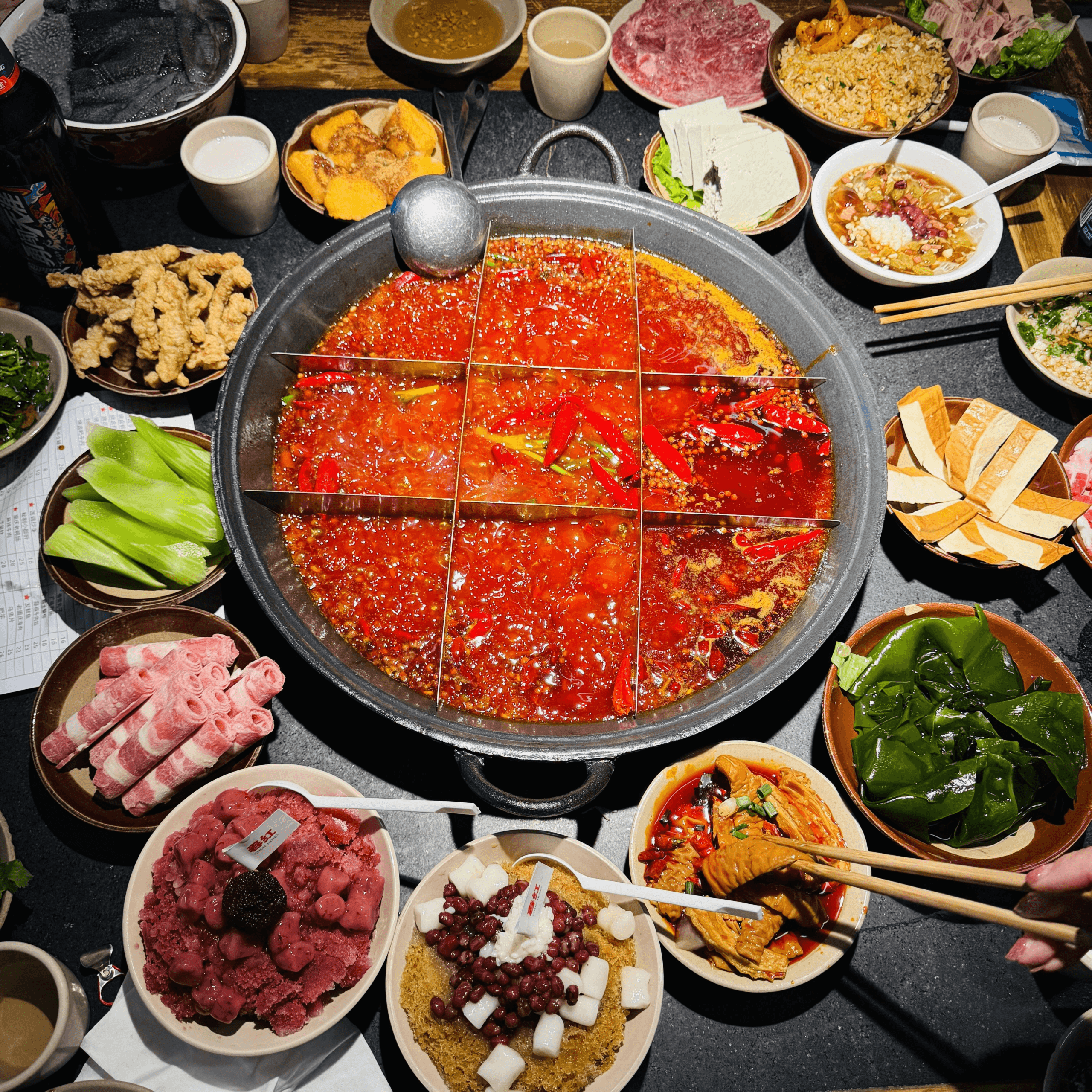
🔥🌶️Let me start with something most guides won’t tell you. The first time I sat down for Chongqing hot pot, I was terrified. A bubbling cauldron of crimson oil, floating dried chilies, and Sichuan peppercorns that locals swore would “numb the pain of a bad day.” I’d read about málà (the famous numbing-spicy combo), but nothing prepares you for the electric tingle that spreads across your tongue, followed by a slow, satisfying warmth that travels down your throat.
But here’s the thing—Chongqing’s food scene is so much more than hot pot. And if you’re a first-time visitor, you’ll want to know what actually works as a proper meal. Not snacks. Not appetizers. But honest-to-goodness, sit-down, “this is dinner” dishes that’ll leave you full, happy, and maybe a little sweaty.
So let me walk you through six heavy hitters of Chongqing cuisine. Each one qualifies as a meal on its own. I’ve eaten every single one. And I’ll tell you straight—what worked, what surprised me, and what I wish I’d known before ordering.


🚨 First, a Crucial Reality Check: The Spice Is No Joke
Before we dive in, let me be brutally honest. Chongqing food is spicy. Not “add a few chili flakes” spicy. I’m talking “your lips go numb and you question your life choices” spicy. That numbness comes from Sichuan peppercorns (花椒, huājiāo), which locals have used for centuries—not just for flavor, but because the numbing sensation supposedly dulls pain and helps with the city’s humid climate.
Here’s my rule after a few too many sweaty dinners: don’t be a hero. Start mild. Most restaurants can adjust spice levels, and you can always ask for wēi wēi là (微微辣)—”super mild spicy.” Even then, keep iced tea or soy milk handy. Soy milk coats your throat and actually helps more than water. And if you’re dining with someone who genuinely can’t handle heat, many hot pot places offer a split pot (yuān yāng guō, 鸳鸯锅) with spicy on one side and clear broth on the other.
Alright, warnings aside. Let’s eat.
🍲 1. Chongqing Hot Pot (重庆火锅, Chóngqìng Huǒguō) – The Communal Ritual
Flavor Profile: Numbing (má), spicy (là), savory, beefy, addictive
If Chongqing had a religion, hot pot would be its sacrament. This isn’t just food. It’s an hours-long social ritual where friends and strangers gather around a single bubbling pot, cooking raw ingredients in a shared, oily broth that’s been simmering for hours.
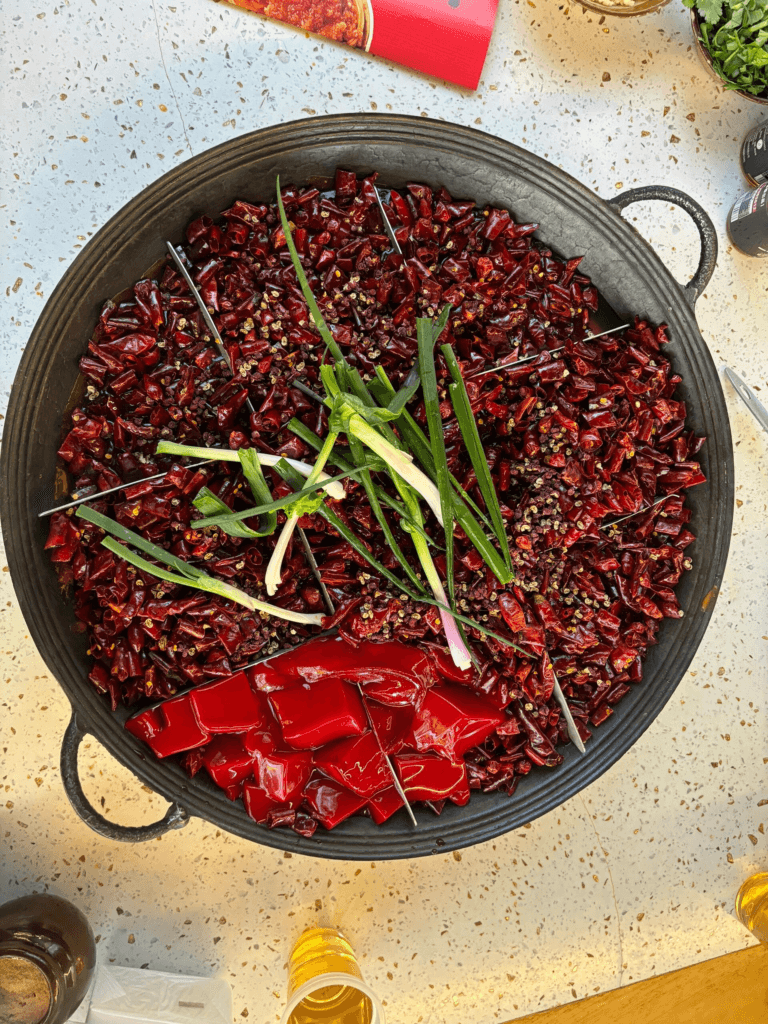
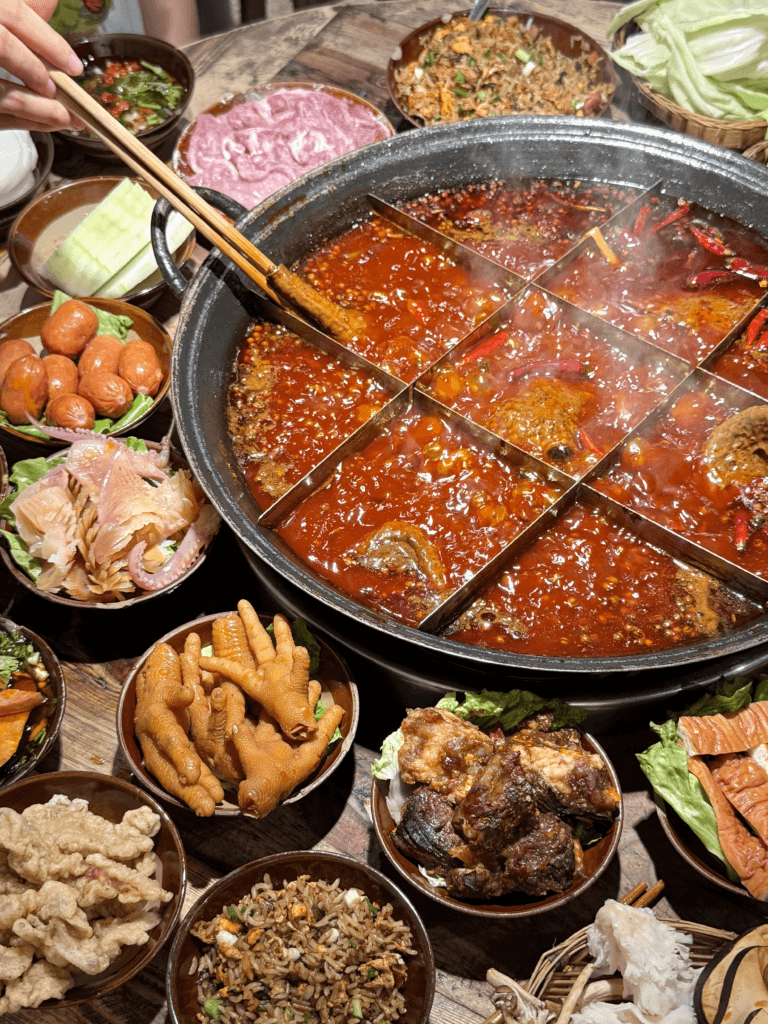
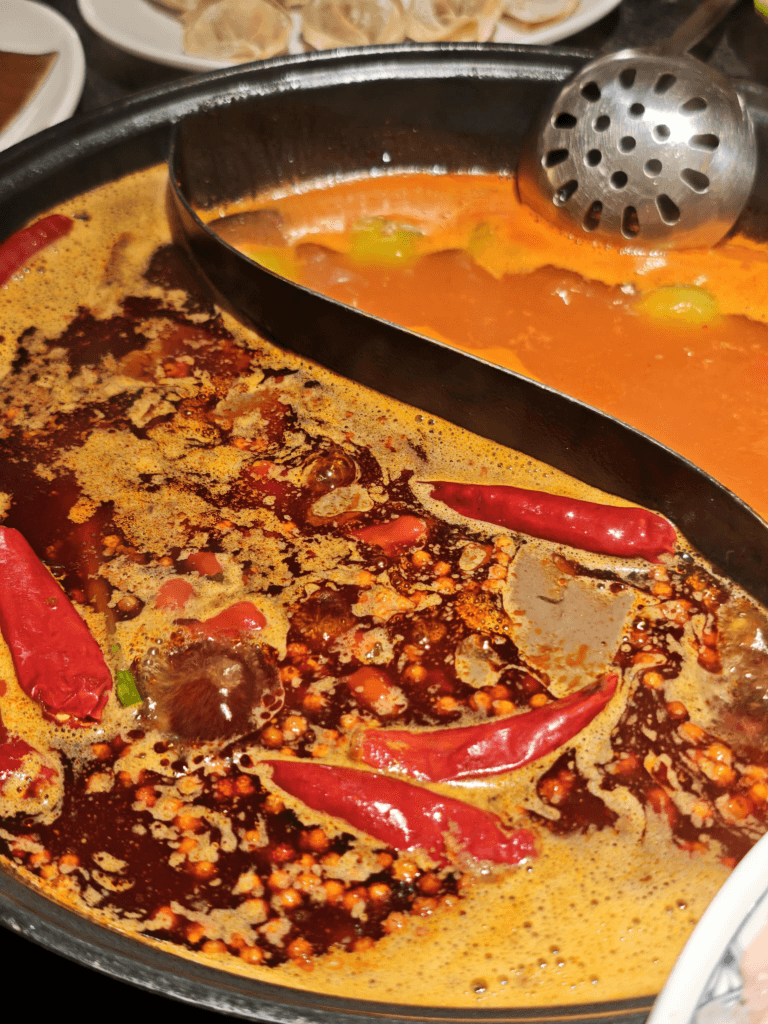
What makes it special. The broth starts with rendered beef tallow, which gives it that rich, glossy texture that clings to everything you cook. Chefs spend hours frying the base with preserved chilies, Sichuan peppercorns, fermented soybean paste, garlic, and shallots—a recipe that’s fiercely protected in every restaurant.
How to eat it. You cook the food yourself. A nine-grid pot is the classic setup—each compartment lets you keep track of different ingredients so they don’t disappear into the abyss. Start with meats like tripe or thinly sliced beef, which absorb the broth’s flavor best. Then add vegetables like lotus root, potato slices, and enoki mushrooms. Dip everything into a simple sauce of sesame oil, minced garlic, and salt—it’s not just for flavor, it’s said to protect your stomach from the heat.
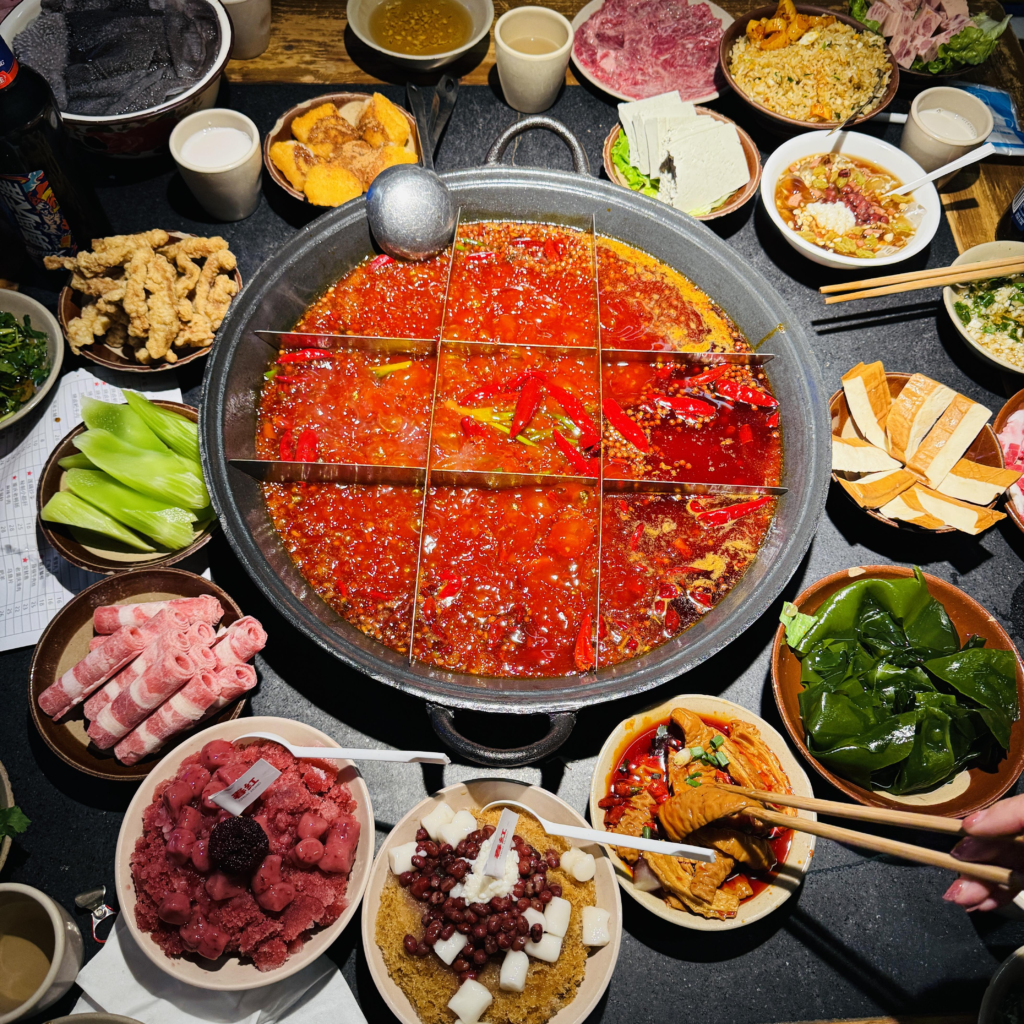
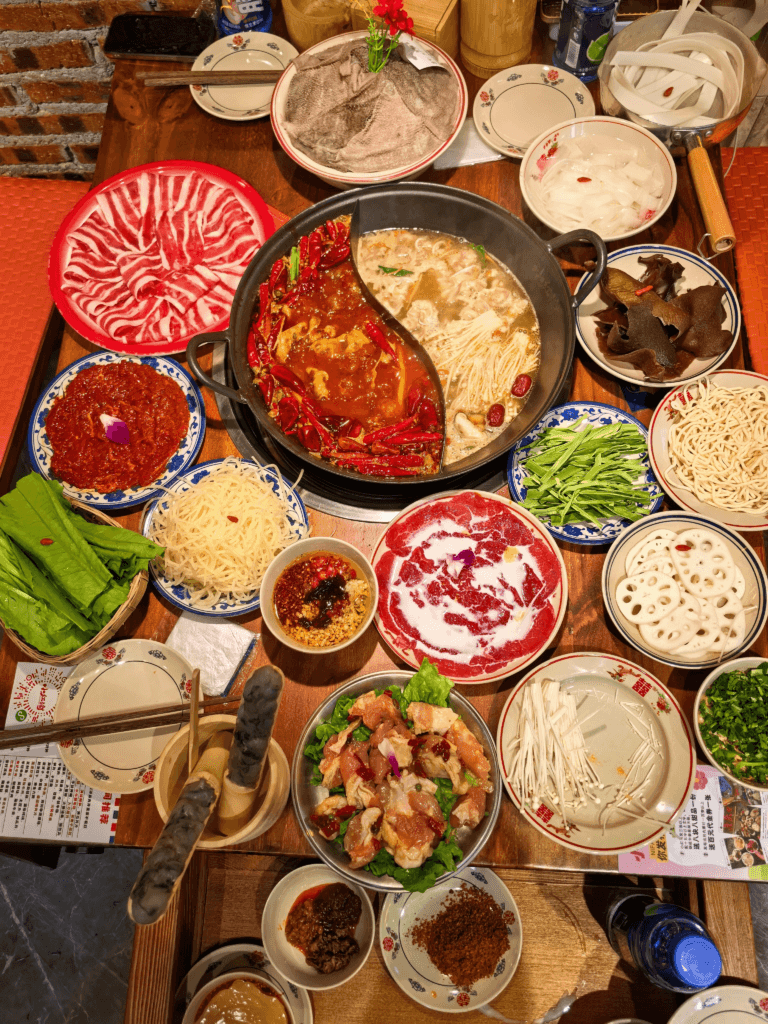
The not-so-glamorous truth. The oil slicks your lips. Your eyes water. You will leave smelling like a campfire mixed with chili oil. And depending on your spice tolerance, your stomach might stage a small protest later. But you know what? It’s worth it. Just don’t book an early morning tour the next day.
💰 Price: ¥80–200 per person. Budget-friendly local spots cost less; tourist-area restaurants charge more.
Pro tip for solo travelers: Some places now offer individual hot pot portions, but they’re harder to find. Many hot pot restaurants expect groups of two or more. Your best bet is to look for chuàn chuàn (串串, skewer hot pot) spots, where ingredients come on sticks and you pay by the skewer. It’s essentially solo-friendly hot pot.
📌 Where to find it: Literally everywhere. But for authenticity, skip the shiny tourist spots. Look for restaurants tucked into residential alleys with plastic stools and locals queuing outside.
🐟 2. Wanzhou Grilled Fish (万州烤鱼, Wànzhōu Kǎoyú) – Smoky River Treasure
Flavor Profile: Smoky, spicy, tangy, umami-packed
Imagine a whole fish, charcoal-grilled until its skin crackles, then simmered in a spicy broth loaded with vegetables. That’s Wanzhou grilled fish. It originated in the Yangtze river town of Wanzhou, where fishermen developed a “roast then simmer” technique to preserve their catch.
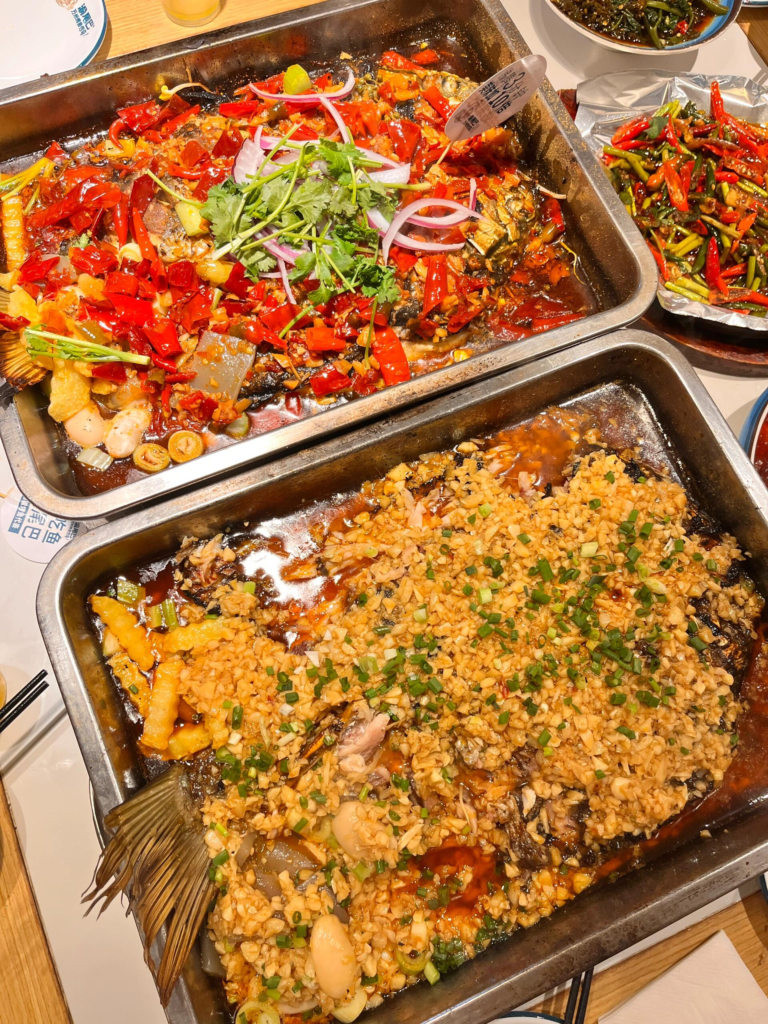
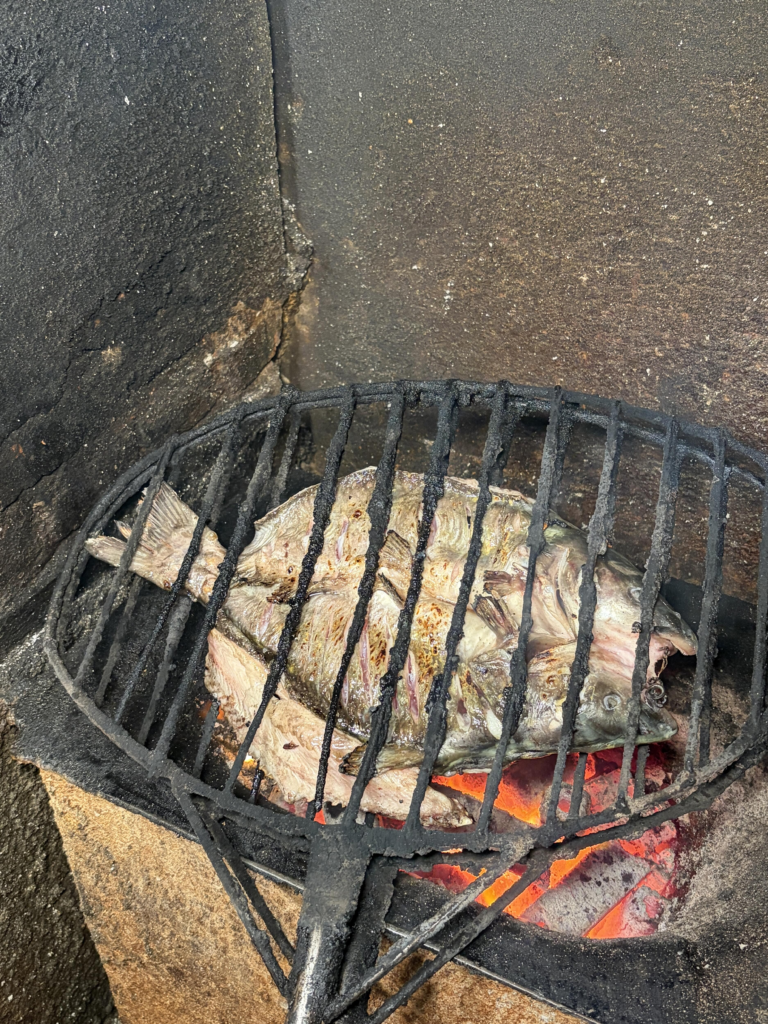
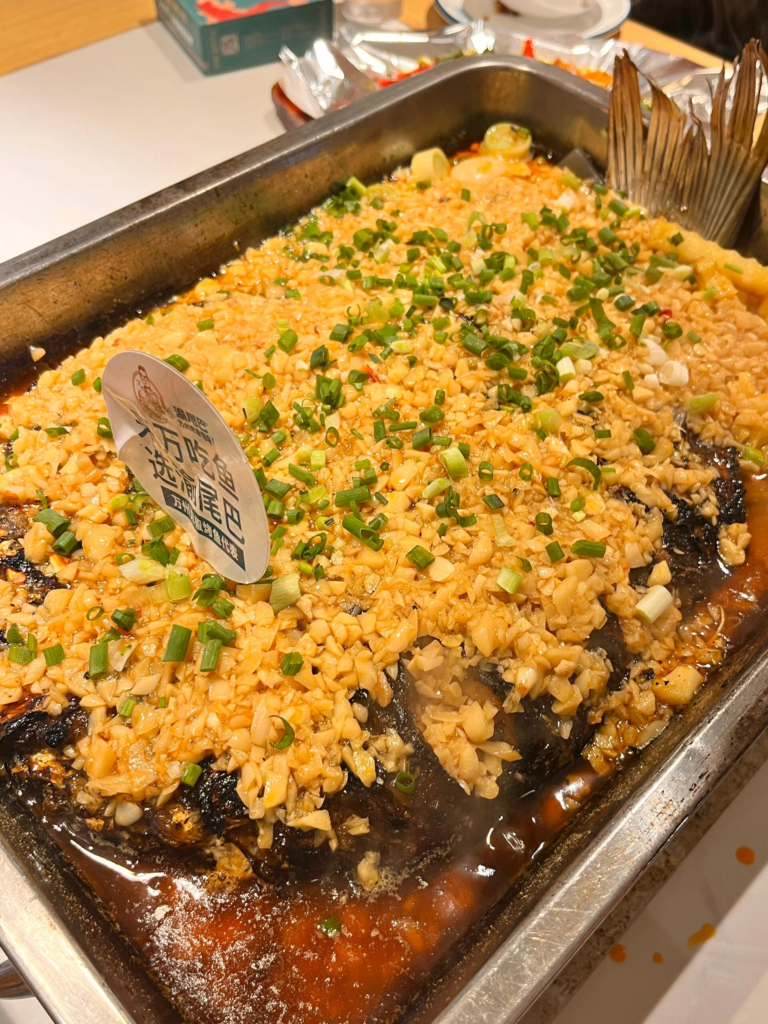
What makes it special. The magic is in the sauce. A generous amount of red chili peppers and Sichuan peppercorns are stir-fried in oil until they release their fiery essence, then poured over the grilled fish. The result is a crispy exterior, tender flaky flesh, and vegetables like konjac, bean sprouts, and potatoes that soak up every drop of flavor.
How to eat it. For a group of 2–3 people, order a fish around 1 kg (about 2.2 lbs). Start by picking your flavor—málà (numbing-spicy) is the classic, but if you’re spice-sensitive, go for fermented black bean or fragrant spicy first. Eat the fish first while the skin is still crisp, then work through the vegetables. Don’t let that broth go to waste—mix it with rice or noodles at the end.
The not-so-glamorous truth. This is not a light meal. It’s oily, heavy, and messy. You’ll use your hands for the fish bones. And the restaurant might not be the cleanest place you’ve ever seen—some smaller shops can be a bit rough around the edges. But that’s part of the charm. Look for places that keep live fish tanks at the entrance; that’s usually a good sign.
💰 Price: ¥80–150 for a whole fish, serving 2–3 people.
Pro tip: Pair it with an ice-cold local beer. The carbonation cuts through the oil and spice beautifully.
📌 Where to find it: Wanzhou district is the birthplace, but you’ll find excellent versions all over Chongqing, especially in riverside restaurants.
🦢 3. Rongchang Braised Goose (荣昌卤鹅, Róngchāng Lǔ’é) – The Low-Heat Surprise
Flavor Profile: Savory, aromatic, subtly sweet, with a crispy skin
Here’s the sleeper hit of this list. Most people come to Chongqing expecting everything to burn their mouths off. Rongchang braised goose is proof that this city’s cuisine has more depth than just heat.
What makes it special. The goose is slowly braised in a secret spice broth containing star anise, bay leaves, Sichuan peppercorns, soy sauce, and a dozen other aromatics. The result is meat so tender it practically falls apart, with skin that’s surprisingly crispy. A 500g portion costs around ¥45, and locals often take it home vacuum-sealed.
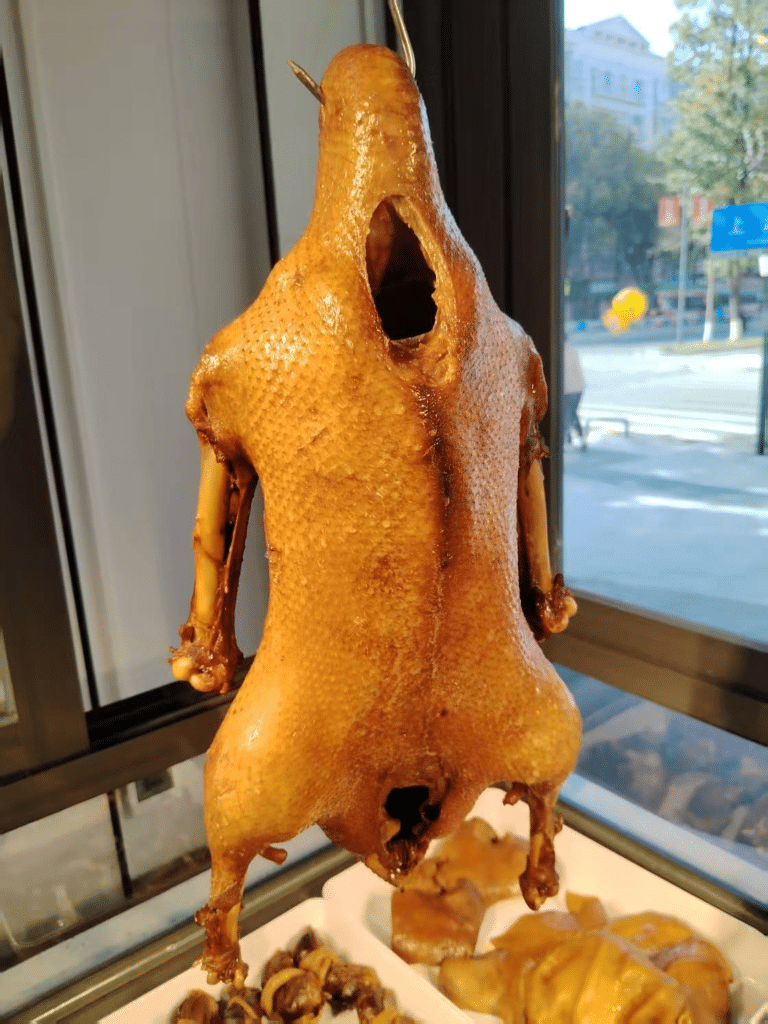
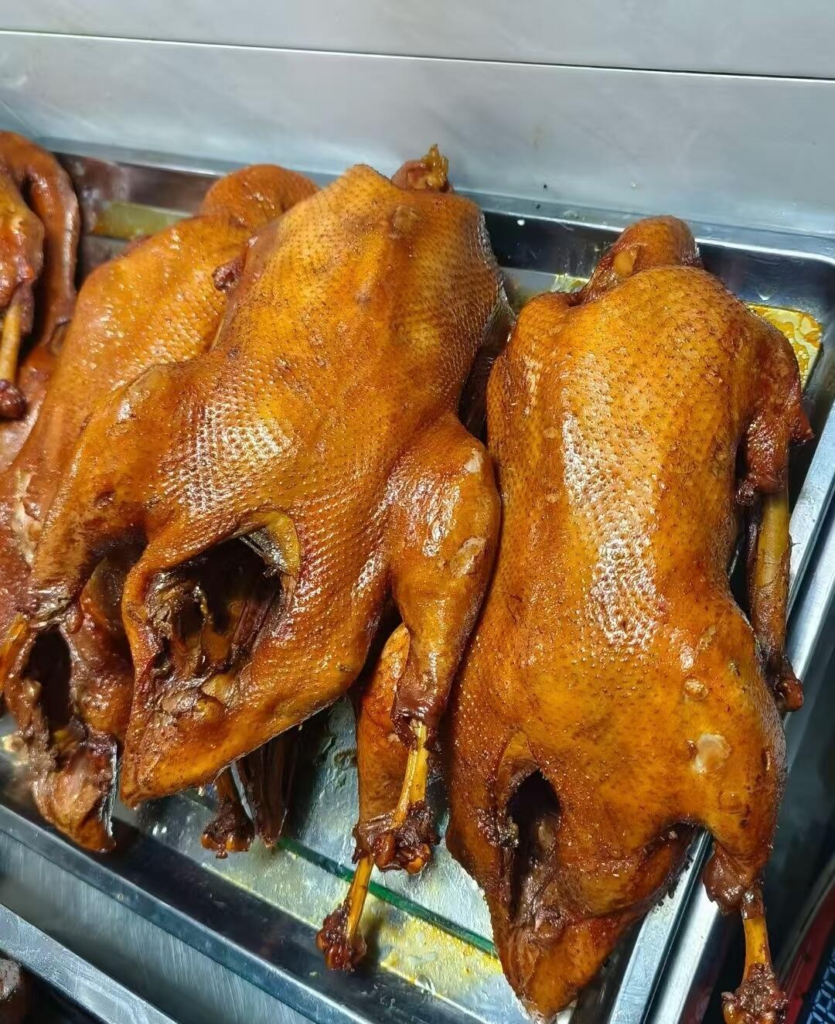
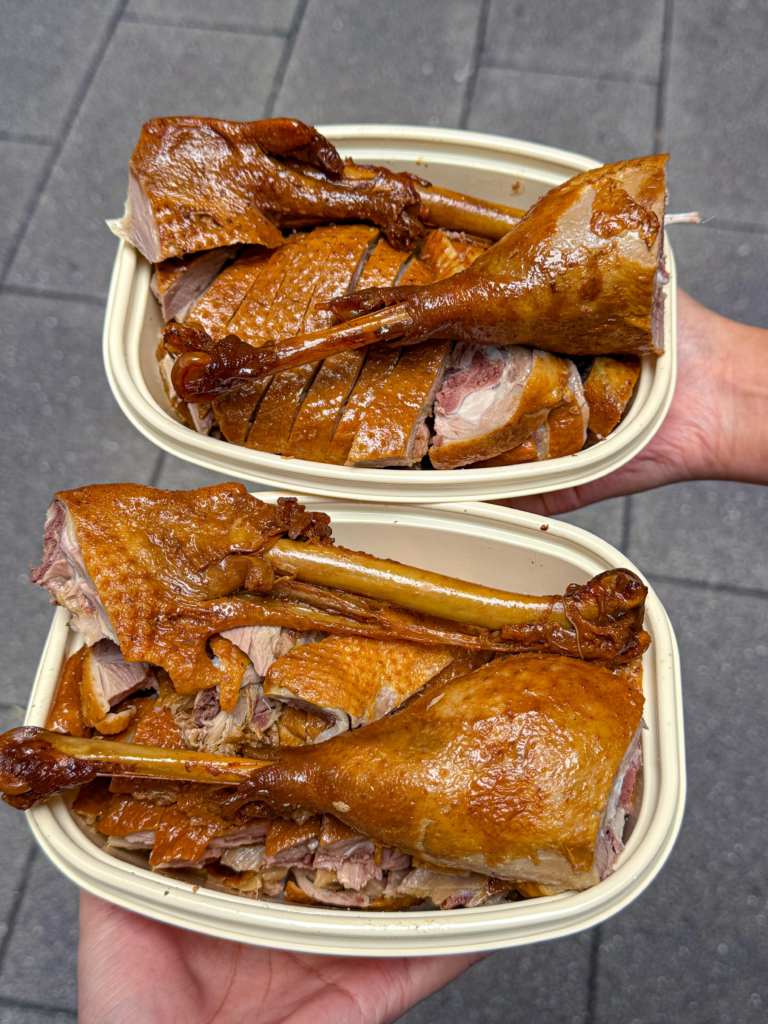
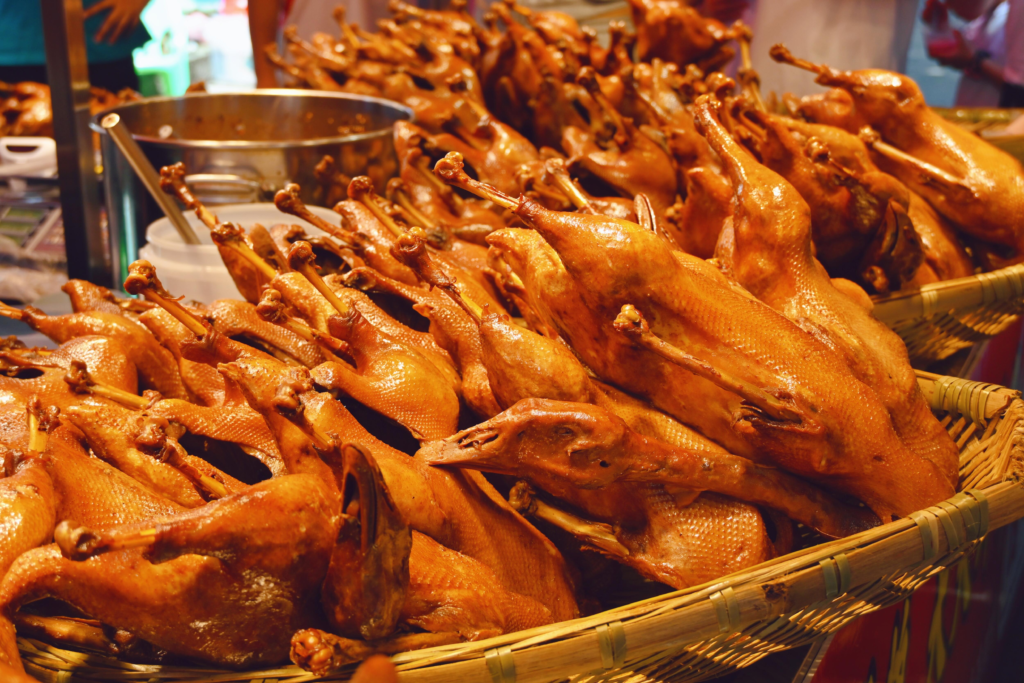
How to eat it. This is the easiest dish on the list for first-timers. You can eat it as-is, or dip it in a spicy seasoning mix if you want a kick. It’s often served cold or at room temperature, making it perfect for a picnic or a takeaway lunch. The whole goose is deboned by chefs with impressive precision—you won’t struggle with bones.
The not-so-glamorous truth. The goose itself isn’t spicy, so if you’re chasing that fiery Chongqing experience, this might feel tame. But that’s also exactly why it’s so valuable—it’s the dish you can order when your mouth needs a break, or when you’re traveling with someone who can’t handle heat.
💰 Price: ¥45 for 500g; a whole goose feast at a restaurant runs ¥150–250.
Pro tip: Visit Rongchang district for the full experience. It’s about 30–40 minutes by high-speed train from Chongqing West Station. The town of Wanling Ancient Town makes for a perfect day trip—eat the goose, then walk it off along the stone bridges.
📌 Where to find it: Rongchang Sanhui Goose Restaurant is the famous spot. In downtown Chongqing, look for shops labeled “荣昌卤鹅” (Róngchāng lǔ’é).
🍗 4. Nanshan Spring Water Chicken (南山泉水鸡, Nánshān Quánshuǐ Jī) – One Chicken, Three Ways
Flavor Profile: Spicy, fragrant, tender, with layers of málà
This dish was invented in 1993 by a local farmer named Li Renhe, who owned a small eatery with a backyard well fed by mountain spring water. He experimented with cooking methods until he stumbled upon something magical.
What makes it special. The chicken is cooked using actual spring water from Nanshan Mountain. But the real genius is the “one chicken, three ways” approach: the main spring water chicken dish, stir-fried chicken gizzards with pickled peppers, and a clear chicken blood soup. One chicken, three completely different eating experiences.
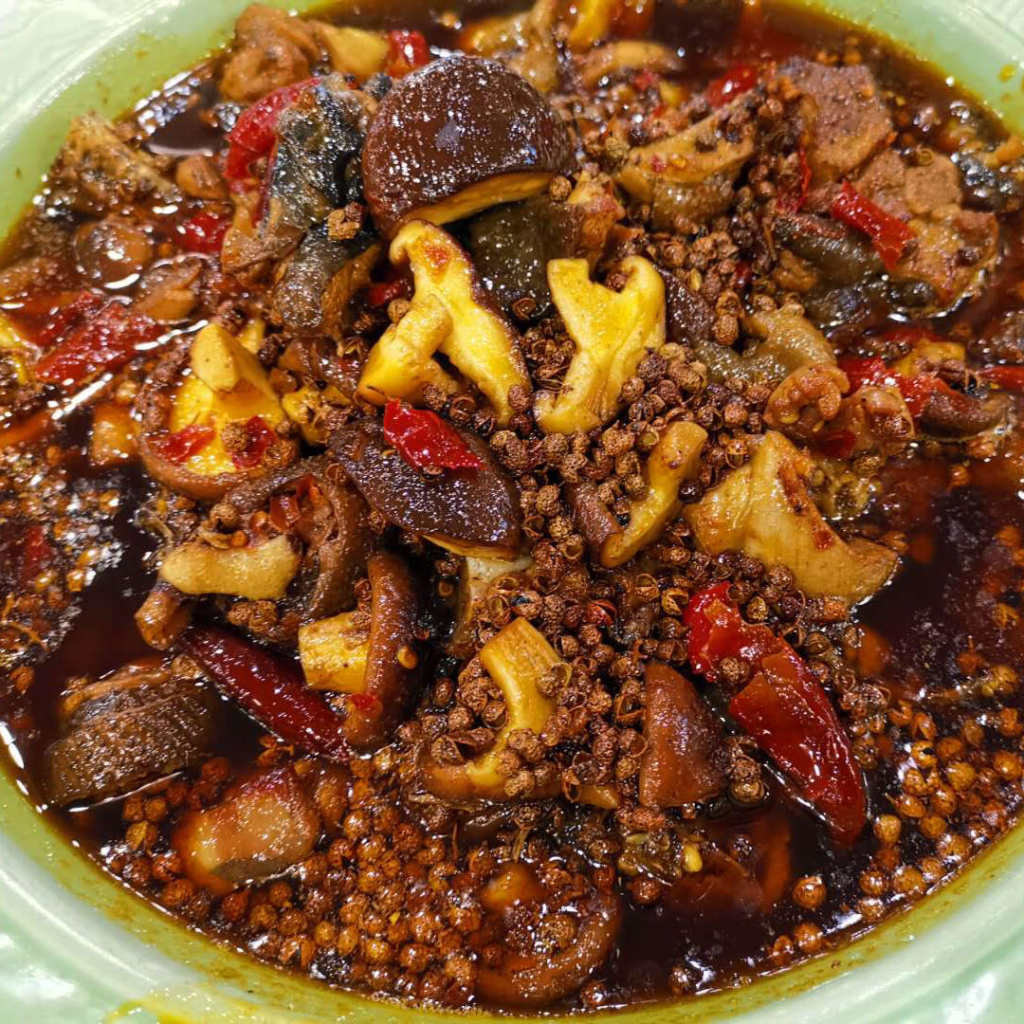
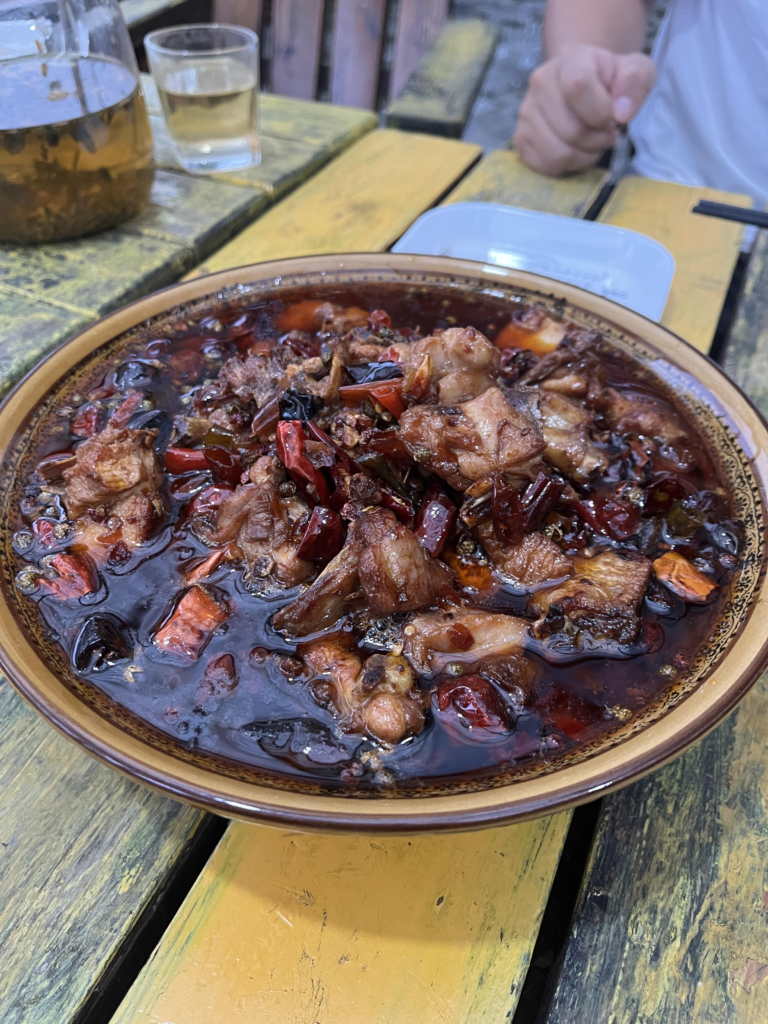
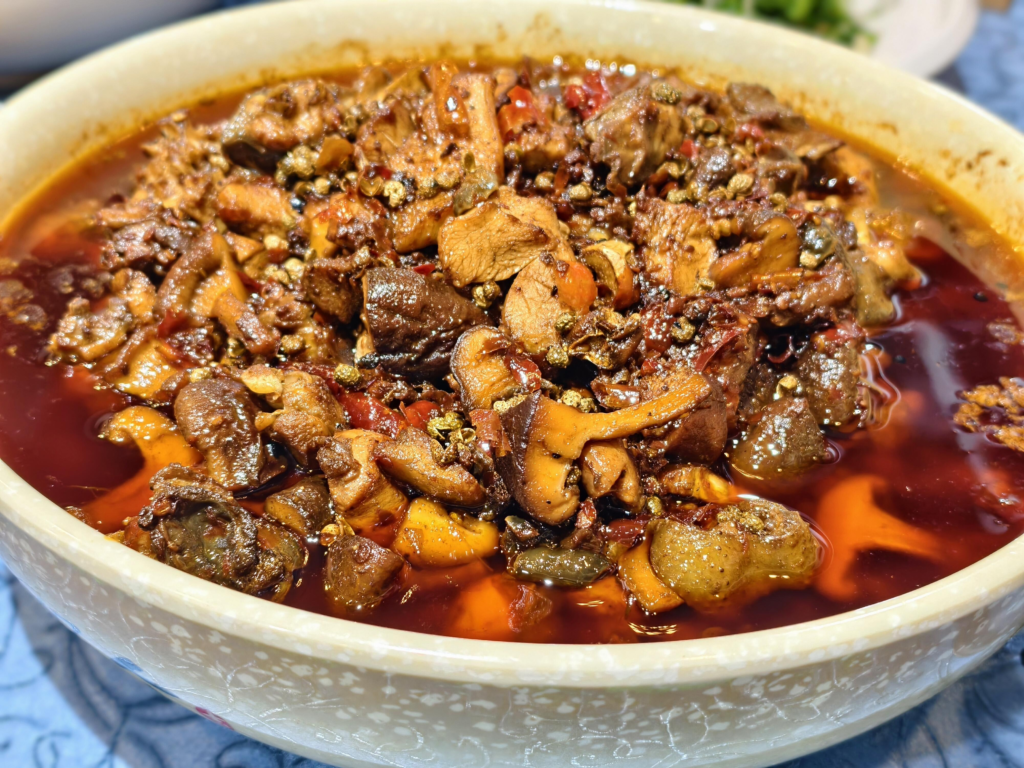
How to eat it. A whole chicken typically weighs 3–4斤 (about 3.5–5 lbs), which comfortably feeds 5 or more people. The main dish is stir-fried chicken chunks with Sichuan peppercorns, dried chilies, doubanjiang (fermented bean paste), and the famous spring water. It’s spicy, fragrant, and deeply satisfying. The gizzards offer a chewy, tangy contrast. And the soup? It’s your palate cleanser when the spice gets too intense.
The not-so-glamorous truth. The chicken is slaughtered fresh when you order. That means you’ll wait 20–30 minutes for your food. Some travelers find this unsettling—others appreciate knowing exactly how fresh their meal is. Also, you’ll probably have leftovers. Lots of them.
💰 Price: ¥200–300 for a whole chicken, serving 5+ people. Very economical for groups.
Pro tip: Visit the “Spring Water Chicken Street” (泉水鸡一条街) in Nanshan. It’s a stretch of restaurants dedicated almost entirely to this dish, and the views over Chongqing from the mountain are spectacular.
📌 Where to find it: Nanshan district, specifically “Quanshuiji Yitiao Jie” (Spring Water Chicken Street). Look for restaurants with live chicken coops visible from the street.
🐔 5. Qianjiang Chicken Gizzards (黔江鸡杂, Qiánjiāng Jīzá) – Offal Done Right
Flavor Profile: Tangy-spicy, crisp-chewy, umami-rich, addictive
I’ll be honest—when I first saw “chicken offal” on a menu, I hesitated. Gizzards, hearts, livers. Not exactly the comfort food I grew up with. But after one bite of Qianjiang chicken gizzards, I was converted.
What makes it special. The offal is stir-fried with pickled chili peppers and pickled radishes, which completely transforms it. Those pickled ingredients bring a spicy-tangy kick that cuts through the richness and eliminates any gamey taste. The texture is crisp and chewy—nothing like the soft, mushy offal you might be imagining.
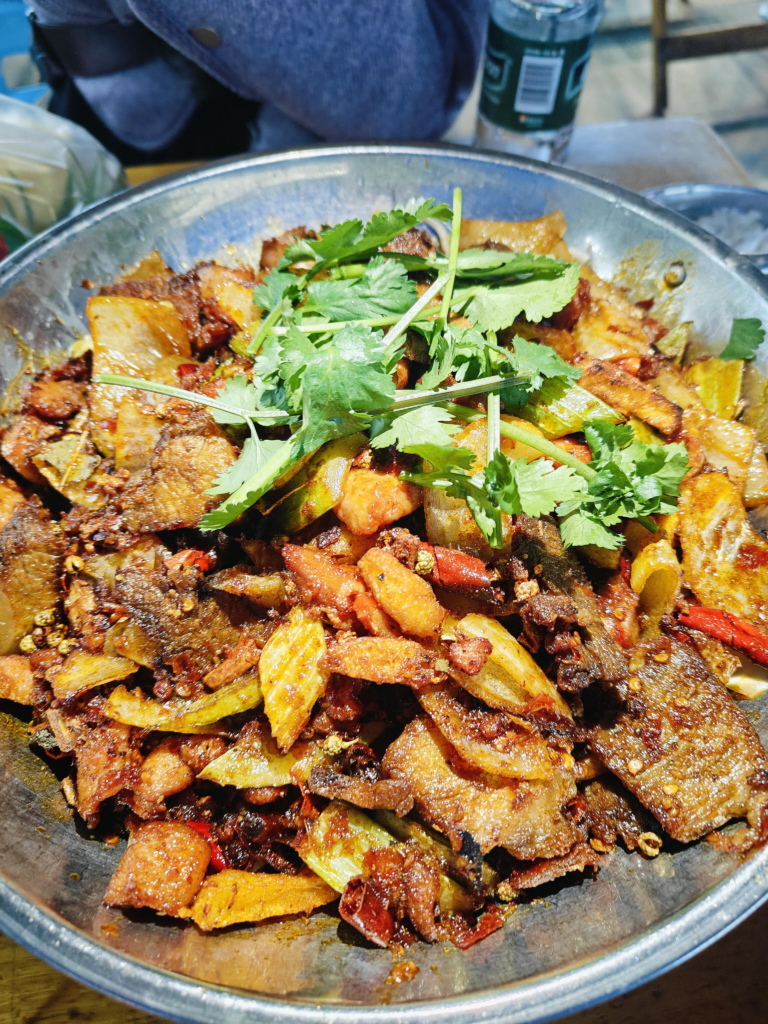
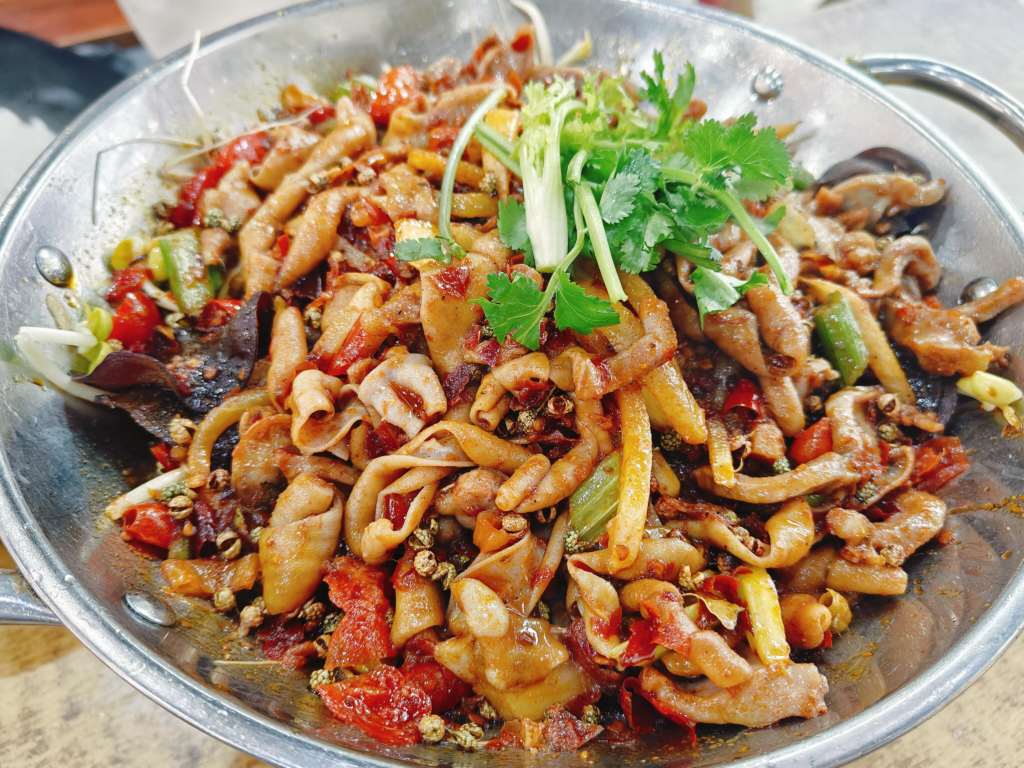
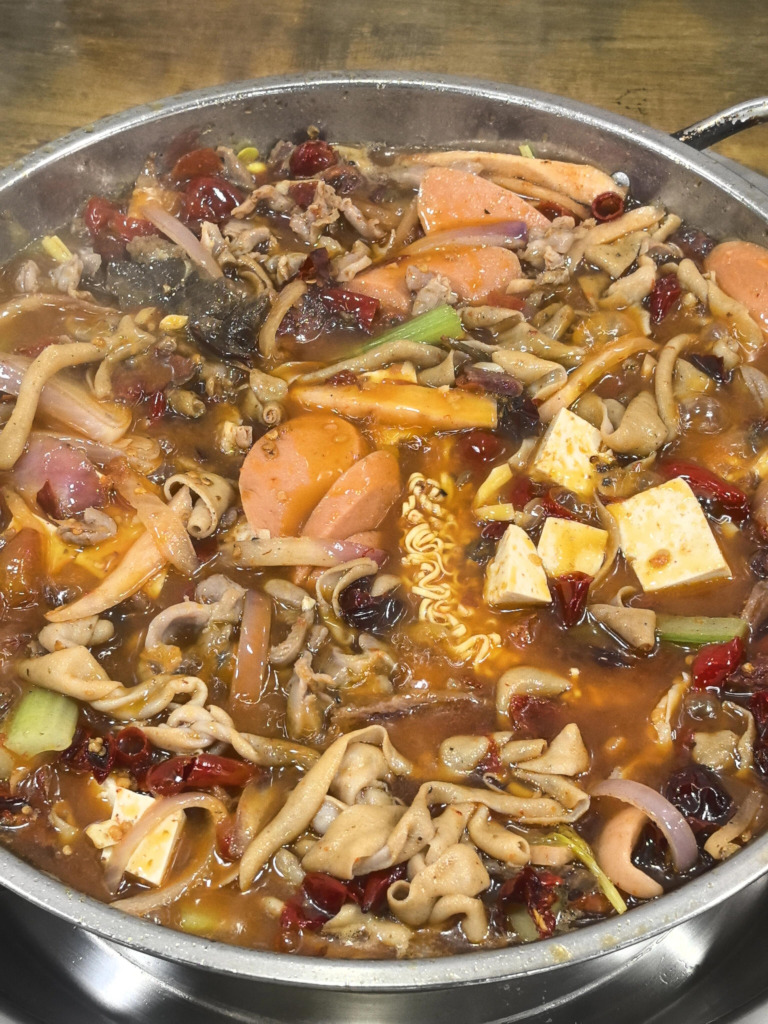
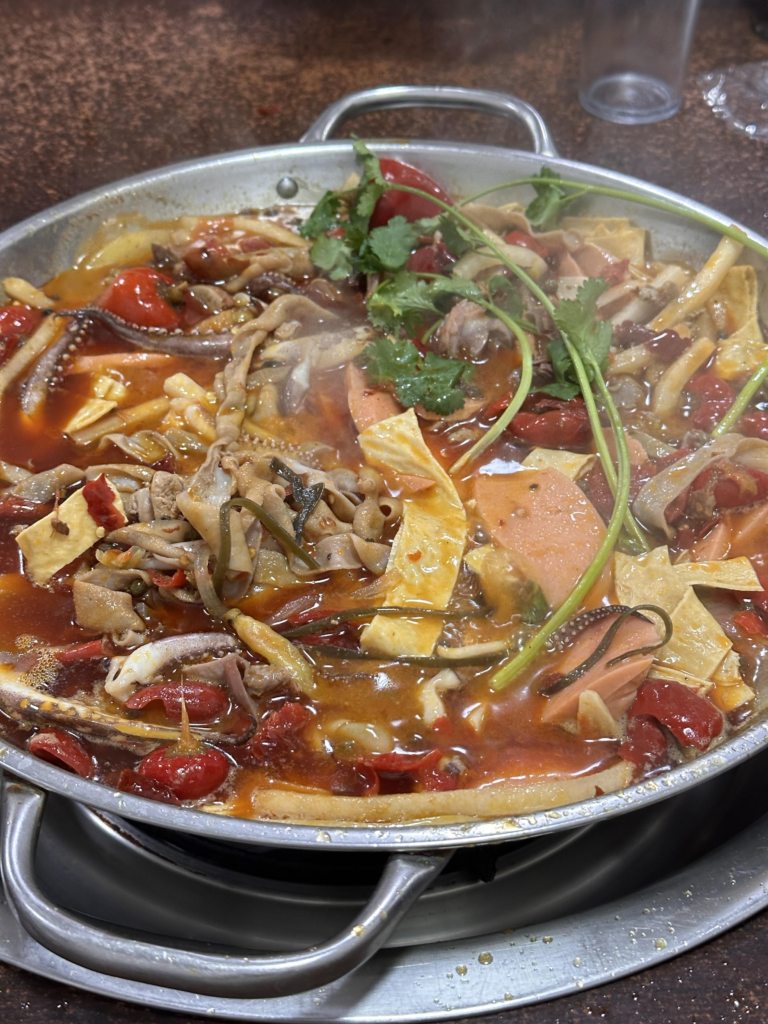
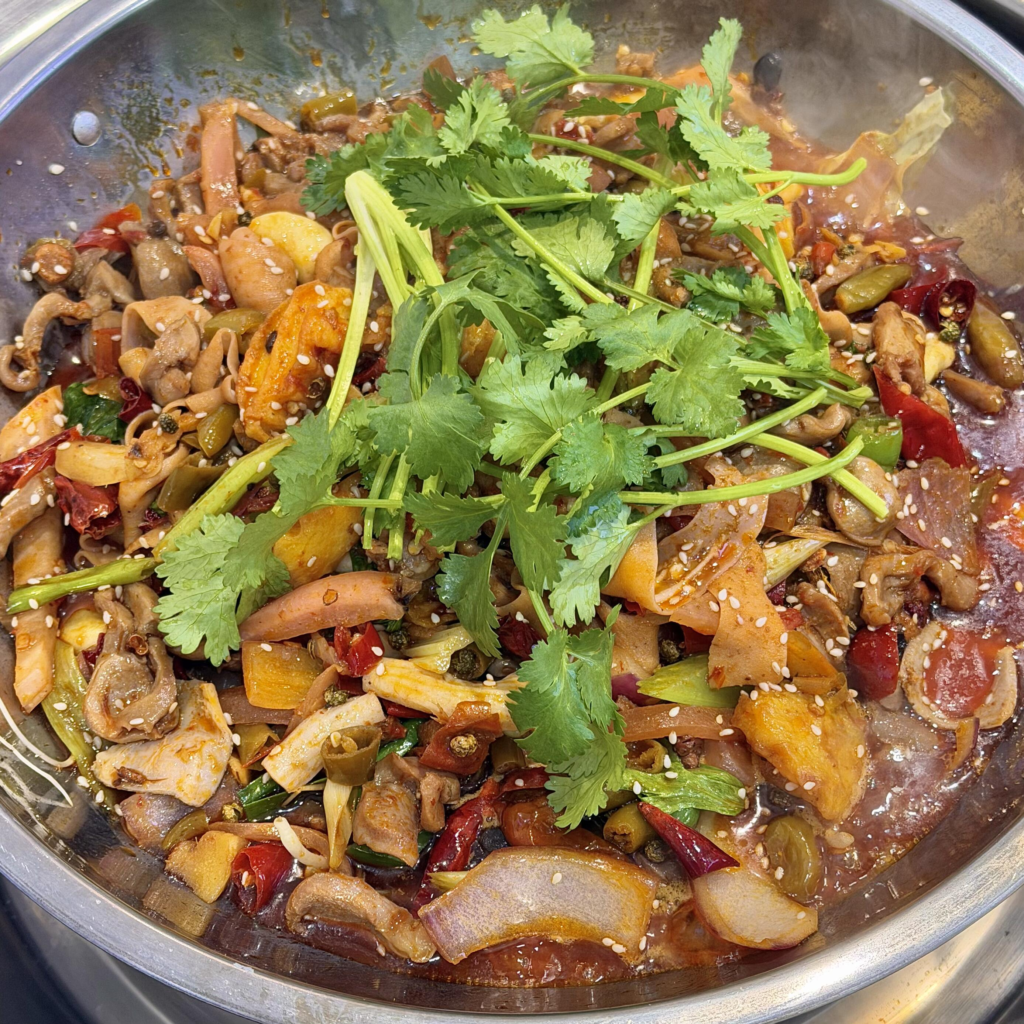
How to eat it. This is a dry pot dish (no broth), served with vegetables like wood ear mushrooms, konjac, and bean sprouts that soak up all the flavorful sauce. Eat it with a big bowl of plain steamed rice. The rice balances the spice and gives you something to soak up every last drop. It’s an exceptional “rice-pairing dish,” as locals say—and it perfectly embodies the bold, unpretentious spirit of Chongqing cuisine.
The not-so-glamorous truth. Look, offal isn’t for everyone. If you have texture issues or a sensitive stomach, this might not be your meal. But if you’re an adventurous eater, this is one of the most rewarding dishes on the list. Also, it’s spicy—even by Chongqing standards.
💰 Price: ¥40–70 per serving, which easily feeds two people with rice.
Pro tip: Qianjiang district is several hours from central Chongqing, but you’ll find excellent versions in most Jianghu (江湖菜, “rivers and lakes cuisine”) restaurants around the city.
📌 Where to find it: Look for “江湖菜” (jiānghú cài) restaurants, which specialize in this bold, rustic style of cooking.
🐠 6. Bishan Laifeng Fish (璧山来凤鱼, Bìshān Láifèng Yú) – The Granddaddy of Jianghu Cuisine
Flavor Profile: Peppery, spicy, fresh, tender, electric
This fish has history. Over 300 years of it, in fact. Laifeng Fish originated in the Han Dynasty, with its current form developed during the Kangxi reign of the Qing Dynasty. It’s been declared an Intangible Cultural Heritage of Chongqing, and it’s considered the forerunner of all Jianghu cuisine—meaning it inspired dishes like spicy diced chicken and other local favorites.
What makes it special. Fresh grass carp is cut into chunks, lightly fried until about 80% cooked, then simmered in a sauce packed with Sichuan peppercorns, dried chilies, doubanjiang, and pickled peppers. The result is an “electric tingle followed by fiery flames on the tongue,” as one traveler described it.
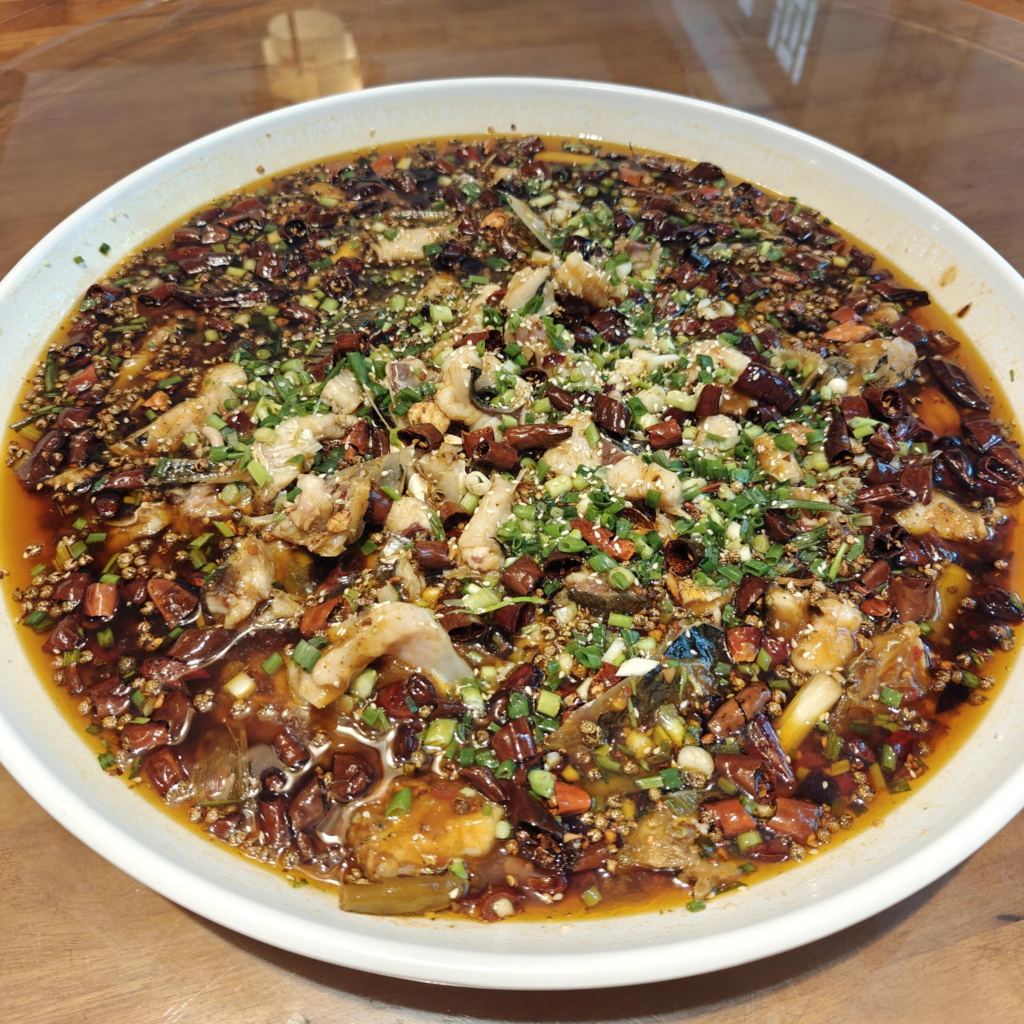
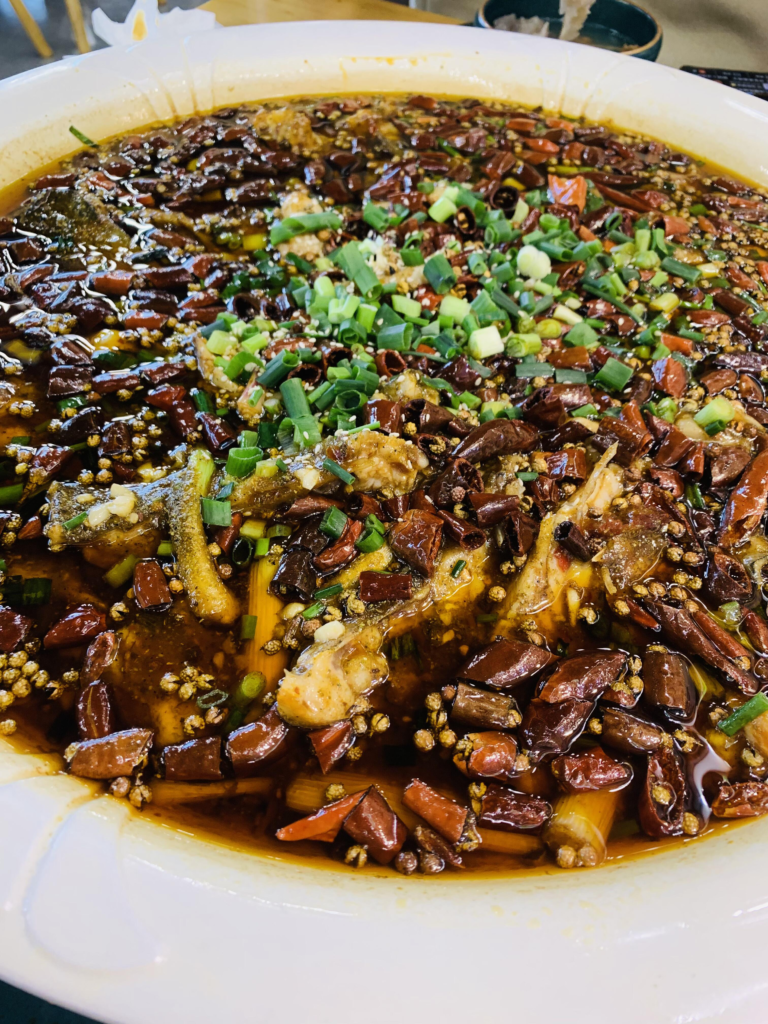
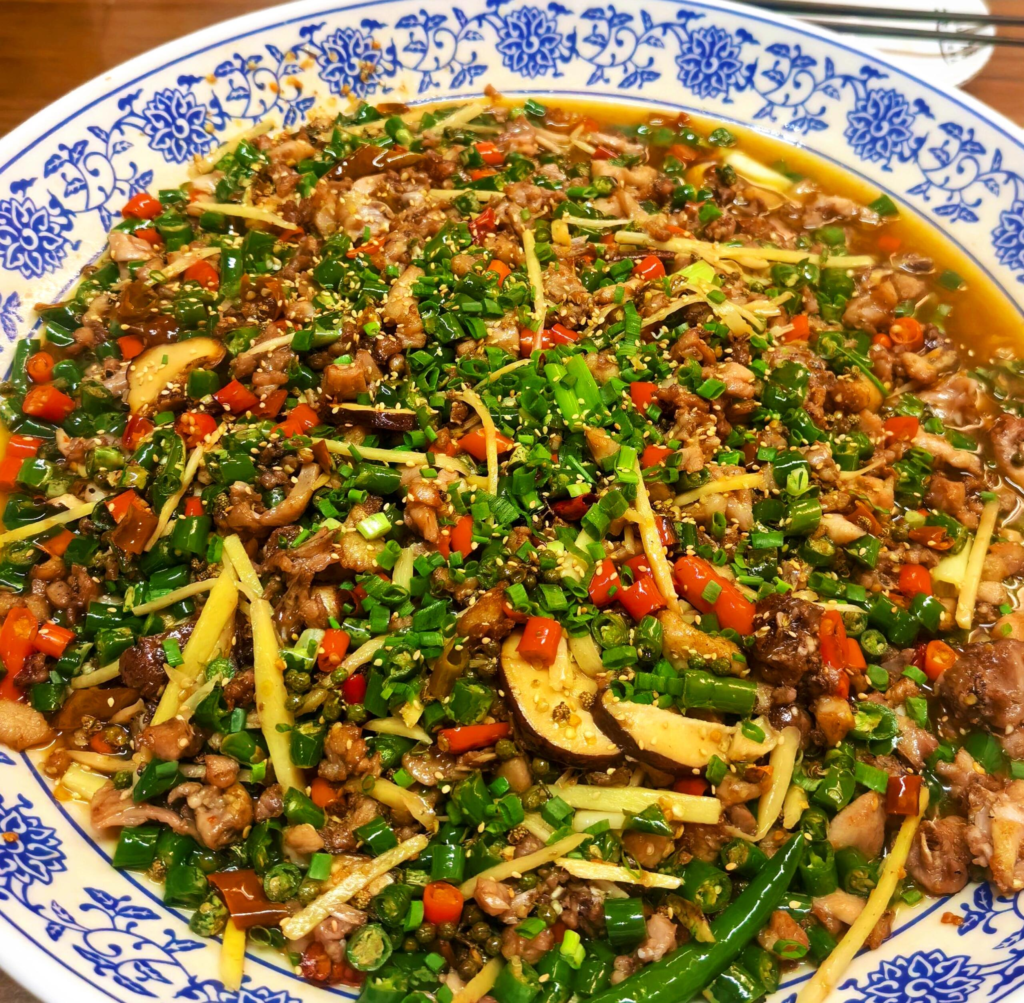
How to eat it. The fish is served swimming in a sea of red chilies and Sichuan peppercorns. Pick out the tender chunks of fish—they’re incredibly soft and flaky—and eat them with rice. The sauce is intensely flavorful, so don’t be shy about spooning it over your rice. A 4–5斤 (about 4.5–6 lb) fish uses over two斤 of oil in cooking, which tells you everything about how rich this dish is.
The not-so-glamorous truth. This is not a beginner’s spice dish. The Sichuan peppercorns are generous, and the numbing sensation can be overwhelming if you’re not prepared. Also, the dish is swimming in oil—it’s delicious, but your stomach might feel heavy afterward.
💰 Price: ¥100–200 for a whole fish, serving 3–4 people.
Pro tip: Visit Laifeng Town in Bishan District for the real deal. It’s about an hour from central Chongqing by car. While you’re there, try the brown sugar ice jelly—it’s the perfect remedy for the spiciness.
📌 Where to find it: Bishan District restaurants, especially in Laifeng Town. In central Chongqing, look for Jianghu cuisine restaurants featuring “来凤鱼” on the menu.
❓ FAQ: Which Dish Is Right for You?
👴 Suitable for elderly travelers?
- Rongchang Braised Goose: Yes. Low spice, tender meat, easy to chew.
- Nanshan Spring Water Chicken (the soup portion): Yes. The chicken blood soup is mild and nourishing.
- Hot pot (clear broth side): Yes, if you order the split pot and stick to the non-spicy side.
- The others: Probably not. High spice levels and heavy oil can upset sensitive stomachs.
👶 Suitable for children?
- Rongchang Braised Goose: Yes. Kids love the savory, non-spicy meat.
- Everything else: Use caution. If your child has any spice tolerance, start with very small portions. Most restaurants can make mild versions upon request, but the culture here is spicy by default.
💑 Suitable for couples?
- Hot pot: Perfect. It’s romantic, interactive, and gives you something to do while you talk.
- Wanzhou Grilled Fish: Great. Sharing a whole fish from a single pan is intimate and fun.
- Nanshan Spring Water Chicken: Best with groups of 4+, but a hungry couple can manage.
🚶 Solo traveler – group tour vs. free & easy?
- Go with a food tour if: It’s your first day, you don’t speak Chinese, and you want a local guide to show you where to go. Food tours also solve the “can’t order enough food for one person” problem by grouping you with other travelers.
- Go solo if: You’re comfortable with Google Translate, you’ve done some research, and you don’t mind eating at less crowded times. Some hot pot places will serve solo diners, but expect curious looks.
🌶️ Non-spicy options exist?
Yes! Contrary to popular belief, not everything in Chongqing will burn your mouth off. Rongchang braised goose is naturally non-spicy. Clear broth wontons, pork knuckle soup, and silken chicken pudding are all mild options available throughout the city.
💡 Real Talk: 10 Things I Wish I Knew Before Eating in Chongqing
- “A little spicy” means medium. Don’t say that. Say wēi wēi là (微微辣, super mild). Trust me on this.
- Soy milk > water. Water spreads the capsaicin around your mouth. Soy milk or yogurt actually neutralizes it.
- Beware the Sichuan peppercorn. It’s not spicy—it’s numbing. Your lips will tingle. Your tongue might go slightly numb. This is normal and locals love it.
- Most restaurants don’t have English menus. Download a translation app. Better yet, save pictures of dishes you want to try and show them to the server.
- Hot pot etiquette: Don’t put your personal chopsticks into the shared pot. Use the serving chopsticks provided.
- Don’t drink the spicy broth. It’s for cooking, not sipping. I learned this the hard way.
- Bring wet wipes. Many local spots don’t provide napkins—or the napkins are tiny and useless.
- Street food is generally safe. Look for stalls with long queues of locals. That’s the quality signal.
- Cash is still useful. While WeChat Pay and Alipay dominate, some small eateries still prefer cash. Keep ¥100–200 on you.
- Pace yourself. Don’t try hot pot, grilled fish, and spring water chicken all in one day unless you want to meet the bathroom very intimately.
🗺️ Where to Start Your Chongqing Food Adventure
If I had to recommend one meal to start with, it would be yuān yāng hot pot (half-spicy, half-clear) at a local residential restaurant. It’s the most forgiving introduction to Chongqing’s flavors, and the interactive cooking makes it fun even if you’re nervous about the spice.
From there, graduate to Wanzhou grilled fish or Nanshan spring water chicken. Save the offal dishes for when you’re feeling adventurous. And keep Rongchang braised goose in your back pocket for when your taste buds need a break.
Chongqing’s food scene is bold, unapologetic, and absolutely unforgettable. It might make you sweat. It might make you question your life choices. But I promise you—the memory of that first perfect bite, sitting around a bubbling pot with new friends, will stay with you long after the numbness fades.
Ready to eat? 👇
🎟️ Book a Chongqing food tour – English-speaking guides available
🧳 Trip Planning Essentials
✈️ Flights, Trains & Hotels
Everything you need for your China journey. Book with Trip.com for the best local coverage and seamless English support.
🎟️ Tours & Attractions
Skip the queues and secure your spot at the Great Wall or Disneyland. Discover handpicked experiences on Klook or GetYourGuide.
💰 Payments & Currency
Cash is rare in China! Link your Wise card to Alipay or WeChat Pay to pay like a local with the lowest exchange fees.
🌐 Internet & Connectivity
Stay online without the Great Firewall. Get a Saily eSIM and pair it with NordVPN to access Google, Instagram, and WhatsApp instantly.
🚗 Airport Transfers & Ground Transport
Avoid the taxi line hassle. Pre-book a private car transfer or use Amap for a stress-free ride to your hotel.
📑 Visa & Travel Insurance
Don’t let the unexpected ruin your trip. Get your travel insurance and visa consultation sorted before you fly.
Disclaimer: This post contains affiliate links. If you book through these links, I earn a small commission at no extra cost to you. It helps me keep writing honest guides like this one.