Nestled on the Nanbin Road waterfront, directly across from the iconic Raffles City skyline, this gallery is one of the most unexpectedly brilliant introductions to China’s most chaotic, beautiful, and vertically insane megacity. Whether you’ve just arrived and are trying to make sense of the 8D puzzle outside your window, or you’re looking for an air-conditioned sanctuary that actually delivers on its “world-class” promises, this place is worth your time.
I spent a solid morning here, and while it wasn’t perfect, it gave me the missing manual to understanding Chongqing.
Here’s your no-fluff, boots-on-the-ground guide.
Why Bother?
Let’s address the elephant in the room. Yes, this is a “planning museum.” But Chongqing’s geography is so extreme—mountains, rivers, cliffs—that its “planning” is less about urban design and more about heroic feats of engineering. You can’t understand the city without understanding how it was built.
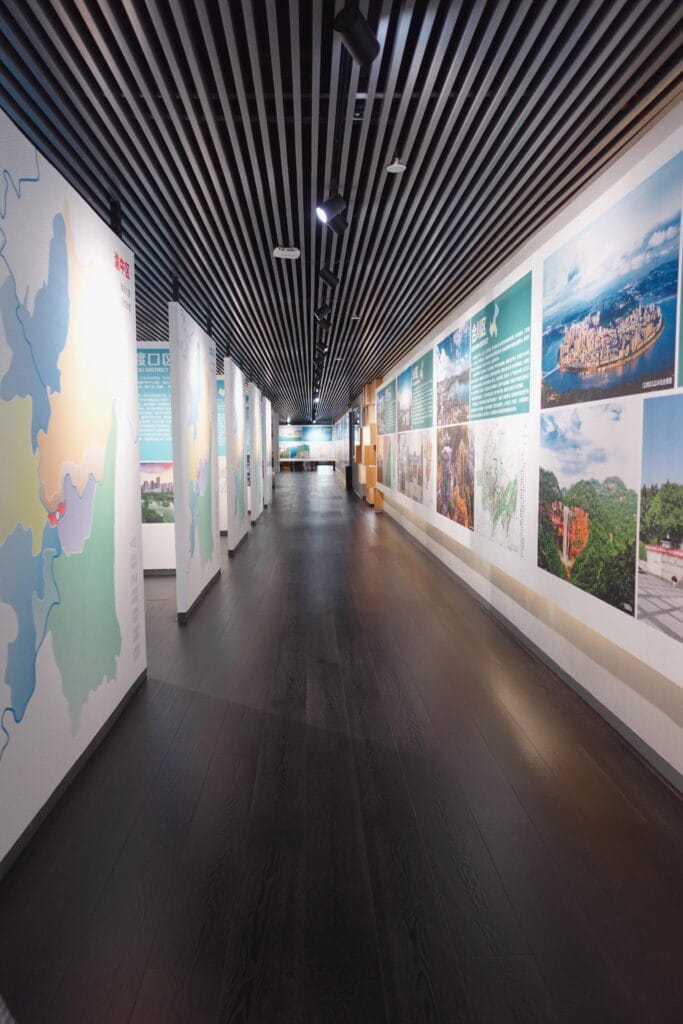
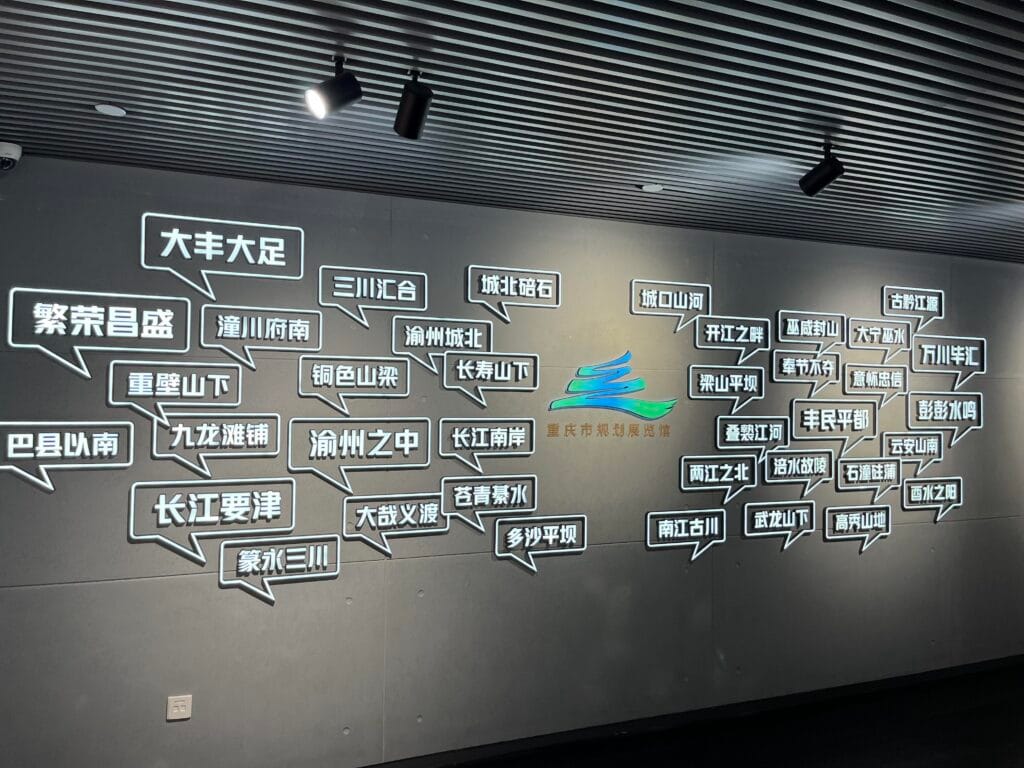
Think of this place as the ultimate lore dump for Chongqing. It explains:
- Why the city feels like it’s built on top of itself (spoiler: it is).
- How 30 million people move through a landscape that looks like a topographical map threw up.
- Where the city is heading next (spoiler: up, and then further up).
Plus, it’s free, fully air-conditioned, and has one of the best photo spots in the city.
The Essentials: Before You Go
Location: No. 131 Nanbin Road, Nan’an District (弹子石广场 / Danzishi Square).
Hours: Tuesday – Sunday, 9:00 AM – 5:00 PM (last entry at 4:30 PM). Closed on Mondays.
Tickets: Free. Simply walk up to the entrance with your physical passport.
English Support: Grab an English brochure at the information desk. The permanent labels are in Chinese, but the main interactive exhibits are visual enough to enjoy without translation.
Getting There:
Don’t trust Google Maps:the location is inaccurate.
- Metro: Take Line 环线 (Loop Line) to Danzishi Station. Exit via Gate 2 or 3. You’ll walk about 10–15 minutes through the charming (and hilly) Danzishi Old Street. Follow the signs toward “Changhuihui” or the river. It’s a pleasant walk, but be warned—it’s downhill on the way there, which means it’s uphill on the way back.
- Taxi / Didi: Just show the driver “重庆市规划展览馆 (南岸区南滨路131号).” Ask to be dropped at the Danzishi Square entrance. Parking is available at the adjacent Changhuihui shopping mall if you’re renting a car.
What’s Actually Inside: The Hits and Misses
The gallery is spread over three main floors. I followed a route that took about 2.5 hours at a relaxed pace. Here’s what stood out, and what didn’t quite land.
1. The “Flying Over Chongqing” Theater (Floor 1)
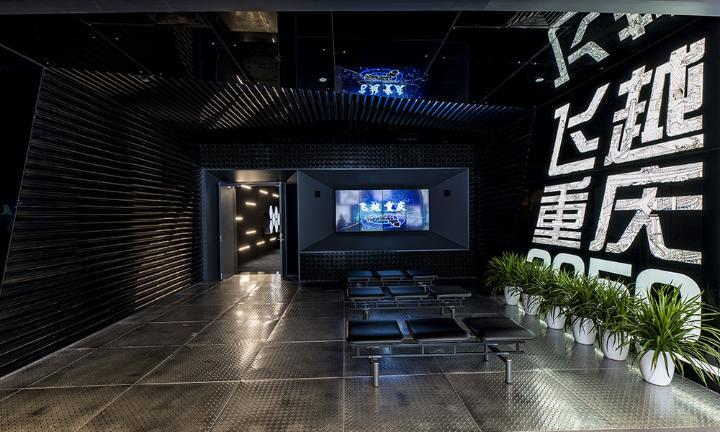
This is a 4D motion ride with a rotating screen. You’re strapped into a seat that moves in sync with a film that simulates flying over the Yangtze River, through the Three Gorges, and into the city’s futuristic skyline. It’s about 8 minutes long and genuinely thrilling. I’ve seen similar tech in Disney parks, and this holds its own.
- My Honest Take: It’s the most popular attraction, so go early. The narration is in Chinese, but the visuals are so immersive you don’t need the audio. It’s a fantastic way to grasp the sheer scale of Chongqing’s mountains and rivers.
- Timing: Shows run at specific times. Check the schedule near the entrance so you don’t miss it.
2. The Master Scale Model (Floor 2)
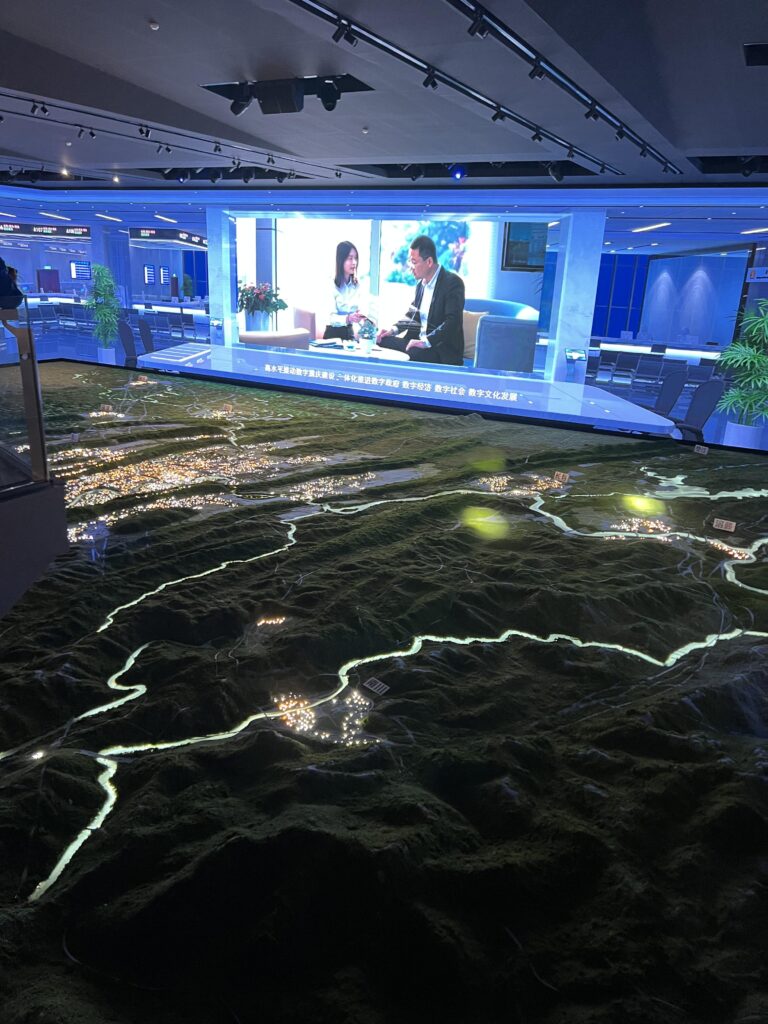
This is the centerpiece of the museum: a massive, 1:700 scale model of the entire Chongqing metropolitan area. When the lights dim and the presentation begins, the model lights up to show the urban layout, the “two rivers and four banks” (两江四岸) development plan, and key landmarks like Raffles City and the airport.
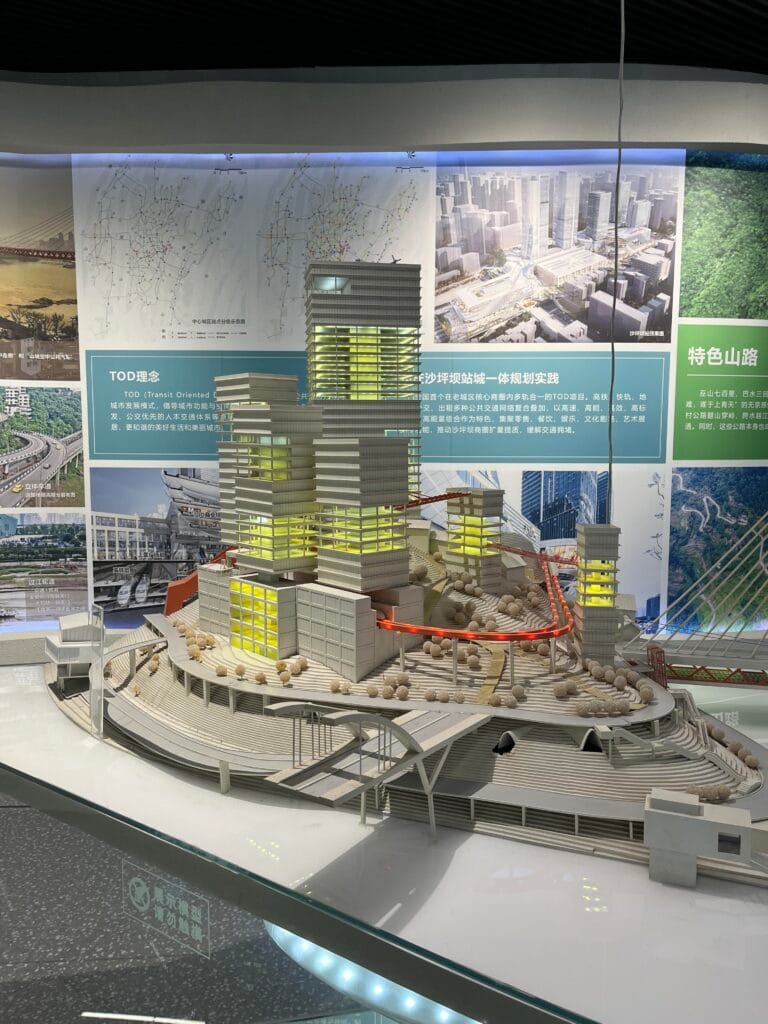
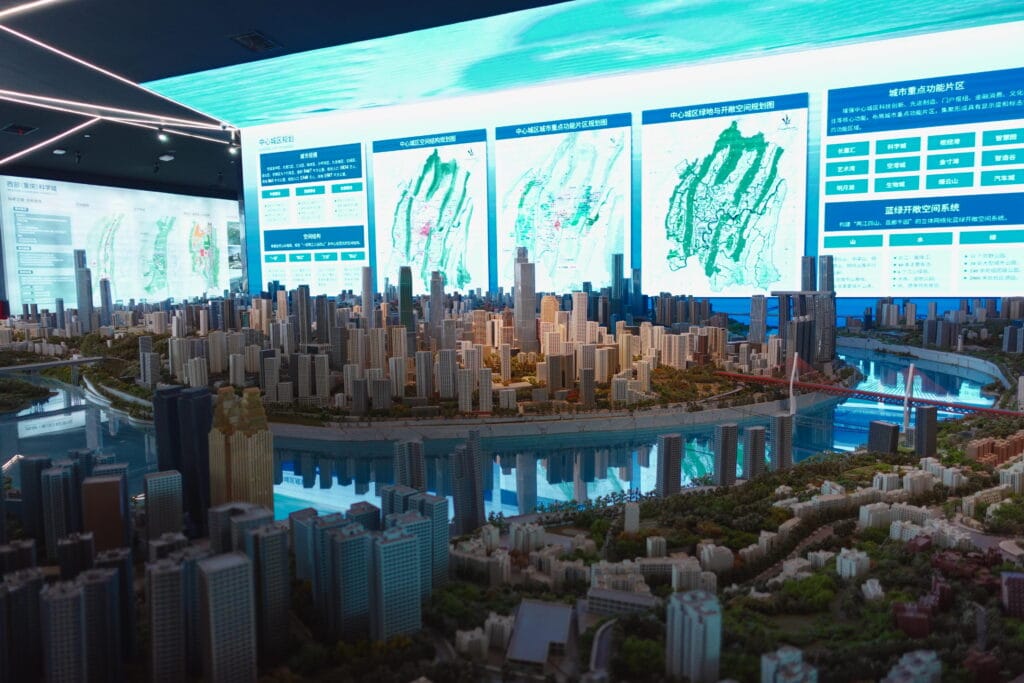
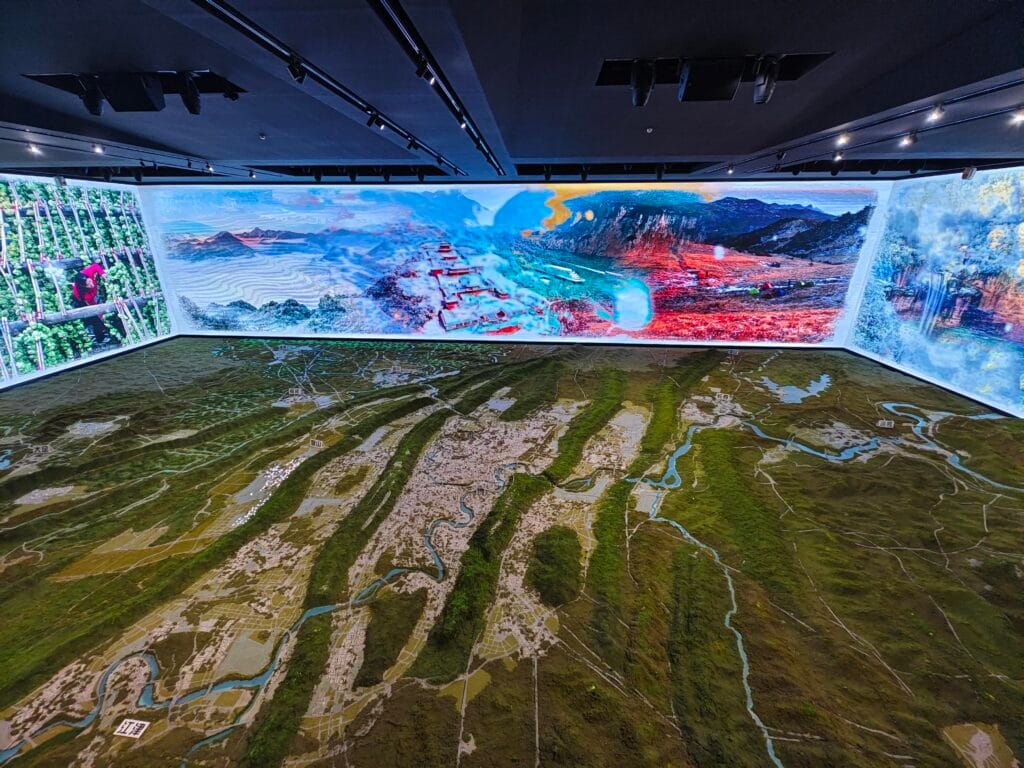
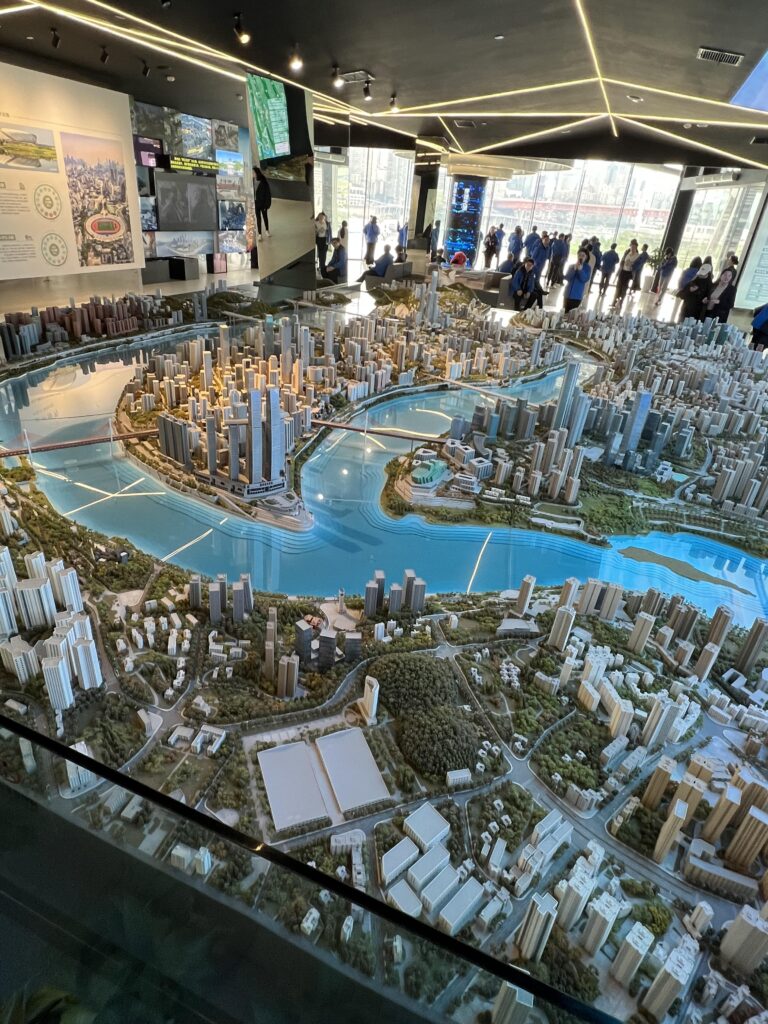
- My Honest Take: It’s visually stunning. However, the presentation is a slick, propaganda-style promotional video in Chinese. While the visuals are beautiful, the tone can feel a bit like a corporate sales pitch. If you ignore the audio and just watch the lights dance across the model, it’s worth it.
- Pro Tip: The viewing platform directly opposite the model is the best spot for a photo. Wait for the light show to illuminate the “Raffles City” section.
3. The Interactive Zones (Floor 3)
The top floor is designed for kids and families, but as an adult, I found it both fun and a little frustrating. There are touch-screen tables where you can “build” your own city, AR screens that animate famous landmarks, and floor projections that ripple when you walk on them.
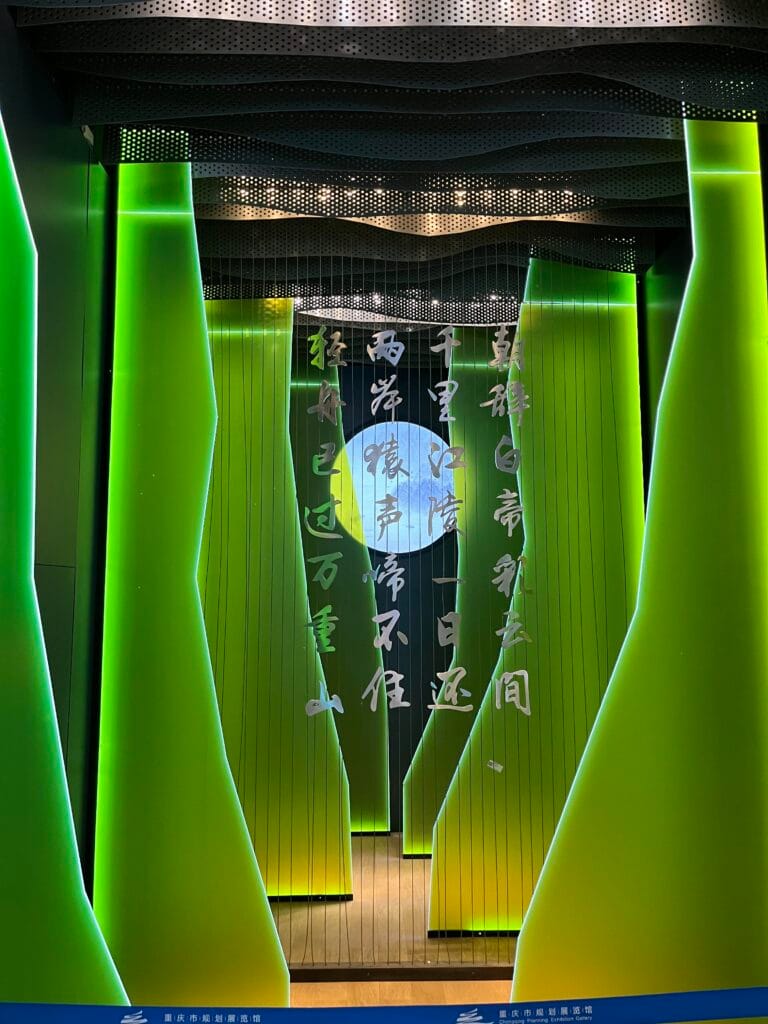
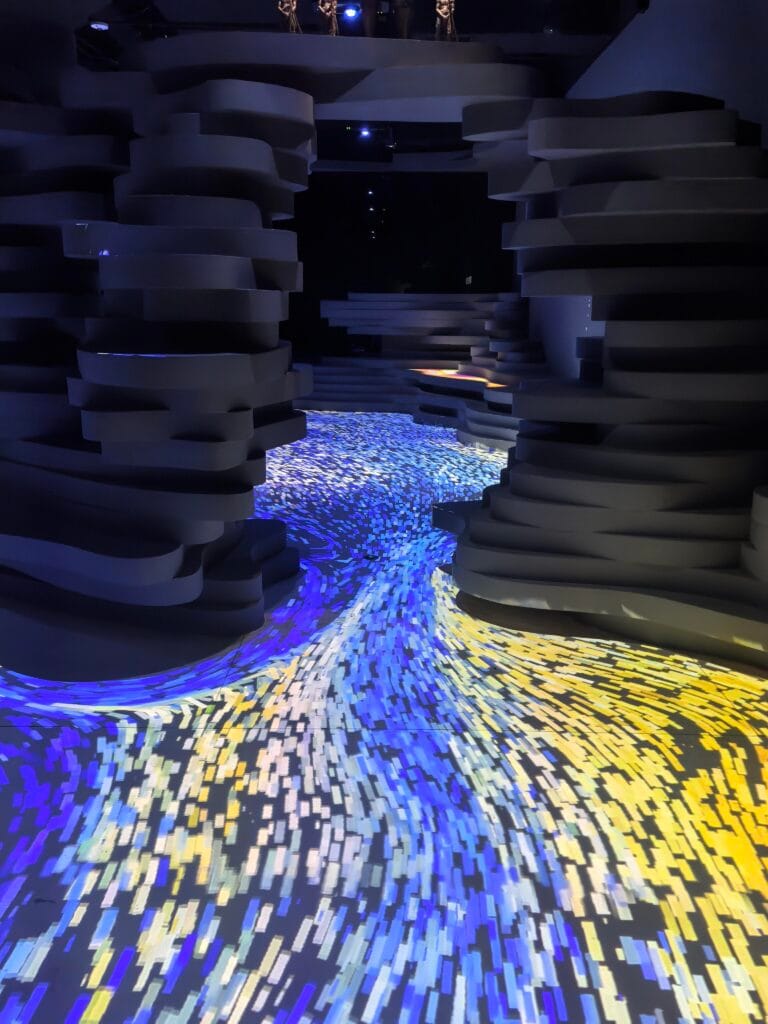
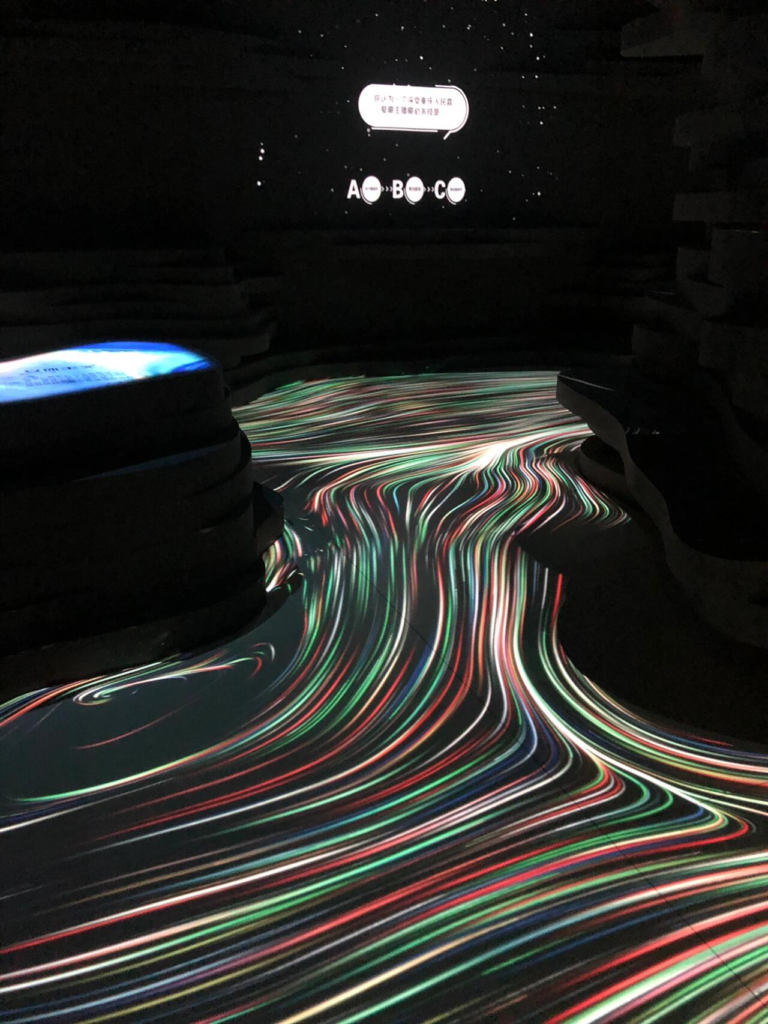
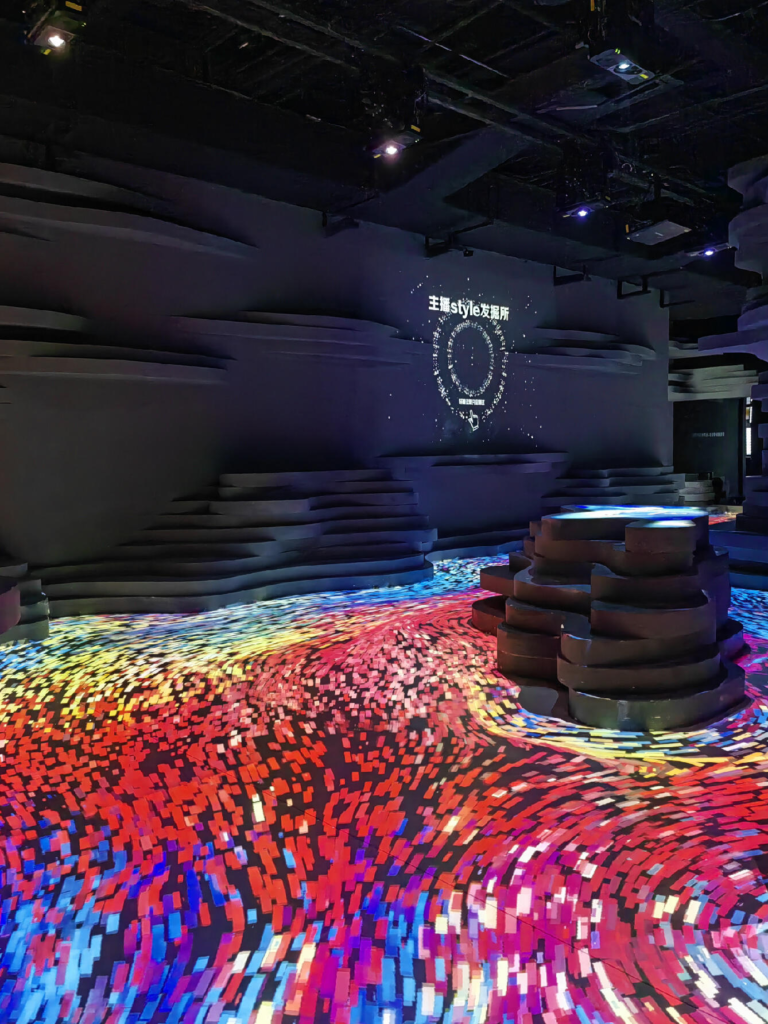
- My Honest Take: The tech is cool, but half the interactive screens I tried weren’t calibrated properly or were turned off. When they work, they’re genuinely fun (especially the “City Designer” game). But don’t come expecting a cutting-edge tech museum.
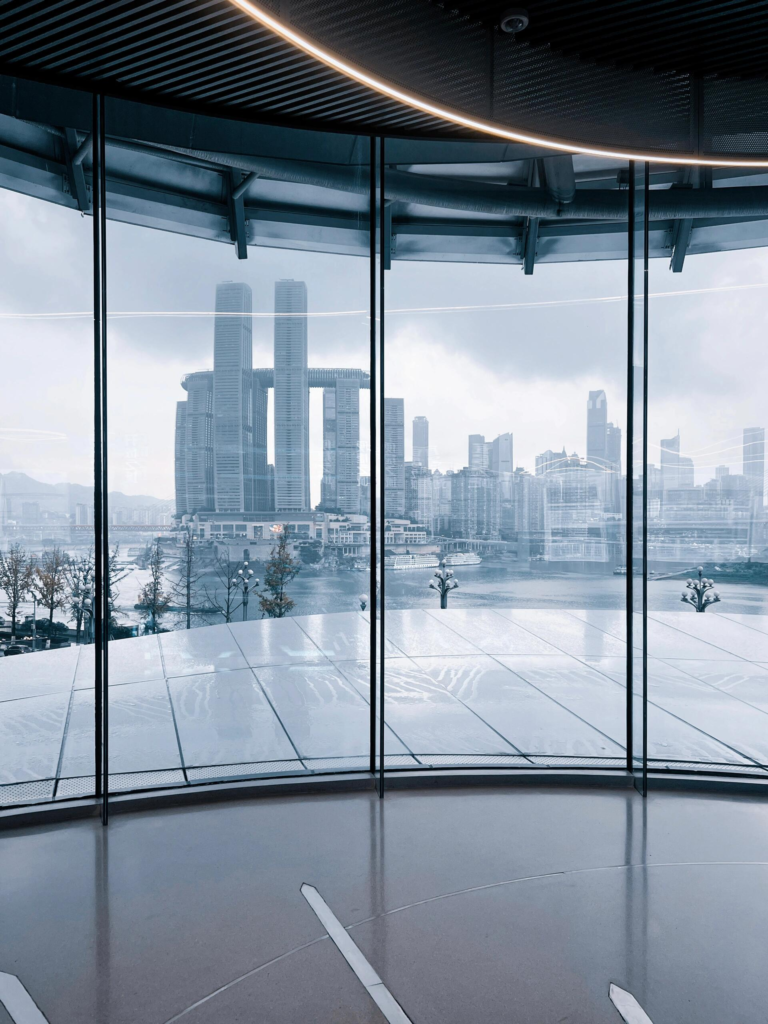
- The Photo Spot: This floor has floor-to-ceiling windows overlooking the river. You get a direct, postcard-perfect view of the Yuzhong Peninsula and the Raffles City skyline. It’s arguably a better view than from the actual Raffles City observation deck, and it’s free.
4. The Historical Exhibits
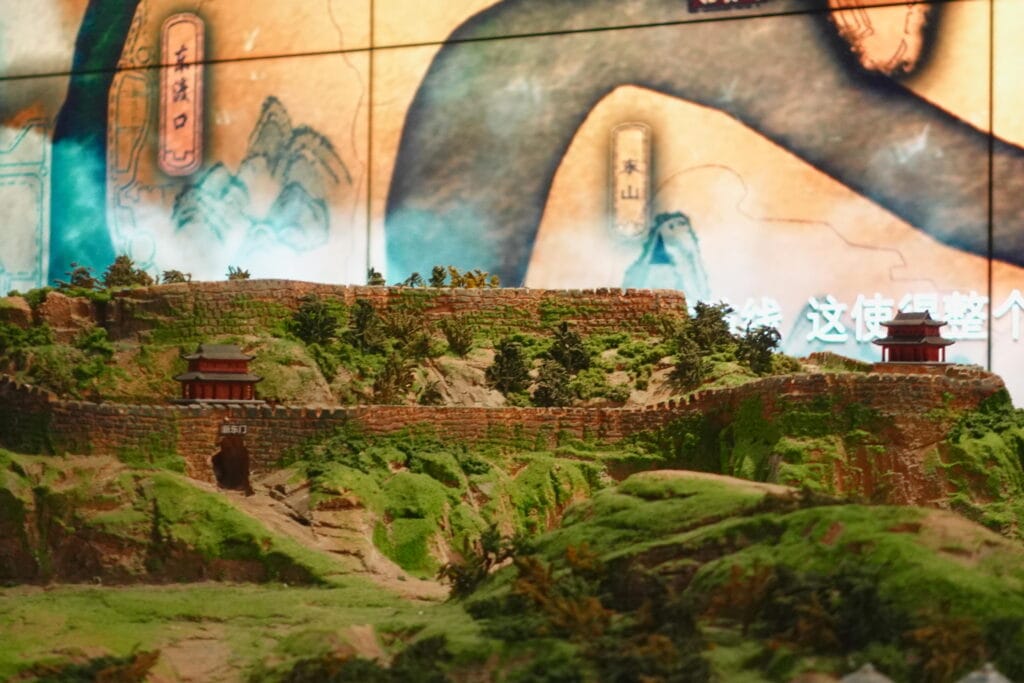
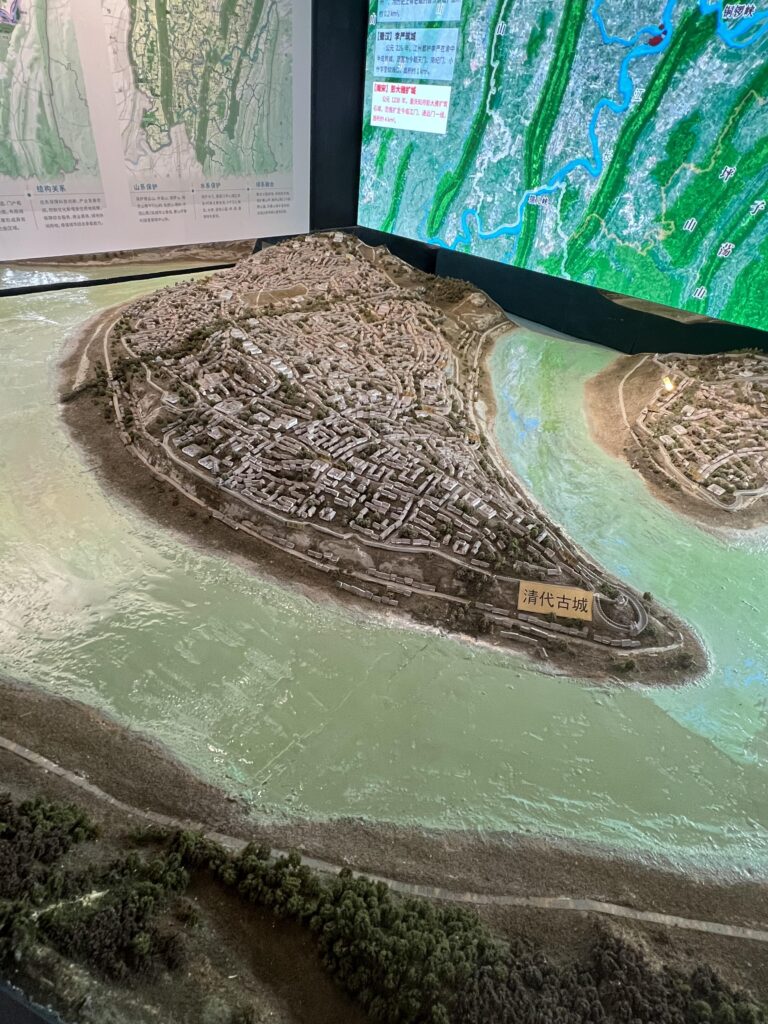
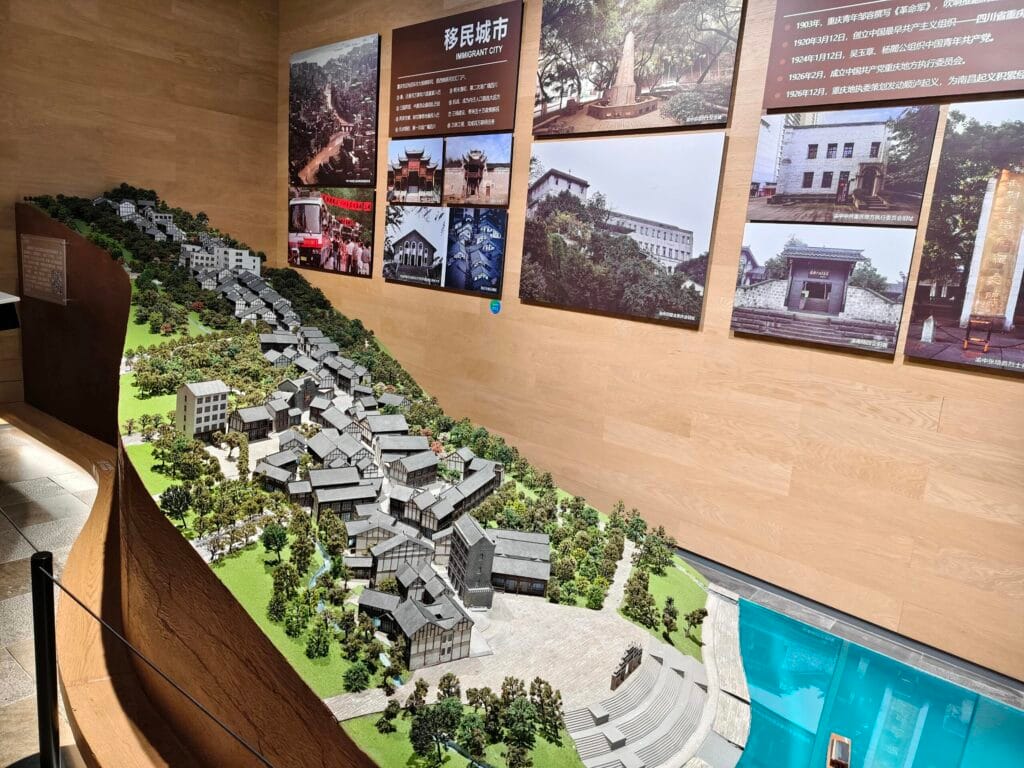
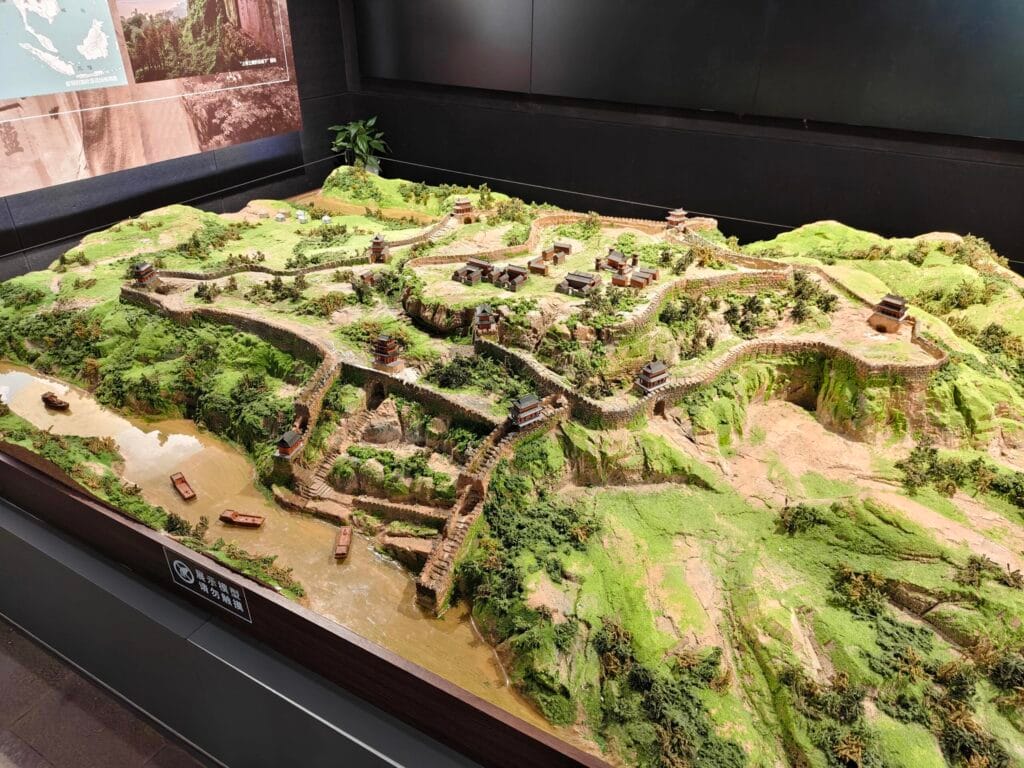
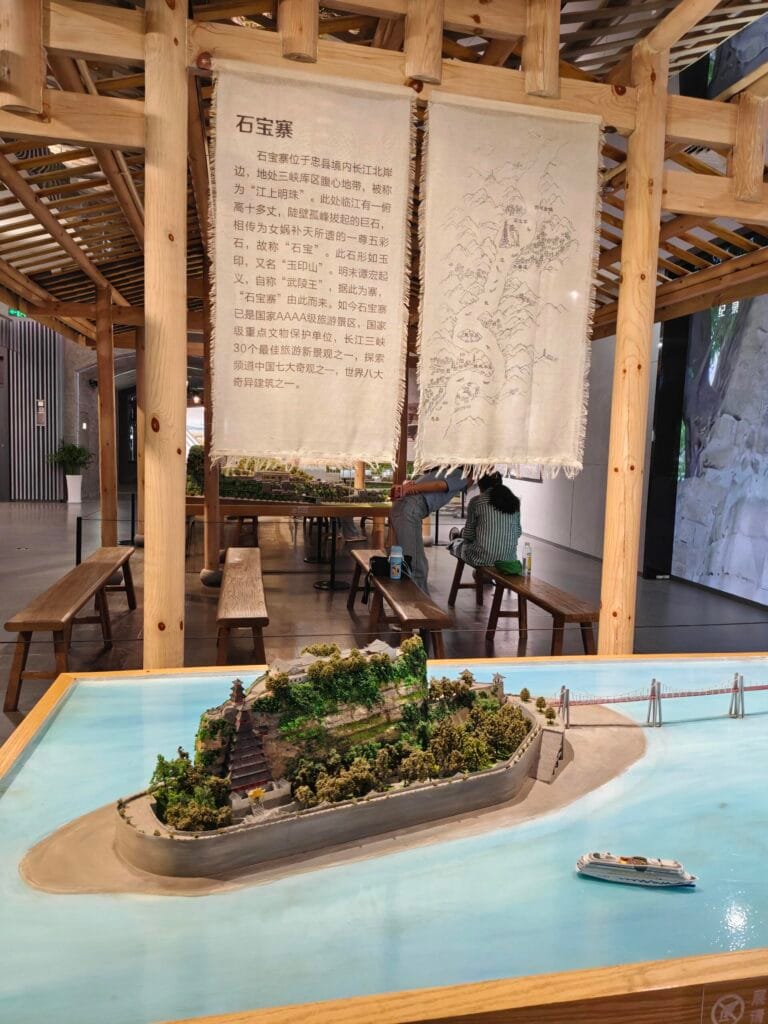
I expected to skim this section, but it’s actually well-curated. There’s a section on the ancient Ba culture, old maps of the city when it was a walled fortress, and photographs of the “stilted houses” (吊脚楼) that used to cling to the cliffs before modernization.
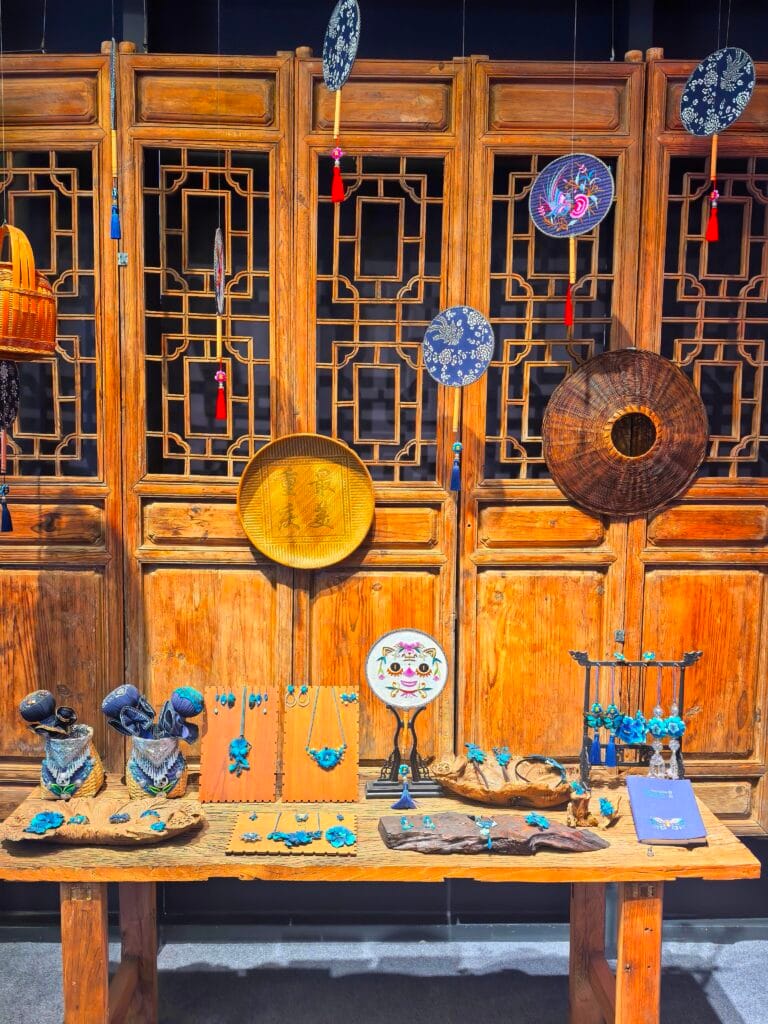
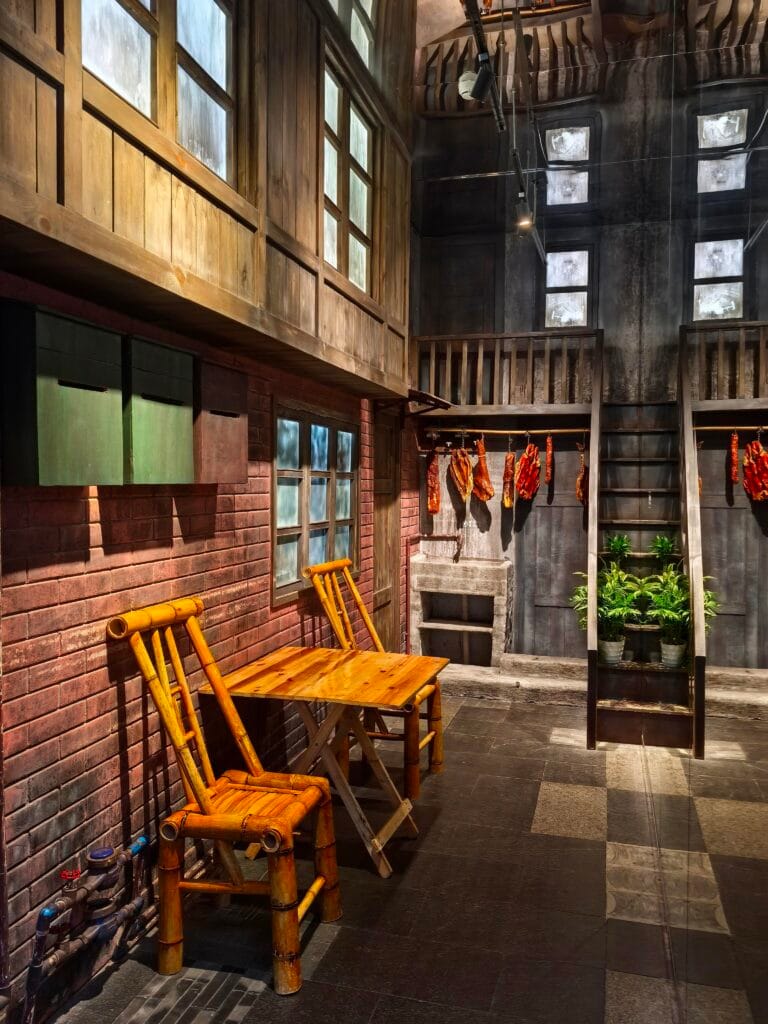
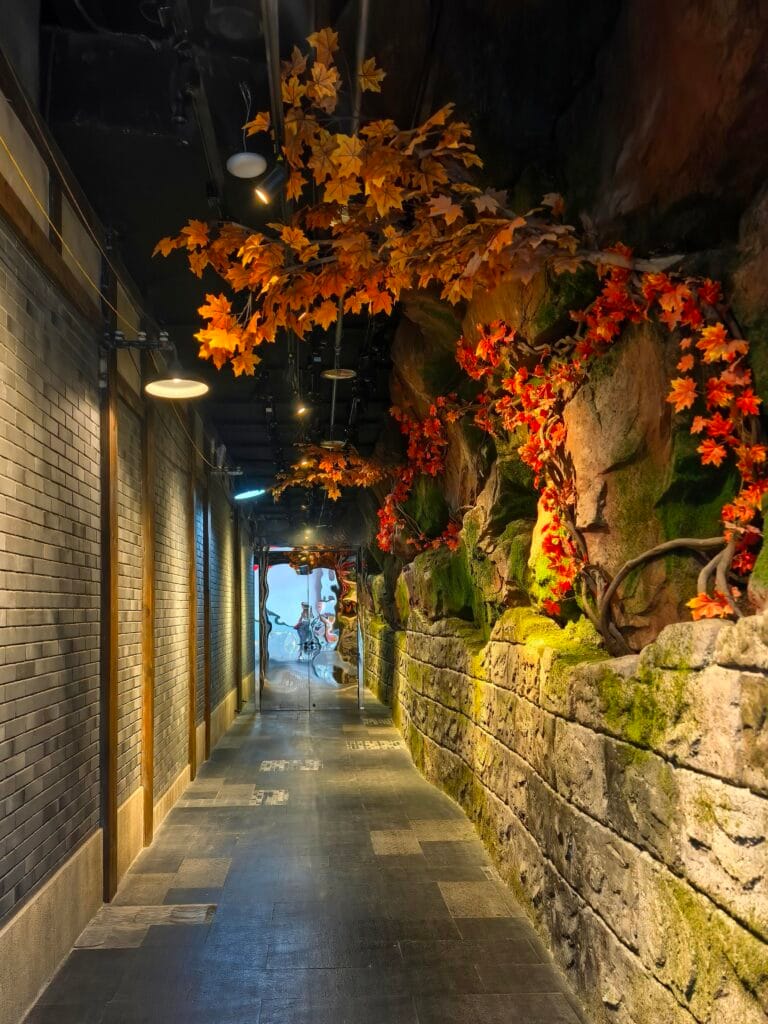
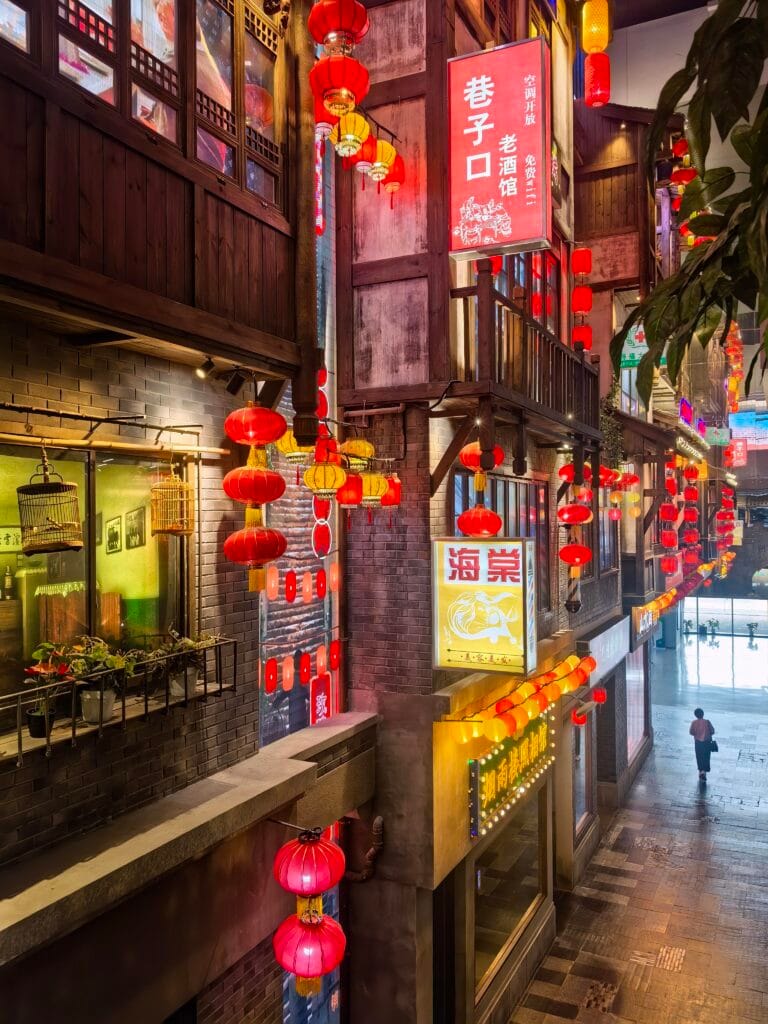
- My Honest Take: This is where the museum shifts from “propaganda” to “cultural education.” The replica of an old Chongqing street is atmospheric, and the displays on the city’s role as a wartime capital during WWII add real historical weight. It helps you understand that Chongqing’s “chaos” isn’t new—it’s a survival mechanism etched into the landscape.
The View: A Legit Reason to Visit
Even if you decide museums aren’t your thing, walk to the outdoor terrace on the third floor. The museum’s location on the Nanbin Road waterfront is unbeatable. You’re standing at the confluence of the Yangtze and Jialing rivers, staring straight across at the soaring, ship-like form of Raffles City.
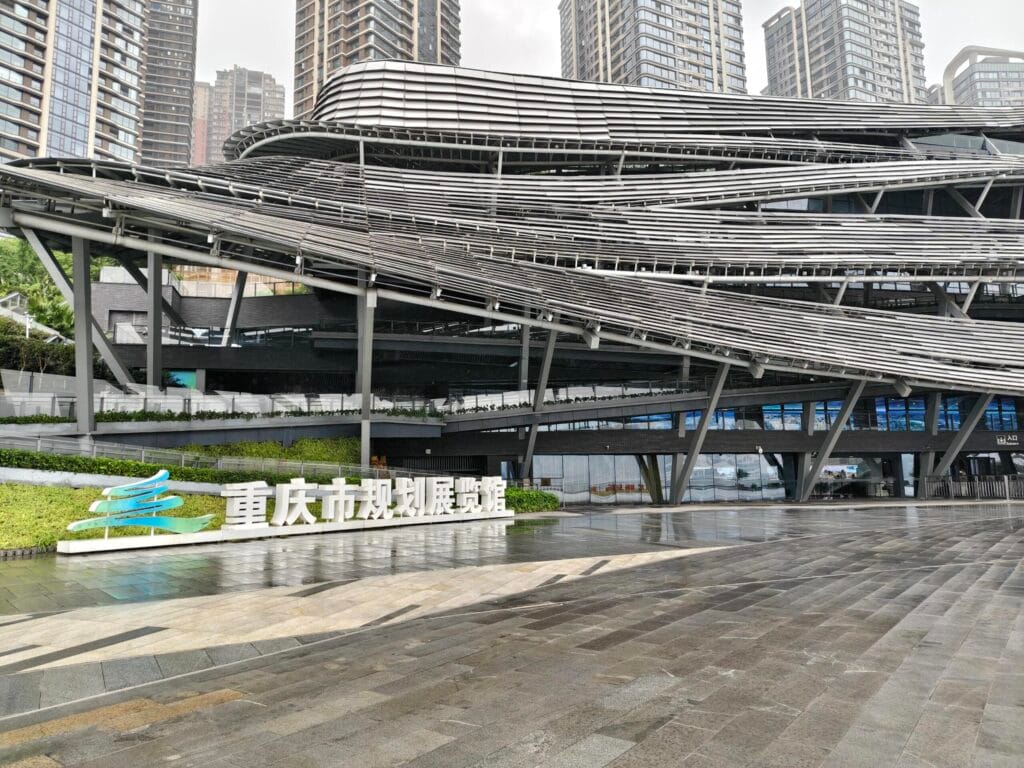
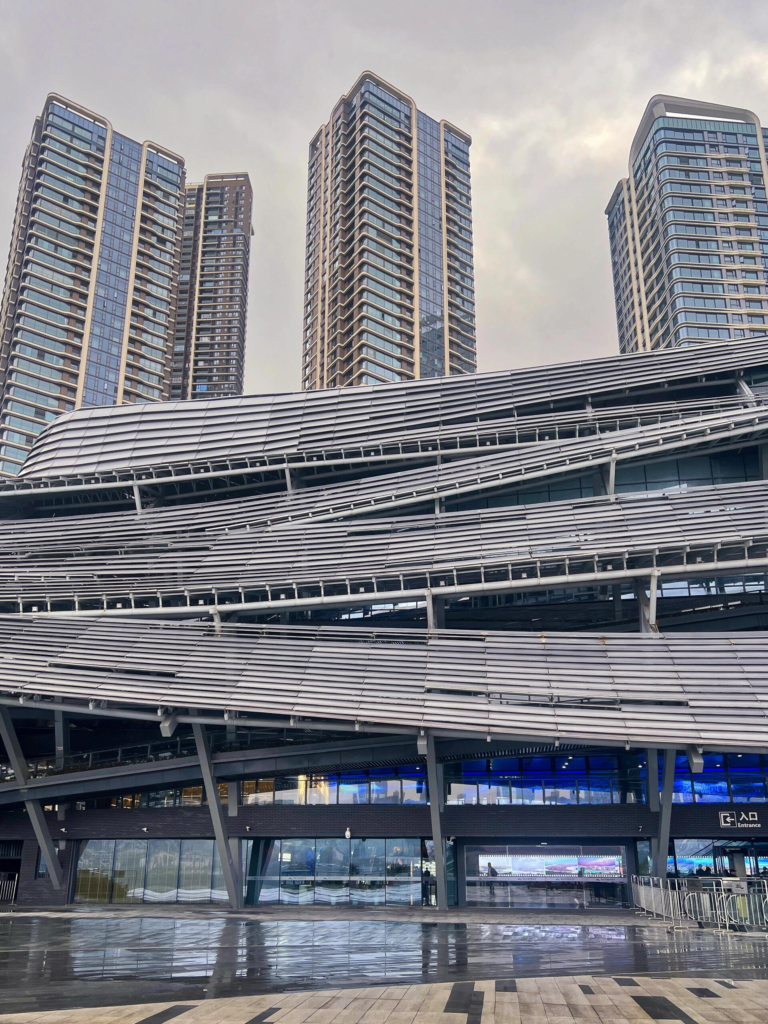
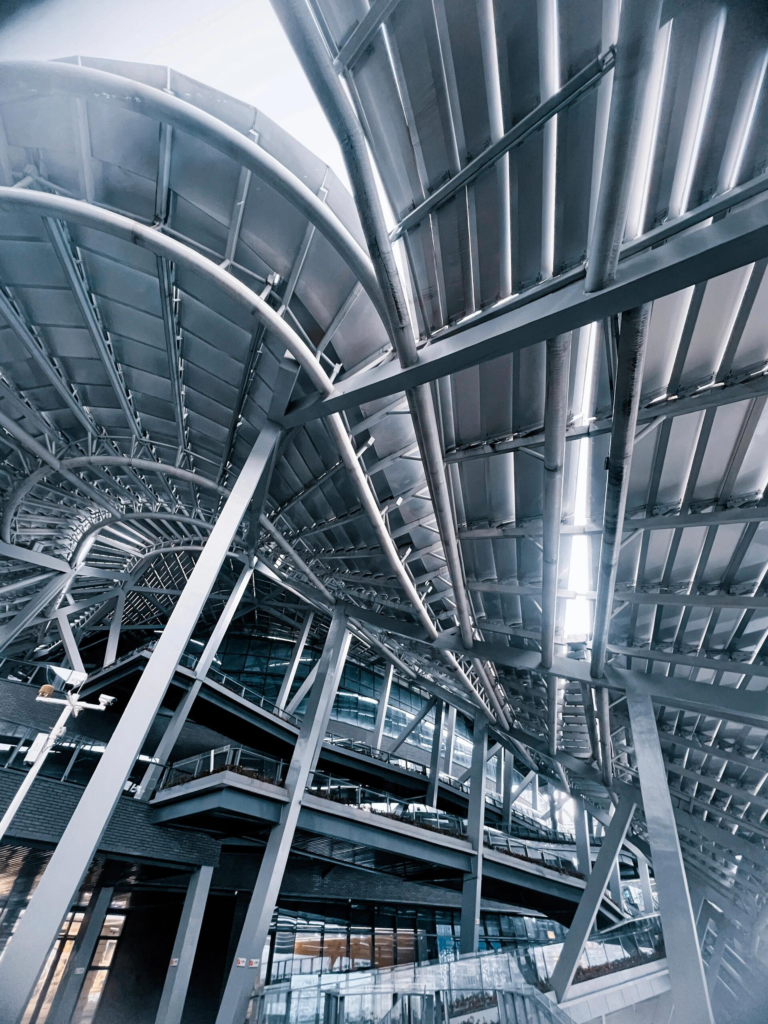
It’s quieter than the crowded riverbanks in Yuzhong, and the architecture of the museum itself—a swirling, “ribbon-like” structure designed to look like a rising character (起) —makes for excellent photography.
What the Brochures Won’t Tell You (The Gritty Details)
- It Gets Warm. The atrium and the main model hall are well-air-conditioned, but some of the side galleries and interactive rooms get stuffy, especially if it’s crowded. Wear layers.
- The Gift Shop is Sparse. There’s a small cultural products store, but don’t expect an international-standard museum shop. It’s mostly books and small trinkets. Bring a water bottle—there are dispensers, but no cups .
- Accessibility is a Work in Progress. The inside of the museum is great—elevators, accessible restrooms, and a free wheelchair loan service at the entrance . However, getting to the entrance is tricky. There’s a long, sloped driveway that serves as the accessible route, but it’s steep and requires going around the side of the building. If you have mobility issues, it’s worth calling ahead (023-63730777) to have staff open the gate for you .
- It’s Not Just for Tourists. On a weekday morning, I saw as many local families and architecture students as I did tourists. It has a genuine community feel, which is refreshing compared to the tourist-trap crowds at places like Hongya Cave.
FAQ: For the First-Timer
Do I really need to bring my passport?
Yes. 100%. They scan it at the entrance. No passport, no entry.
Is it worth it if I don’t speak Chinese?
Absolutely. The “Flying Over Chongqing” theater, the massive scale model, and the outdoor terrace are all universal experiences. For the historical exhibits, use a phone translator like Google Lens or DeepL on the plaques.
Is it kid-friendly?
Very. The third-floor interactive zone is designed for children, and the scale model is like a giant, illuminated city of toys. There’s also a baby care room on the first floor . However, be prepared for the same issues you’d have anywhere in China—crowds and occasional chaos.
When is the best time to visit?
Tuesday through Thursday mornings, right at 9:00 AM. Avoid weekends and Chinese public holidays unless you enjoy queuing.
Final Verdict
The Chongqing Planning Exhibition Gallery isn’t a traditional museum. It’s part architectural showcase, part educational center, and part civic boosterism. If you go in expecting the Louvre, you’ll be disappointed. But if you go in curious—wanting to understand how a city can possibly function when it looks like it was built on a crumpled piece of paper—you’ll leave with a deep appreciation for the sheer audacity of this place.
I left with my head full of facts about bridge-building records and my camera roll full of skyline shots. It’s not a “must-do” in the same way that eating hotpot is, but for anyone who likes to dig beneath the surface, it’s the best three hours you can spend in the city.