
You already know it’s the “8D Magic City” of endless stairs, monorails driving through buildings, and hotpot that will change your life. But if you are planning your first trip to China, there is one experience that’s likely to pop up on every itinerary, yet leaves many Western tourists scratching their heads: the Chongqing 1949 Grand Stage Play.
Is it just government propaganda? Is it a world-class theatrical masterpiece? Or is it something uniquely, bafflingly “Chongqing”?
I went in with a healthy dose of skepticism (I’ve seen a lot of these massive, state-sponsored “indoor spectacles” in China). I wanted to see if the eye-watering 800 million RMB budget actually translated into something a non-Chinese speaker could enjoy.
Here is my honest, first-person breakdown of the Chongqing 1949 show, analyzing the pros and cons to help you decide if you should grab a ticket.
What Exactly Is Chongqing 1949?
This isn’t a Broadway show. It’s better to think of it as a massive, immersive live-action spectacle.
It is set in the chaotic, dangerous months just before the Communist liberation of Chongqing in 1949. The story focuses on the “Red Crag” history—a period of intense struggle between the Nationalist (KMT) and Communist parties.
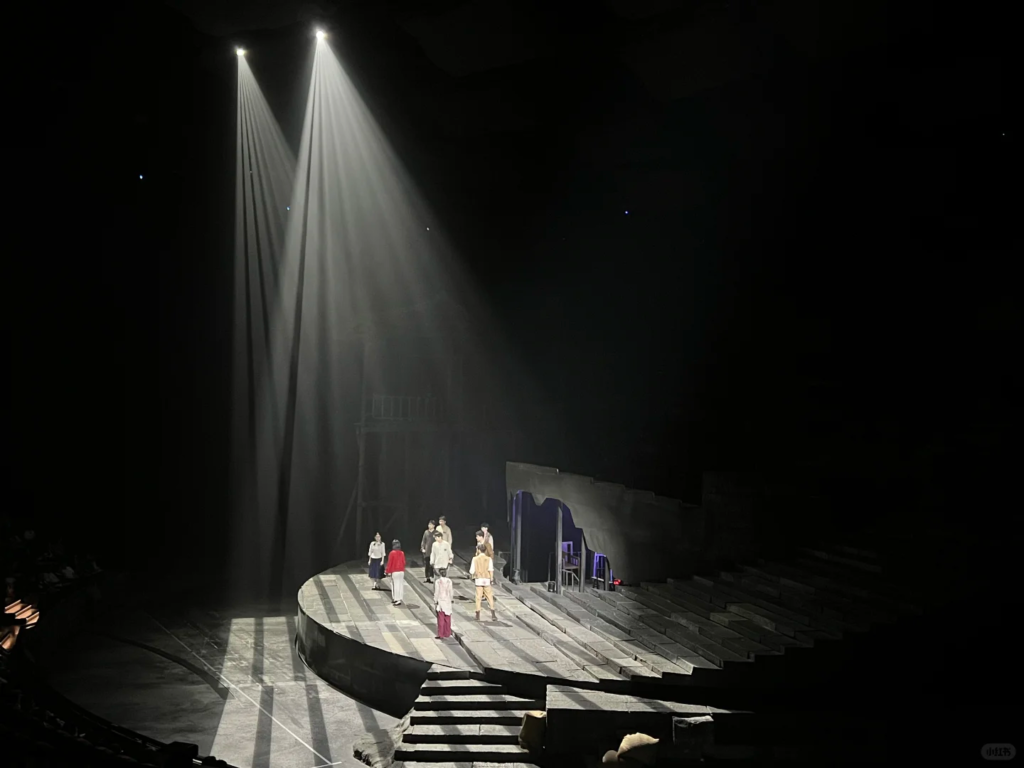
The drama unfolds through the stories of three brothers from the Lin family, each with different political loyalties, alongside historical figures like “Little Radish” (a famous child martyr). It’s a群像 (group portrait) drama, touching on themes of family, love, sacrifice, and intense revolutionary faith.
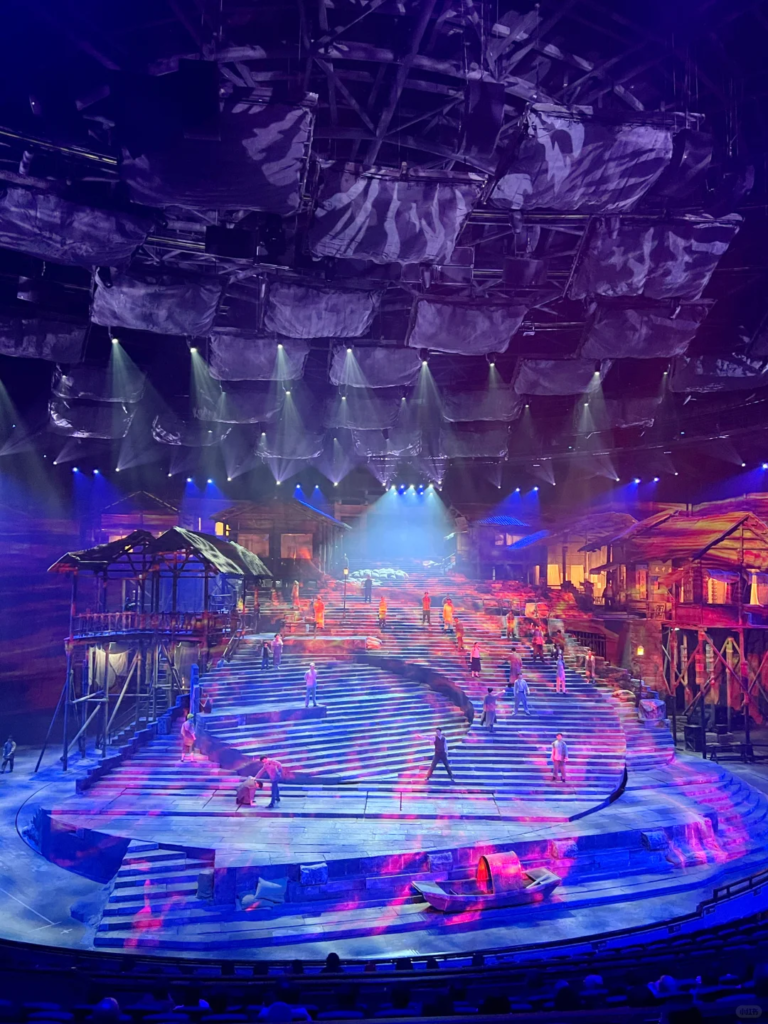
The venue itself—the Chongqing 1949 Grand Theatre in Shapingba District—was custom-built for this performance. It uses a mind-blowing 360-degree stage and audience system, where you, the viewer, are often moving.
The Real History (Before You Go)
To respect the culture and truly understand the play, you must pre-study a little bit. This show deals with a very sensitive, painful, and ultimately defining chapter of modern Chinese history. It is “very Red.” The “Red Crag Spirit” (loyalty, sacrifice, unwavering belief) is the core of the entire performance.
Western tourists are welcome (I saw quite a few), and they even have leaflets with English summaries. However, the play itself has no English subtitles. The story can feel fragmented if you don’t know who the key players are. If you arrive with zero context, you might be dazzled by the visuals but utterly lost by the narrative.
The Pros: Why You Should See It
Okay, let’s get into the good stuff. When this show works, it is stunning.
1. A Masterclass in Visual Spectacle
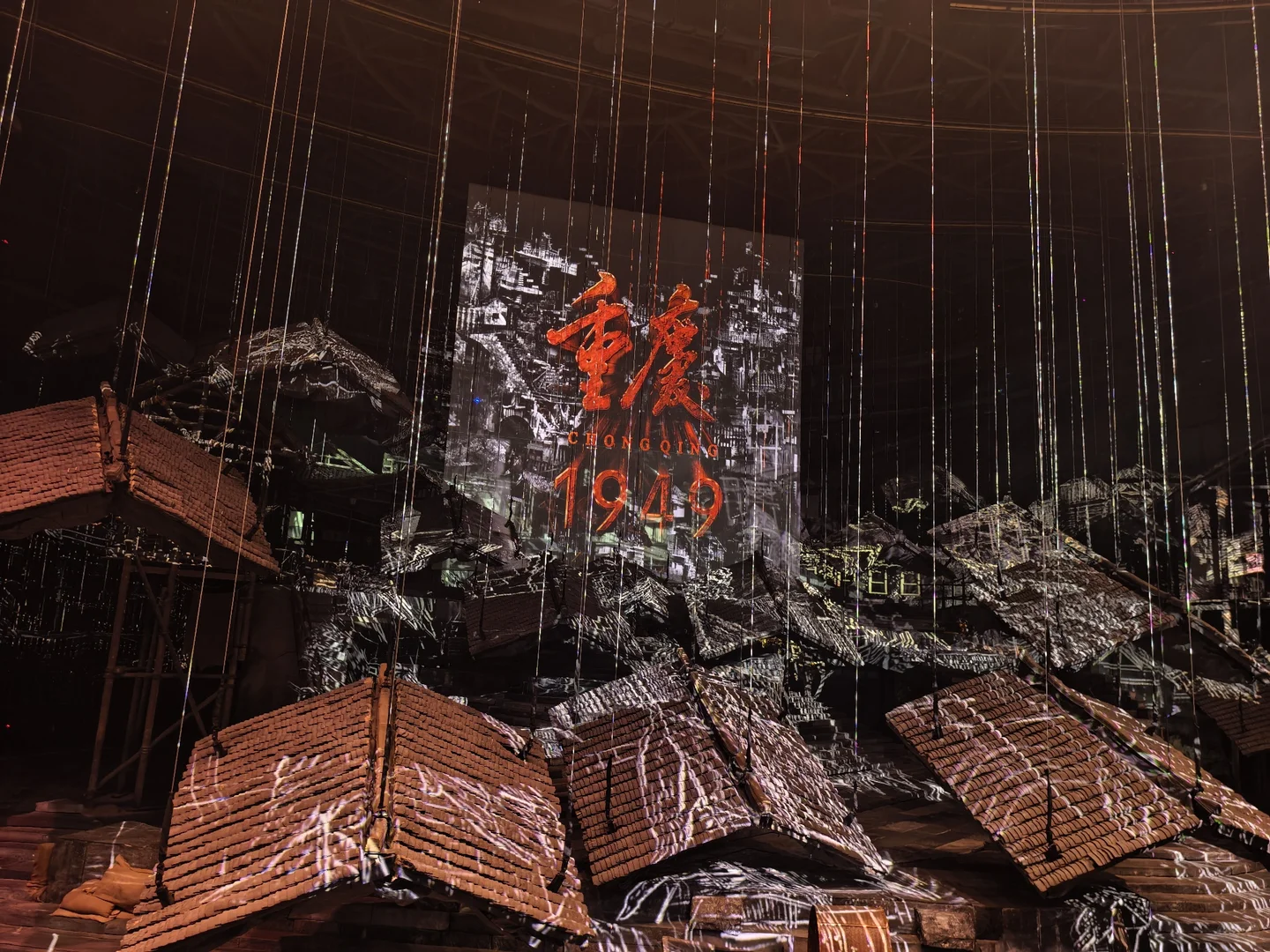
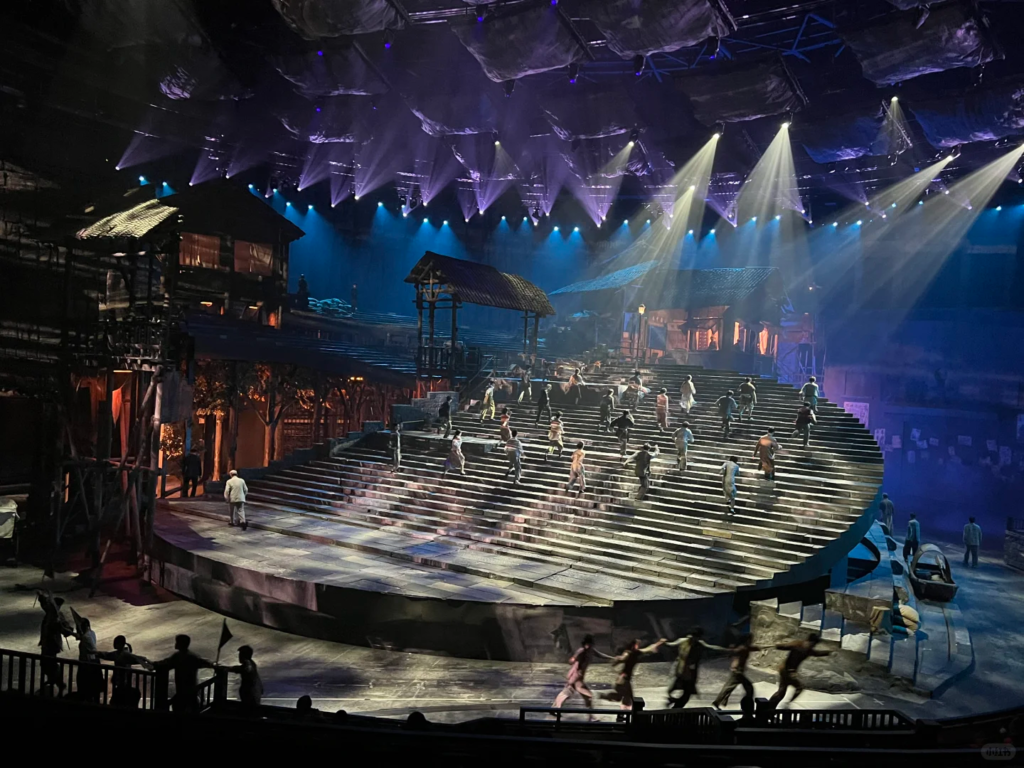
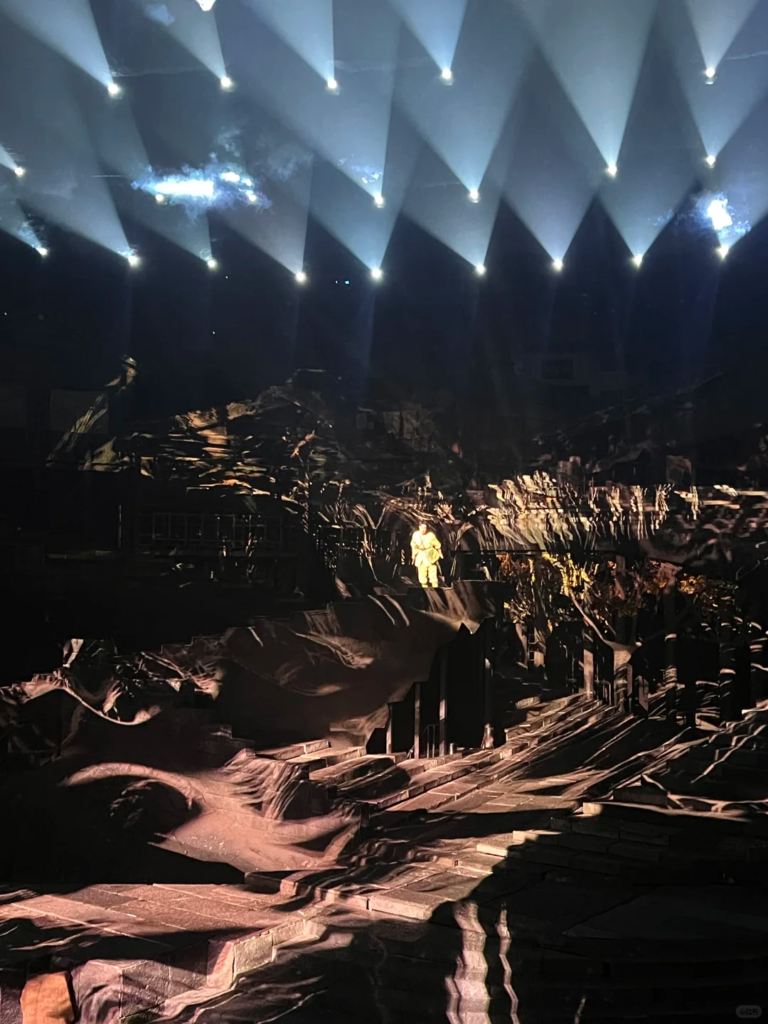
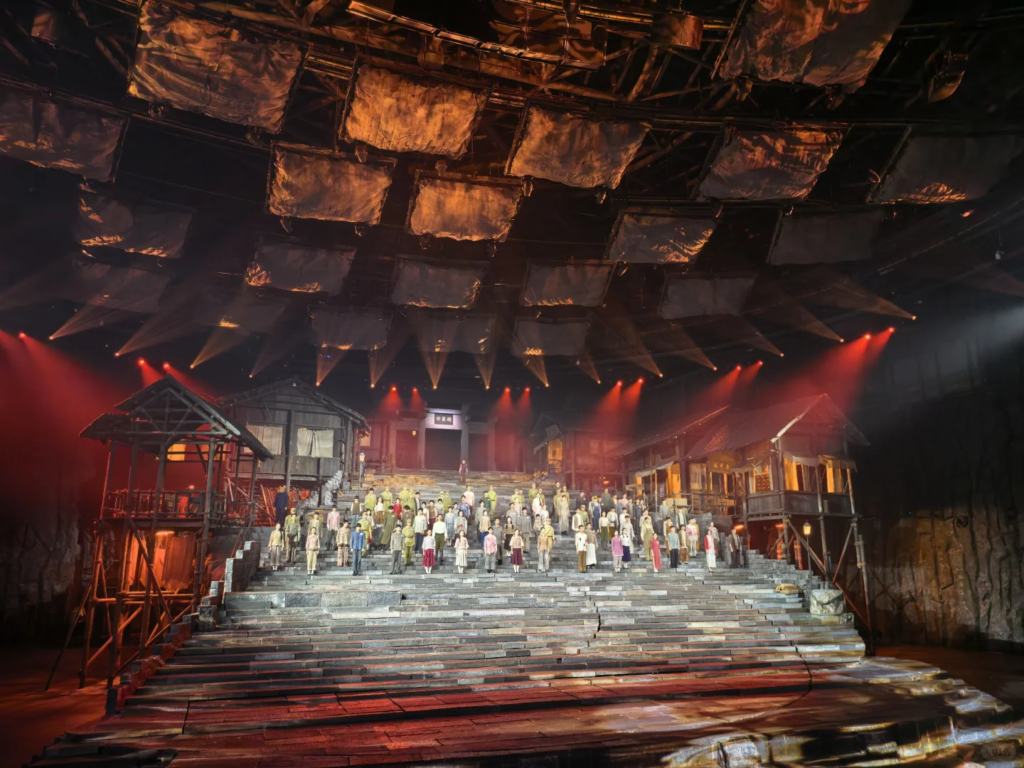
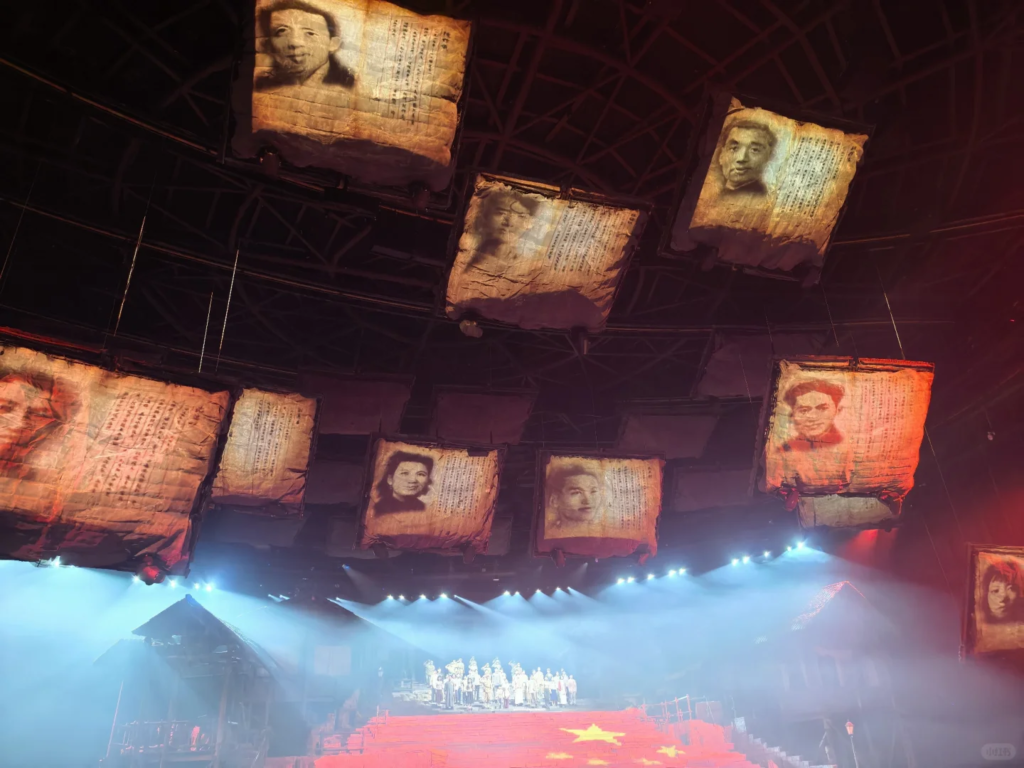
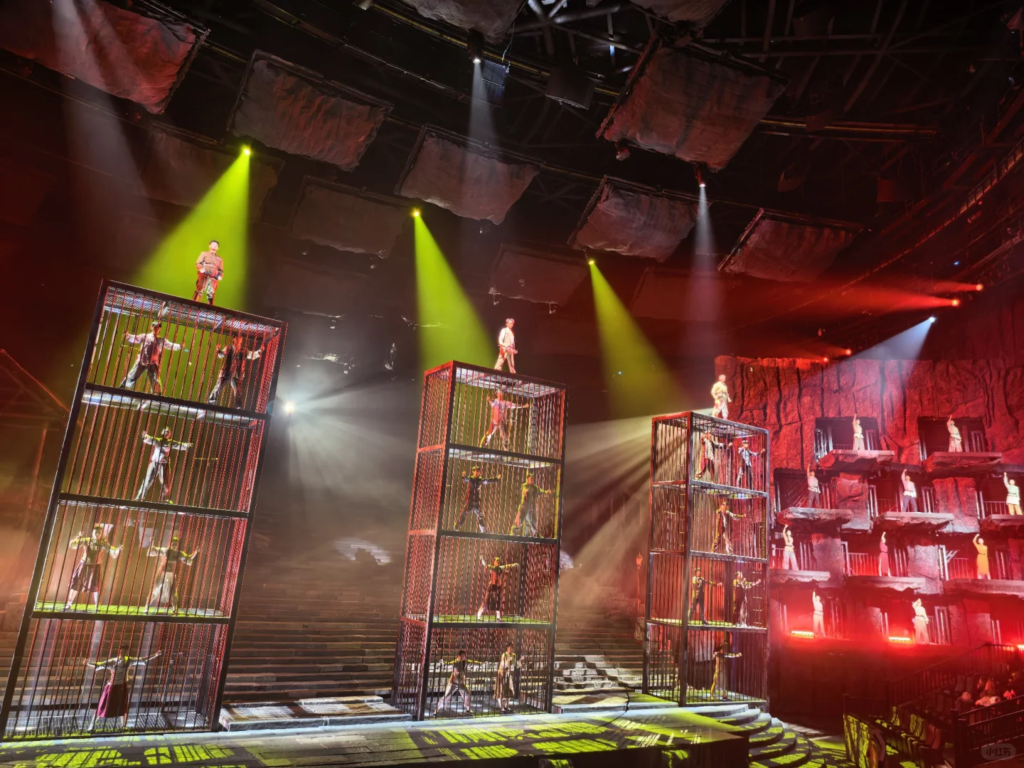
The 800 million RMB budget is right there on the stage. If you are a photography enthusiast, you will be in heaven. The lighting design is superb—dynamic, atmospheric, and incredibly dramatic. The use of the deep stage setting creates an illusion of endless, shadowy mountains and sprawling cityscapes. I found myself taking constant photos (where allowed).
2. True 360-Degree Immersion (If You Choose Wisely)
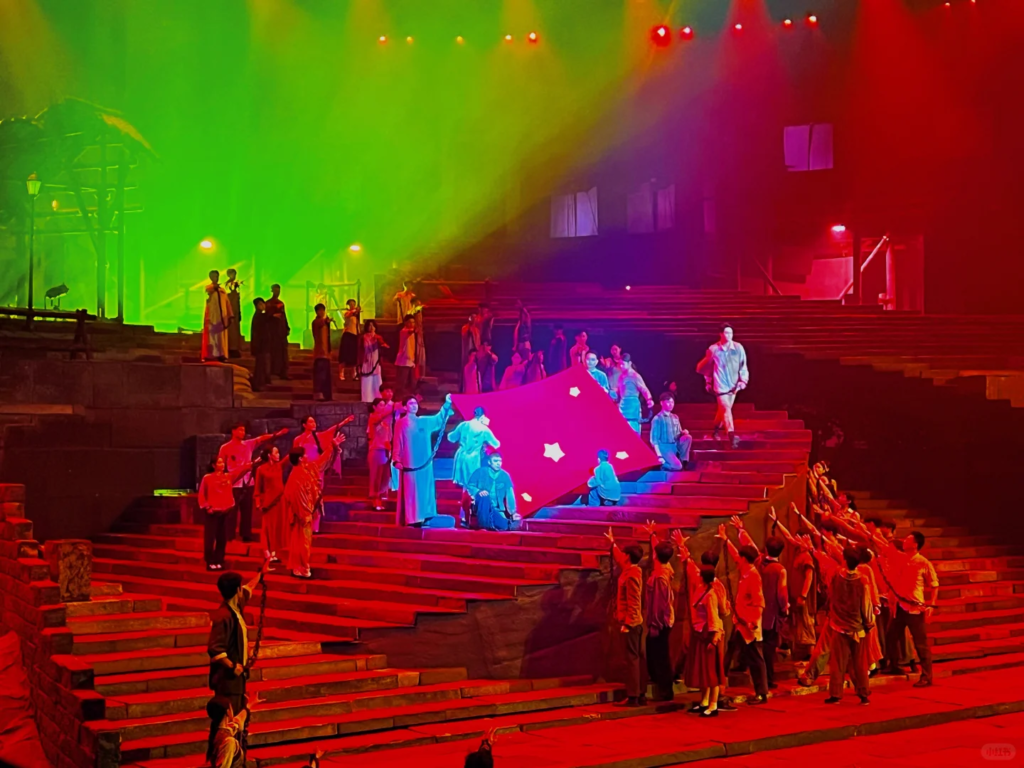
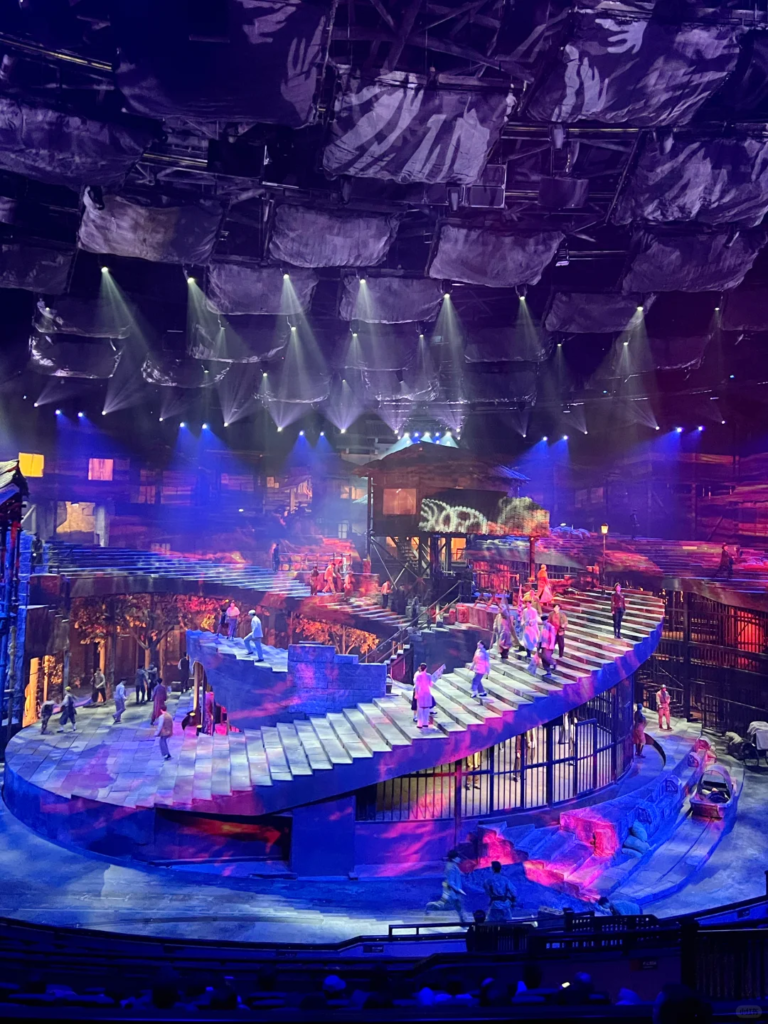
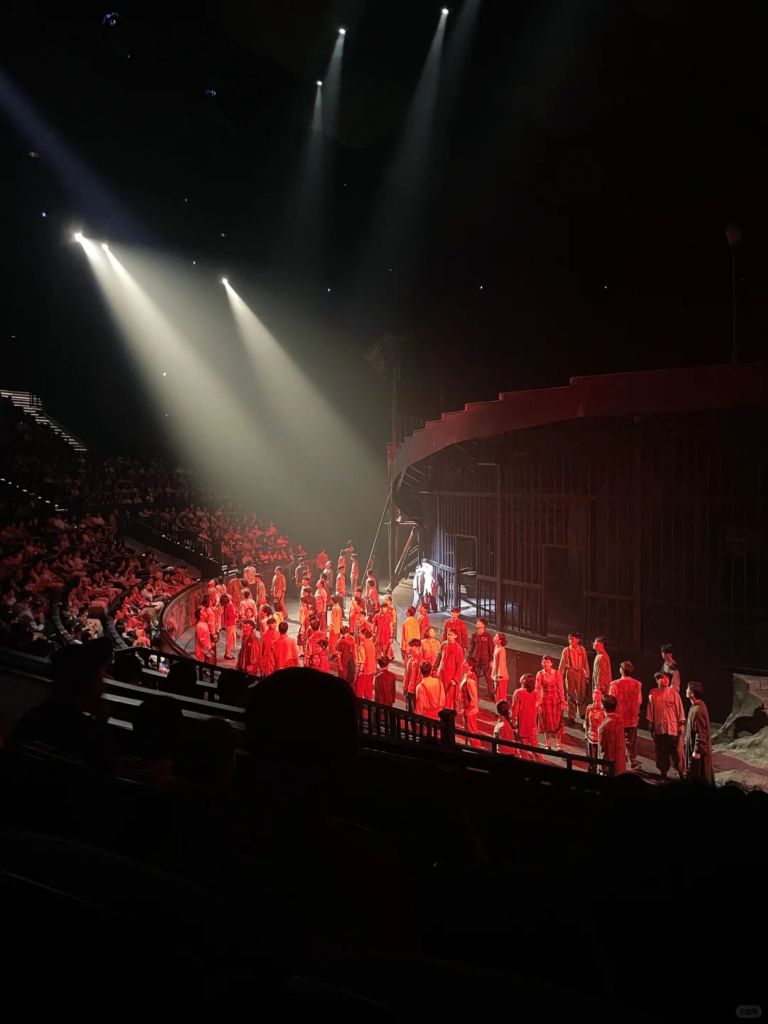
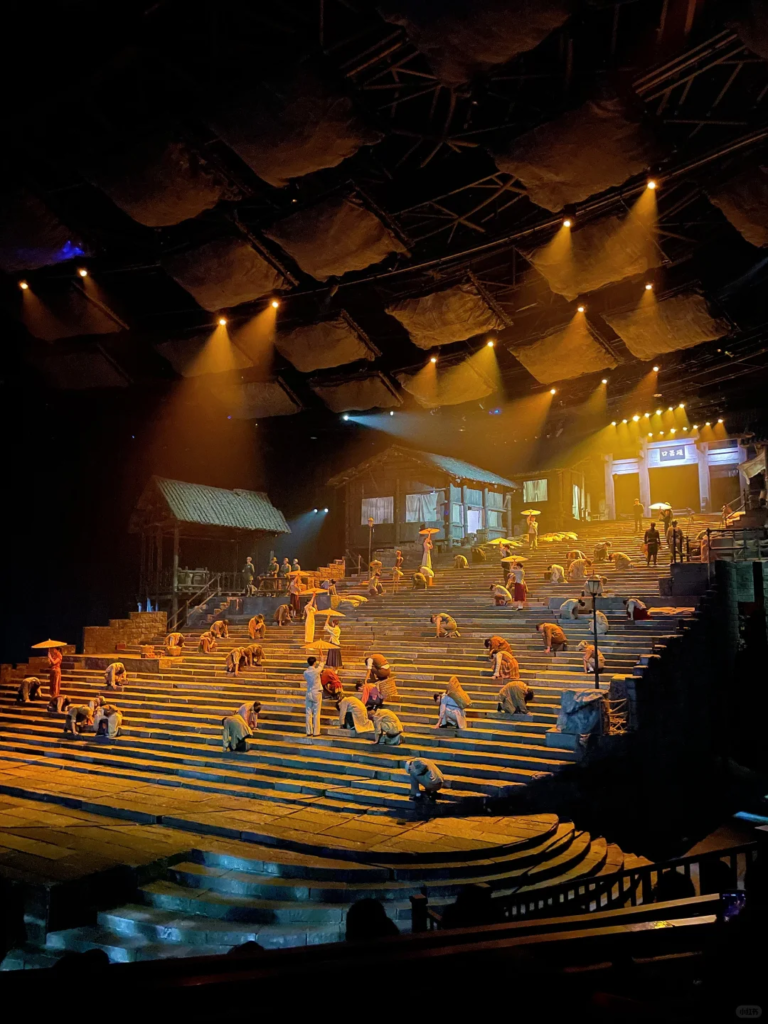
This is the show’s defining feature. In certain seating zones, the audience seats actually rotate as the story moves. The stage itself consists of multiple layers of concentric rings that move independently. You are constantly being turned to face new sets: the narrow stilt houses of the Jialing River docks, the stone gates of Ciqikou Ancient Town, the terrifying, shadowy depths of the Zhazidong (Scraps Cave) prison. Sometimes the actors are right in your face; sometimes bullets seem to fly overhead; sometimes real “rain” pours down. It’s a sensory overload.
3. Dedicated Performances
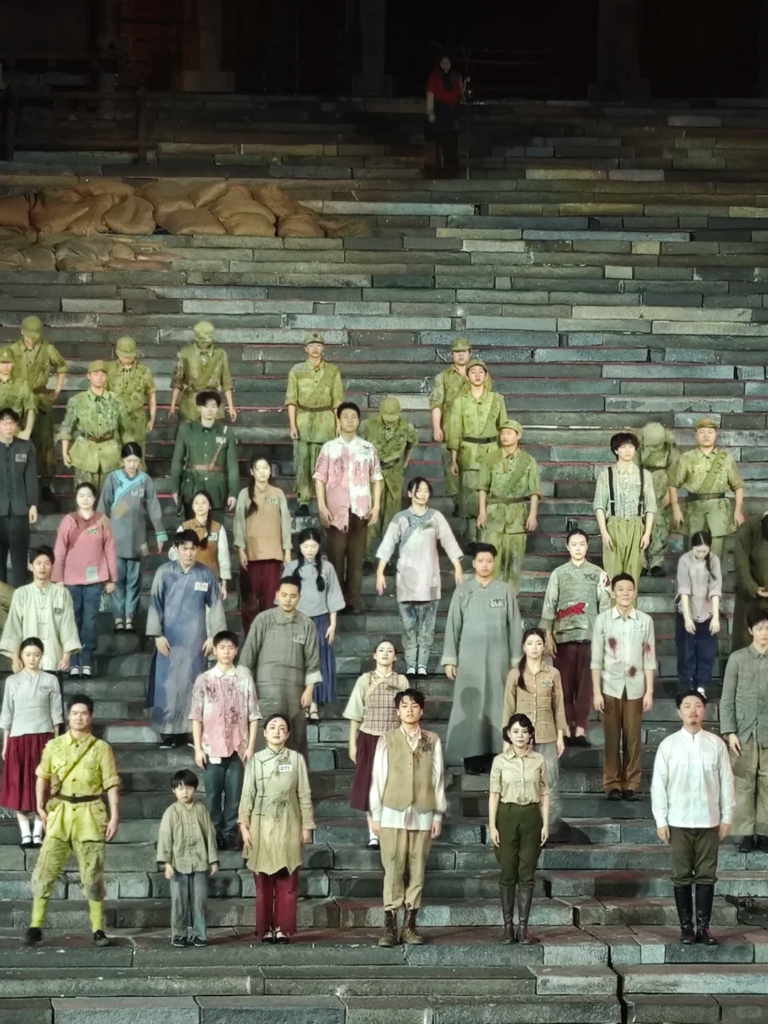
The actors are incredibly passionate. The primary roles are often double-cast, but I was struck by the commitment of everyone, from the main leads to the hundreds of ensemble performers. The child actor playing “Little Radish” was particularly heart-wrenching. There’s a tangible raw energy on that stage.
4. Convenient Timing and Location
The show starts at 19:30 and ends by 20:45. This makes it an easy, accessible evening activity. The location is perfect: right next to Ciqikou Ancient Town. You can spend the afternoon exploring the town, have dinner, and then stroll over to the theater (just avoid trying to stay in Ciqikou itself; it’s a bit too isolated).
The Cons: Why It Might Not Be For You
I promised to be honest. This show is not a guaranteed hit for every traveler.
1. The Language Barrier is Significant
As mentioned: Although a free English translator is provided, you may still have difficulty understanding it. You need to do your homework before watching.The narrative relies heavily on dialogues, slogans, and inner monologues. While the historical figures and prototype stories are common knowledge to Chongqing locals, the fragmentation and “group portrait” style make the plot genuinely hard to follow for outsiders. You are watching a spectacle, not necessarily a play you understand.
2. Audio Quality Can Be Terrible
This is the single biggest complaint online, and it’s true. The microphones are often “炸” (distorted/peaking). It’s loud, echoey, and sometimes impossible to hear the dialogue clearly, even if you do speak Chinese. If you are sensitive to loud, chaotic noise, this will be challenging.
3. It’s a “Mixed Bag” Artistisally
Is it an opera? A musical? A drama? A dance show? Chongqing 1949 tries to be all of them simultaneously, resulting in a bit of a chaotic “soup.”
- As a drama: The plot can feel weak, relying on symbols and fragmented scenes.
- As a dance show: While the big ensemble numbers are impressive, they are sometimes described as “uncoordinated” by critics.
- As a musical: Most of the singing appears to be pre-recorded lip-syncing, which detaches you from the live experience.
Crucial Ticket and Seating Guide: Where to Sit!
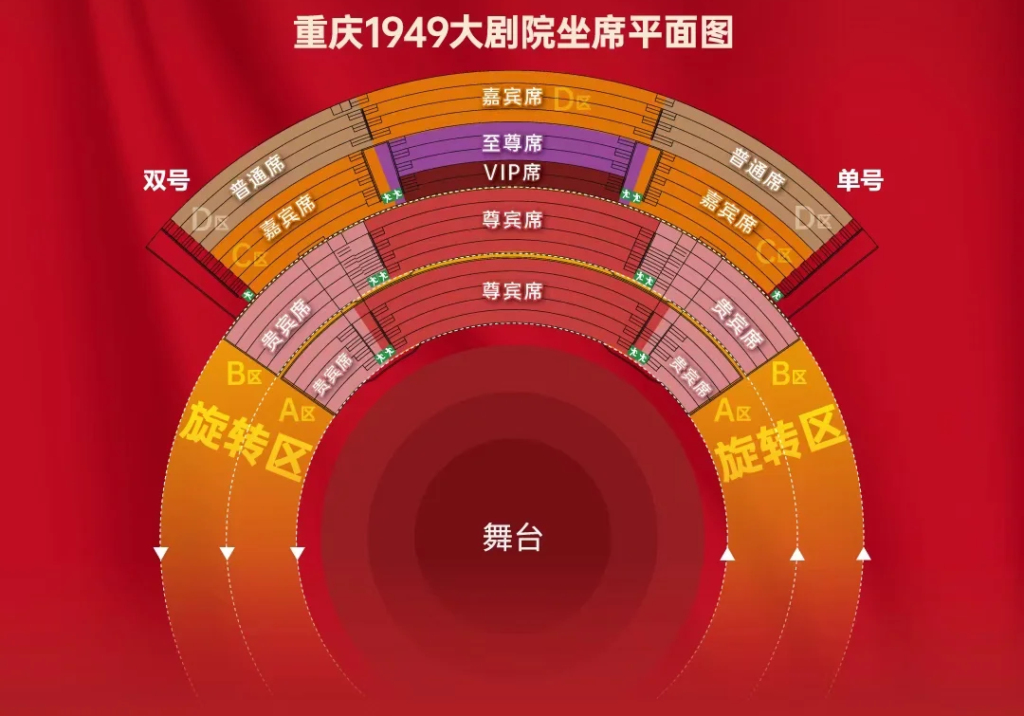
This is the most important decision you will make. When buying online, the seating is usually assigned randomly, but you get to choose your zone. My advice is firm: Avoid Zone A.
| Seating Zone | Experience | Verdict |
| Zone B / C / D (Central/Low) | These zones are lower down and feature the rotating seats. This is where the true immersive magic happens. You are moving with the story. | RECOMMENDED. Choose Zone B (VIP/尊宾席) if your budget allows for the widest, most central rotating view. |
| Zone A | Located higher up, these seats do not rotate. You are just watching a massive show from a distance. | DO NOT RECOMMEND. You lose the primary selling point of the show. |
The Verdict: Go or Skip?
My Final Score: 4.0 / 5.0
I recommend Chongqing 1949, but with a strong warning: Understand why you are going.
DO NOT GO IF: You expect to follow a coherent, nuanced narrative like a traditional Western play, if you hate loud audio, or if you refuse to do any historical prep work. You will likely find it confusing, repetitive, and expensive.
DEFINITELY GO IF: You love mind-bending stagecraft, massive spectacles, high-end lighting design, and “8D” immersive technology. If you are willing to accept the language barrier and appreciate the emotional intensity (the ending where the actors say “忘了我吧” or “Forgot me” is a guaranteed tear-jerker), you will find this a unique, deeply moving experience. It makes the Red Crag history具象化 (concrete) in a way that reading can’t.